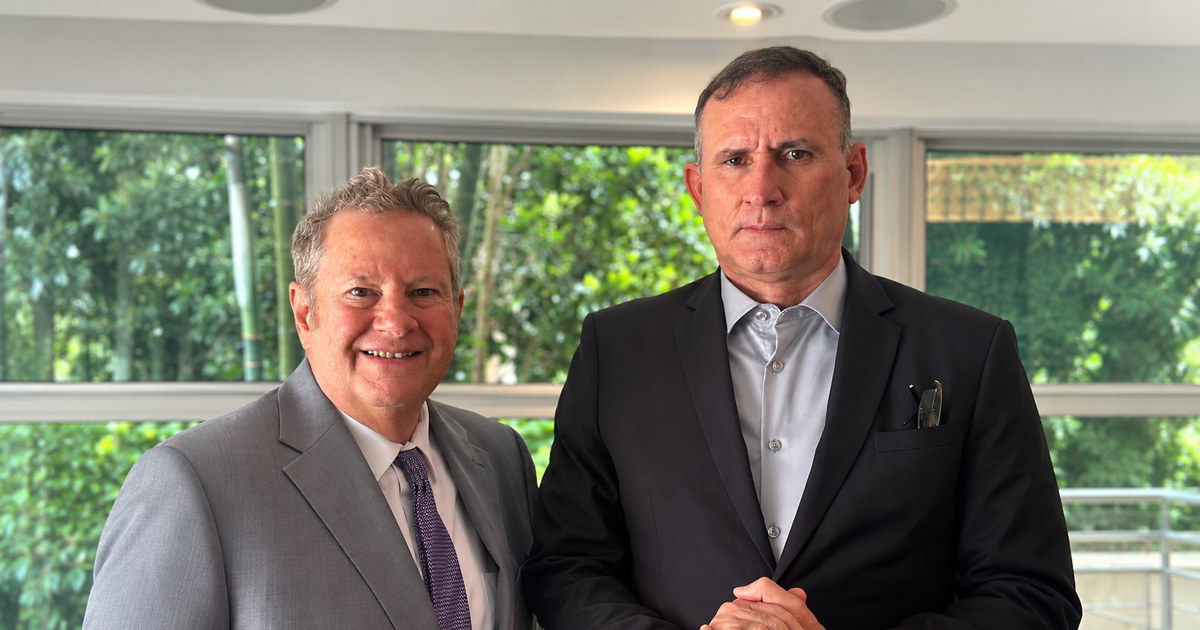
The people love and admire him, while the regime hates him and does not want him in Cuba. Last year, Deputy Foreign Minister Carlos Fernández de Cossío acknowledged that they were considering the possibility of declaring him persona non grata. Recently, there has been speculation about the request from the Castro-communist regime to the United States to remove him from the Embassy in Havana. It is said that the response was: remove Bruno Rodríguez Parrilla.
The truth is that amidst so many years of suffering, repression, poverty, and abandonment, the Cuban people have had foreign friends who have demonstrated, through actions and not just words, their commitment to the cause of our freedom and our rights. Among them, Mike Hammer stands out today, head of the U.S. diplomatic mission in Havana, a man who has made solidarity, human sensitivity, and bravery fundamental traits of his diplomatic work.
Since his arrival in Cuba in late 2024, Hammer has engaged in an intense activity that sets him apart from many foreign representatives who confine their contacts to regime officials, protocol meetings, and diplomatic receptions. He has also chosen to walk through streets and humble neighborhoods, enter dilapidated homes, listen to the persecuted, and embrace those who suffer.
His solidarity with political prisoners and their families has been exemplary. In January 2025, he met with relatives of those suffering arbitrary imprisonment under terrible conditions, who shared the injustices endured by their loved ones.
On February 1, 2025, I had the honor of receiving him in Santiago de Cuba. We talked for several hours about the dramatic national situation, political repression, and the need for international solidarity. He listened to the testimonies of Pastor Lorenzo Rosales Fajardo and mine about our experiences in prison. He also spent time with Estrella Gell, the mother of the political prisoner Iam Gámez.
He has subsequently visited numerous dissidents, including Marta Beatriz Roque, Berta Soler, Ángel Moya, Óscar Elías Biscet, Guillermo Fariñas, and other brave defenders of freedom.
In July 2026, marking five years since the popular uprising of July 11, he visited the homes of Wilber Aguilar, father of political prisoner Walnier Luis Aguilar Rivera; Daymi Albornoz, mother of Yoanky Báez; Carlos Martín, father of Dayron Martín; and Jenny Taboada, mother of Duannis León Taboada. He listened to the suffering of these families and reaffirmed his commitment to the release of those unjustly imprisoned.
He has also supported independent journalists, religious activists, and targeted youth, including Anna Sofía Benítez Silvente, known as Anna Bensi, and her mother Caridad Silvente.
But Hammer is not only concerned about the victims of political persecution. He has also shown extraordinary sensitivity towards Cubans suffering from hunger and extreme poverty.
In Cacocum, Holguín, he visited, among others, an 89-year-old woman known as Cuca, whose precarious existence deeply moved him and reminded him of his own mother. In Bejucal, Mayabeque, he talked with families who benefited from the American humanitarian aid distributed through Caritas.
In September 2026, he toured Quemado de Güines, Corralillo, and other communities in Villa Clara, visiting households in need and personally verifying the distribution of food and hygiene products. He also held meetings with representatives of the Catholic Church involved in these humanitarian efforts.
Their journeys through Havana, Santiago de Cuba, Holguín, Las Tunas, Camagüey, Sancti Spíritus, Artemisa, and Villa Clara demonstrate a diplomacy that is close to the people.
That attitude has provoked the hostility of the repressive apparatus. In January and February 2026, during his visits to Trinidad and Camagüey, small groups of regime supporters organized acts of repudiation against him, hurling insults and accusations.
Hammer's reaction was admirable: calm, patience, steadfastness, and courage. Instead of responding with insults, he stated that those individuals did not represent the everyday Cubans and reaffirmed his determination to continue traveling across the country.
The incredible and supportive work of Hammer also reminds us of other diplomats who honored their duties by standing in solidarity with our people.
Among them stands out the American Mara Tekach, who, as chargé d'affaires, denounced political imprisonments and defended the Ladies in White. In November 2019, she visited my wife, Nelva Ismarays Ortega Tamayo, in Santiago de Cuba while I was incarcerated, and called for my release.
Special recognition also goes to the Czech diplomat František Fleisman, third secretary of the Embassy of the Czech Republic from 2010 to 2014. He traveled through the Cuban provinces, maintained constant contacts with civil society, and received the Award for Committed Diplomacy in Cuba in 2015, granted by CADAL, with 167 votes and the unanimous support of the Ladies in White.
Another admirable figure was the Dutch Caecilia Wijgers, who supported independent journalists, projects such as Convivencia and the alternative blogosphere, facilitated meeting spaces, and showed solidarity with the Ladies in White. She received the CADAL award for 2009-2010 and later the Mark Palmer Award.
CADA also recognized diplomats such as Michael Parmly, Andrea Brouillette-Rodríguez, Stanislav Kázecky, Daniel Gromann, Melanie Hopkins, Hans-Ulrich Lunscken, Ingemar Cederberg, Volker Pellet, Joaquín Monserrate, and Filip Vurm for their commitment to human rights and democracy in Cuba.
All of them demonstrated that diplomacy can be much more than protocols and negotiations between governments: it can serve as a tool of solidarity with the persecuted and the defenseless.
Mike Hammer continues that noble tradition and enriches it with his human closeness and tireless work. While some remain silent in the face of injustices, he listens; while others avoid the persecuted, he visits them; and while the oppressors try to intimidate, he responds with courage and dignity. For all these reasons, he deserves our recognition, respect, and gratitude.
Thank you, Mike Hammer, for standing with the Cubans who suffer, resist, and peacefully fight for a free, democratic, and prosperous Cuba.
Related videos:
Filed under:
Opinion article: Las declaraciones y opiniones expresadas en este artículo son de exclusiva responsabilidad de su autor y no representan necesariamente el punto de vista de CiberCuba.