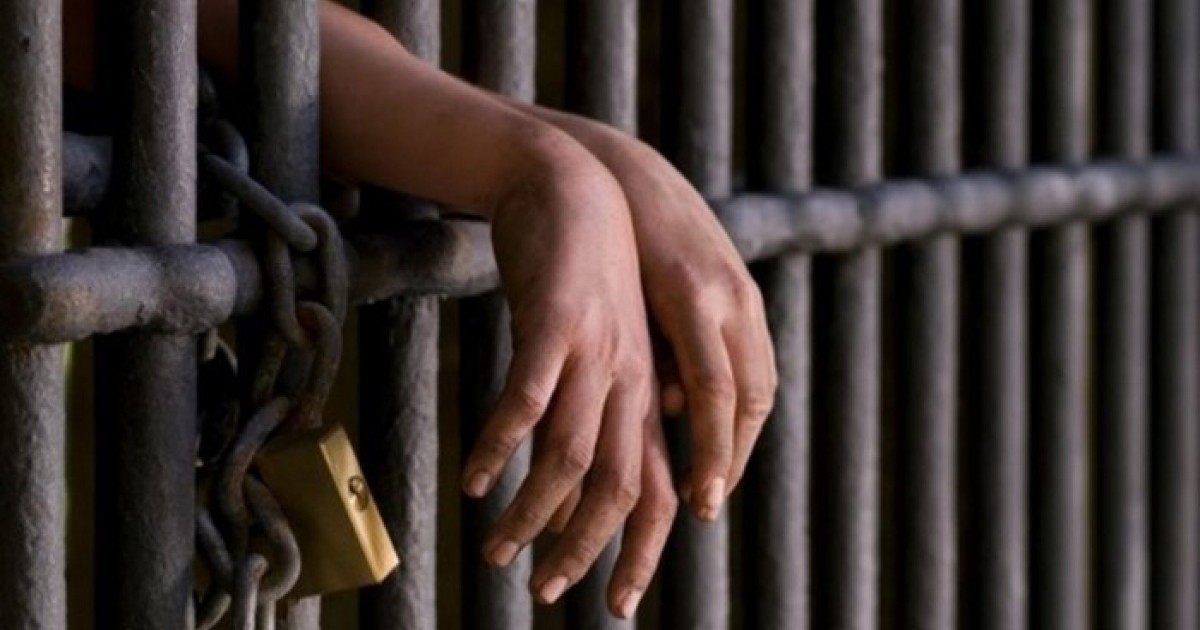
The human rights organization Cubalex reported this Monday that it had documented 18 incidents related to punishment or isolation cells in Cuban prisons during the first 26 days of October 2026, according to the monitoring report published by the entity.
With this figure, October becomes the third month of the year with the highest number of records in this category, following July—which has 26 events—and April, with 23. The report indicates that isolation is a recurring practice within the Cuban penitentiary system, rather than an exceptional phenomenon.
Throughout 2026, up to the cutoff this Monday, 95 people have been identified in at least one event related to punishment cells or isolation in the organization's records. Cubalex clarifies that these are data from its continuous monitoring and not an official census, and that the number of events alone does not allow us to determine the continuous duration of isolation nor automatically establish its legal qualification.
Among the cases with the highest number of accumulated records this year are Danisbel Labrada Morales and Fausto René Ramos Ramírez, each with nine events; Ediolvis Marín Mora, with seven; Virgilio Mantilla Arango and Pedro Carlos Camacho Ochoa, each with six; and Aliesky Calderín Acosta and Alexander Fábregas Milanés, each with five. All are political prisoners.
Cubalex indicates potential situations of prolonged isolation in the cases of Calderín Acosta, Labrada Morales, Ramos Ramírez, Mantilla Arango, and the opposition figure Félix Navarro Rodríguez, although it cautions that each case requires an individualized assessment that takes into account the actual conditions of detention, available human contact, and the health implications for each individual.
The organization emphasizes that the recurrence of incidents against the same individual "does allow for the identification of cases that require closer scrutiny, to verify possible patterns of punishment and to document the conditions faced by individuals deprived of their liberty."
The international reference framework for evaluating these practices is the UN Minimum Rules for the Treatment of Prisoners, known as the Nelson Mandela Rules. Rule 44 defines isolation as separation of 22 hours or more per day without significant human contact, and considers prolonged isolation to be that which exceeds 15 consecutive days. Rules 43 and 45 prohibit indefinite and prolonged isolation as a disciplinary sanction, stating that it can only be applied as a last resort, for the shortest time possible, and subject to independent review.
The balance for October aligns with a trend documented throughout the year. The semestral report from Cubalex, published in August, recorded 85 incidents of isolation in disciplinary cells during the first half of 2026, out of a total of 1,894 human rights violations —an increase of 48% compared to the second half of 2025—.
In September, Cuban prisons accounted for the majority of documented repression: nearly half of the 298 repressive events of the month affected incarcerated individuals, and the communication blackout between prisoners and their families reached its highest level of the year, with nearly a week during which relatives of inmates in dozens of facilities were unable to receive any news from them.
On October 24, Cubalex published for the first time an interactive list of political prisoners with 679 individuals documented, while Prisoners Defenders recorded 1,351 political prisoners in Cuba at the end of September.
Related videos:
Filed under: