The Cuban communist regime left the recent United Nations sessions with several defeats. One was recorded on the voting board regarding its non-binding resolution filled with lies and exaggerations against the U.S. embargo; the others were the result of the poor behavior of its own representatives.
On October 19, 27, and 28, the Castro delegation turned its international presence into a display of poor manners, intolerance, arrogance, and contradictions. They aimed to discredit their opponents but ended up providing arguments that reinforced the accusations against their criminal dictatorship. Many argue: If they behave this way at the UN headquarters, what must life be like for the Cubans on the Island.
The resolution was approved with 130 votes in favor, 17 against, and 25 abstentions. A year ago, it received 165 supports. Losing 35 favorable votes and seeing an increase in opposition represents a political setback, even if the official propaganda celebrates the approval. Support has fallen to its lowest level in three decades. It is also important to clarify that voting against the embargo does not necessarily mean endorsing the regime: it has been appropriating that distinction for years to create a legitimacy that Cuban ballots have never granted it, and support that it only receives from other undemocratic regimes.
But the diplomatic deterioration had another particularly revealing expression: the defeats their officials inflicted upon themselves by acting as they usually do in front of defenseless citizens in Cuba.
The first occurred on October 19, around the forum "Free Cuba: The Oppression Havana Hides," organized by the American mission. There we were, the Cubans María Werlau, Orlando Gutiérrez-Boronat, Emilio Morales, Luis Manuel Otero Alcántara, Juan Antonio Blanco, and the undersigned.
The screams of regime diplomats against us brought the practice of repudiation, so well known on the Island, to the headquarters of the United Nations. Accusations of terrorism and insults replaced the debate that a diplomatic representation should engage in with arguments.
It was a moral defeat for the regime. In front of an international audience, those officials revealed the nature of the power they represent. It is difficult to convince the world that allegations of intolerance are fabricated while trying to intimidate those who raise them. The delegation made visible exactly what it wanted to hide: its inability to accept that other Cubans speak freely.
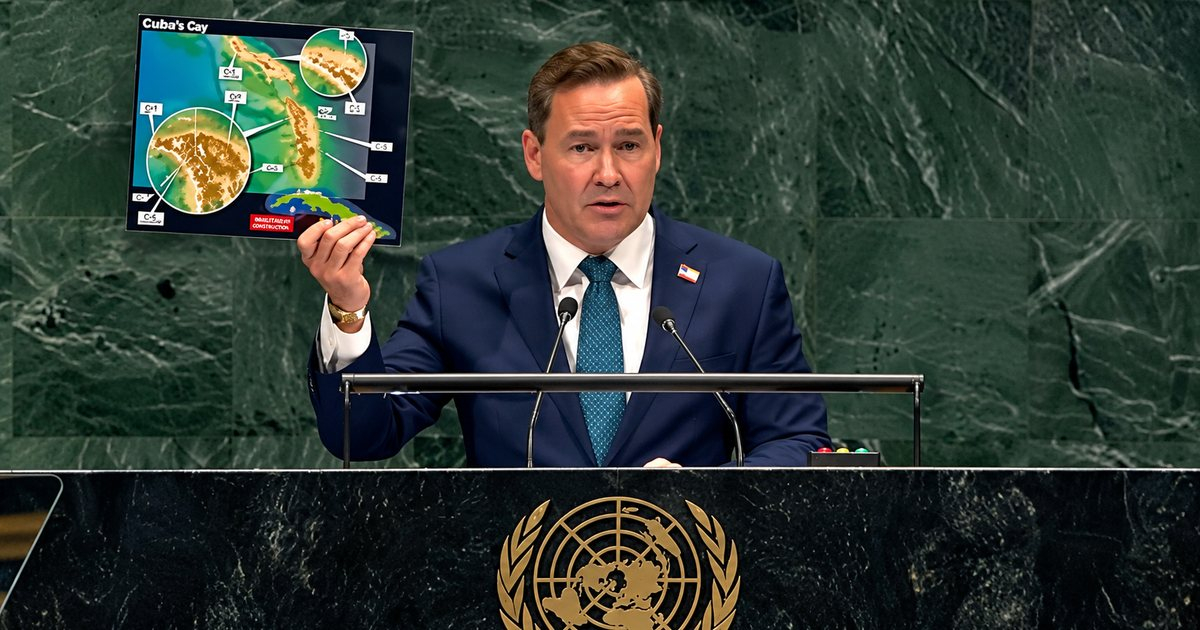
On the 27th, another setback occurred due to their own barbaric behavior. During Ambassador Mike Waltz's intervention, representatives of the Castro regime pounded the table and raised points of order. Bruno Rodríguez moved to the podium of the Assembly and yelled that the American was lying. The exchange turned into a verbal confrontation unworthy of the dignity demanded by that setting.
A procedural objection may be legitimate; using chaos to interrupt the speaker reveals a bullying mentality of the worst kind. Accustomed to having their repressive forces silence uncomfortable voices in Cuba, they seem to forget that the United Nations is not a dependency of the Communist Party. There, they must listen to complaints, endure criticism, and answer questions. Diplomatic status does not grant the authority to impose the uncivilized and authoritarian habits of the regime on the rest of the world.
The expulsion of the diplomat Richard Tur de la Concepción, announced by Washington after accusing him of attempting to assault a U.S. official and trying to take his phone, introduced a concrete consequence. Immunity and credentials no longer seemed like an unlimited protection against any unacceptable behavior.
On October 28, we observed a more restrained communist delegation, and I attribute this change to the warnings and the fear of new expulsions, as well as the loss of the ability to acquire expensive goods and send "packages" to Cuba. When consequences arise that affect the position of officials, the discipline of the thugs of the dictatorship improves.
The question is inevitable: how much does the defense of one’s convictions weigh, and how much does the preservation of one’s advantages? A life in New York offers living conditions and access to goods that are far superior to those available to the vast majority of Cubans. The reference to the trivial exposes this contradiction: those who justify a system of deprivation have material reasons to avoid returning. If the fear of losing those advantages explains their moderation, their supposed “revolutionary firmness” is reduced to personal convenience.
There is still another defeat worth mentioning. Bruno Rodríguez requested that Orlando Gutiérrez-Boronat be expelled from the room, but he did not achieve his goal. He turned the presence of an opponent fighting for the freedom of his homeland into a central issue of his speech, exposing the limits of his authority outside of Cuba.
It can be interpreted as improvisation and a loss of control: a prudent chancellor calculates the feasibility of a demand before making it public. He may also have sought propaganda aimed at portraying himself as a victim. In both cases, the outcome was unfavorable: Orlando remained steadfast in his seat, and the attempt to silence him failed.
The regime in Havana obtained approval for a resolution, but lost support and suffered successive moral, political, and diplomatic setbacks. Its representatives aimed to portray us as the problem, but ended up demonstrating that the real issue remains a tyranny that needs to intimidate in order to silence the truth of the tragedy it has imposed on the Cuban people. However, time is running out for them, and that is the big news:
Related videos:
Filed under:
Opinion article: Las declaraciones y opiniones expresadas en este artículo son de exclusiva responsabilidad de su autor y no representan necesariamente el punto de vista de CiberCuba.