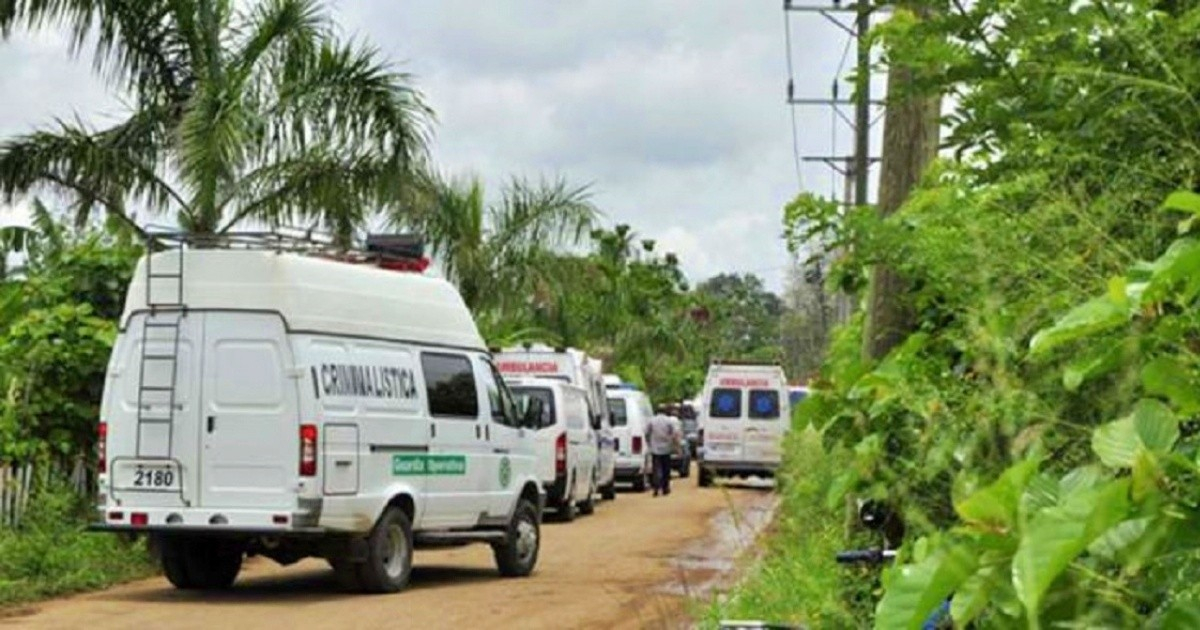
Yarielys Gigato Medina, 36 years old, died in a very violent manner, allegedly at the hands of her ex-partner on Friday morning at her home, located at kilometer two and a half of the Viñales highway, in the municipality of the same name in the province of Pinar del Río, according to the Gender Observatory of Alas Tensas (OGAT).
With this crime, the organization raises the number of verified femicides in Cuba to 61 in 2026, a figure that exceeds the totals from the last two years, according to its underreporting: 49 cases in 2025 and 56 in 2024.
The victim leaves behind three minor children. "Our condolences go out to the two girls and one boy who survive her and are now left without maternal care, as well as to other family members and close friends who mourn her loss," stated OGAT in a message on their social media.
The crime occurred just 10 days after the body of Marili Reina Fajardo, 45 years old, was found in Brisas del Mar, East Havana, showing signs of extreme violence and sexual assault, a case that the observatory recorded as the 60th femicide of the year.
The pattern of violence documented throughout 2026 is alarming: partners or ex-partners are the aggressors in 75.5% of the analyzed cases, 64.6% of the crimes are committed with a bladed weapon, and 62.5% occur in the victim's home or its vicinity.
The year began with an unprecedented escalation: between January and July, 44 femicides were documented, compared to 18 during the same period in 2025, representing an increase of approximately 112%. Cuba reached 50 femicides on September 4, surpassing the total from the previous year at that time.
The observatory has also recorded 38 attempted femicides and two murders of men in the context of feminicide violence this year, in addition to maintaining an investigation into 11 possible femicides and 18 attempted cases reported during 2026.
OGAT requested access to the investigation reports for the cases of Anais Tamayo Puente, Danaibis Tamayo Ramírez, and Odalis Brizuela Zayas, and is investigating the case of Bárbara Sánchez González as a possible feminicide suicide.
Cuba does not classify femicide as an autonomous crime in its current Penal Code, and the National Assembly rejected a proposal in 2022 to incorporate it as an independent criminal offense.
The State also does not publish systematic official statistics on these crimes, making the Alas Tensas registry the main public source of documentation.
Since the beginning of its monitoring in 2019 until June 2026, OGAT had documented at least 350 femicides in Cuba.
Related videos:
Filed under: