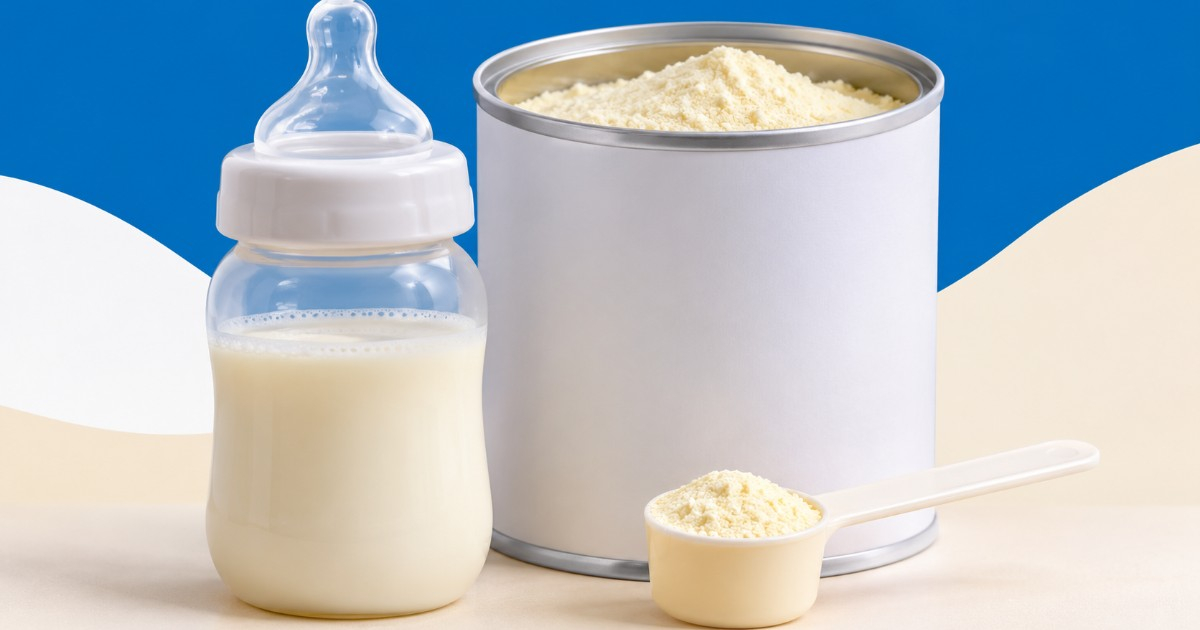
The United States Food and Drug Administration (FDA) announced on October 29, 2026, a proposal to update the nutritional requirements for infant formula sold in the country. The document, published on November 2 in the Federal Register, suggests modifying the limits for four nutrients while maintaining the limits for another four. This is the first step in a broader review of infant feeding standards.
For families, including Cubans living in the United States and those receiving assistance from the WIC program, the essential point is that this is a proposal, not a regulation that has already been approved. The FDA states that the infant formulas currently marketed in the United States remain safe and that the process will not have an immediate impact on WIC.
What nutrients in infant formula does the FDA want to change?
U.S. regulations establish requirements for 30 nutrients in infant formula. In this first phase, eight have been evaluated, and the agency proposes to adjust the ranges of four:
- Iodine: raise the minimum requirement from 5 to 15 micrograms and lower the maximum from 75 to 50 micrograms per 100 kilocalories.
- Manganese: reduce the minimum from 5 to 1 microgram per 100 kilocalories and introduce a maximum of 50 micrograms.
- Vitamin A: reduce the minimum and maximum permissible values, use a new unit of measurement on the labeling, and establish that only preformed vitamin A counts towards meeting the required limits.
- Vitamin D: increase the minimum from 1 to 2 micrograms and the maximum from 2.5 to 3 micrograms per 100 kilocalories, in addition to updating the units of measurement.
The FDA considers the current levels of the other four examined nutrients—chloride, potassium, selenium, and sodium—to be adequate. It also seeks scientific opinions on substances such as DHA, ARA, and L-carnitine, which some manufacturers are already adding to their products. At this stage, there is no proposal to add or remove nutrients from the list of 30 mandatory ones.
Is the infant formula being sold now safe? Should I switch brands?
The agency states explicitly that the infant formulas available in the U.S. market remain safe. According to their explanation, the review does not arise from any identified safety issue with those products, but rather from the intention to align standards with current knowledge about nutrition and child development.
Therefore, the announcement is not a health alert nor an order for the recall of brands or batches. It also does not imply that families should replace the formula they use on their own, change the preparation amounts, or add supplements. When a baby requires special nutrition or there are doubts about a specific product, it is appropriate to consult with their pediatrician.
What happens with WIC and families who receive infant formula?
The Special Supplemental Nutrition Program for Women, Infants, and Children (WIC) provides food and nutritional support to eligible individuals, including families with infants. Infant formula may be included as part of the benefits, depending on the needs of each participant and the program's regulations.
The FDA is clear: the proposal will not have immediate effects on WIC. It also announced that it will work with the United States Department of Agriculture (USDA), the agency responsible for the program, to consider its potential repercussions before approving any final regulation.
This means that the announcement, on its own, does not change the benefits or require an immediate change to the formula that a family obtains through WIC. To know which products and brands can be purchased with their benefits, participants should consult the guidelines of their state’s WIC agency. The USDA explains how the provision of infant formula in WIC works.
When would the new requirements come into effect?
The FDA announced the text on October 29 and officially published it as a proposal on November 2, 2026. A public comment period is now open, but there is still no definitive date for the implementation of new nutritional requirements.
The agency plans to study the 30 required nutrients through three phases and compile the changes that are ultimately approved into a single standard. The proposed plan envisions that this eventual regulation will go into effect 60 days after its final publication and suggests giving manufacturers an additional three years, starting from that effective date, to reformulate and adapt labeling. These timelines are part of the procedure and do not constitute obligations that commence immediately.
Interested parties can consult the file published in the Federal Register and the current instructions for submitting comments. It is important to distinguish between the publication of a proposed rule and the adoption of a final rule.
A nutritional review, not a new supply crisis
This is the first comprehensive review of infant formula nutrient requirements since 1998. Unlike the formula shortage reported in the United States in 2022, as reported by CiberCuba, the current process focuses on nutritional specifications and labeling. The FDA indicates that it will monitor the supply chain during a potential transition to avoid disruptions.
For now, the practical conclusion for families is simple: the formulas currently on the market are still considered safe by the FDA, the benefits of WIC do not change immediately due to this proposal, and any mandatory modifications for manufacturers will depend on a future regulatory decision.
Related videos:
Filed under: