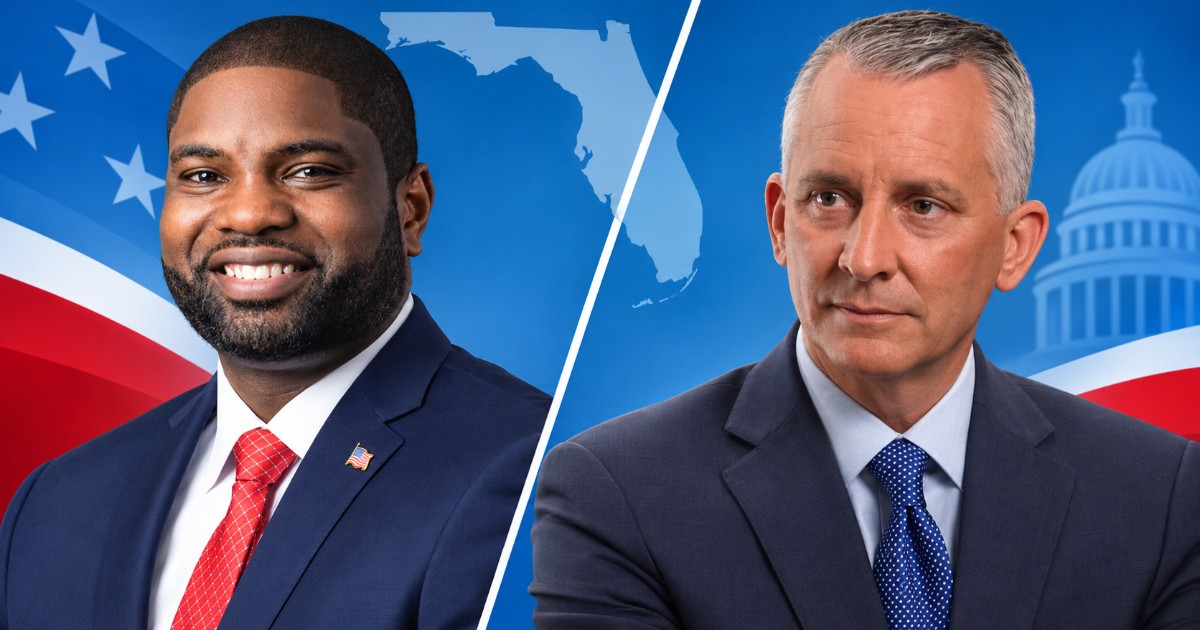
Voters in Florida are heading to the polls this Tuesday, November 3, to elect a successor to Republican Governor Ron DeSantis. The two main candidates are Congressman Byron Donalds, a Republican backed by President Donald Trump, and David Jolly, a former Republican congressman who is now running with the Democratic Party.
The election will determine whether the Republicans maintain control of the governorship, which they have held for decades, or if the Democrats regain the position. DeSantis is completing his second consecutive term and could not run for a third consecutive election.
Both candidates made their final appeals for votes during the day, according to Local 10. Donalds voted this Tuesday alongside his family in Collier County and encouraged residents of the state to participate in the election.
Home insurance and taxes: two different proposals
The cost of housing and homeowner insurance has been one of the central issues of the campaign. Donalds proposes reforms to the insurance market, expanding programs that help strengthen homes against hurricanes, and reducing certain surcharges from the state system. He also advocates for speeding up construction permits to lower the costs of new developments.
Jolly proposes creating a state fund to cover hurricane damage that would take on a larger share of the risks currently covered by private insurers. He argues that this measure would allow for a reduction in premiums, although his estimates and the funding of the system have been subject to debate. The proposals from both regarding insurance were examined during the campaign by CBS Miami.
They also disagree on Amendment 3, which voters are deciding on this Tuesday and which aims to expand the property tax exemption for primary residences. Donalds supports it; Jolly opposes it due to the potential impact on local government revenues and advocates for more targeted tax relief for first-time homebuyers and seniors.
Education and data centers
In education, Donalds aims to expand school choice options and ensure that educational funding follows the student, while Jolly proposes increasing investment in public schools, improving teacher salaries, and enforcing stricter requirements on private institutions that receive public funding.
Another difference lies in the large data centers linked to artificial intelligence. Jolly proposes a one-year moratorium on new installations while studying their effects on electricity consumption, water use, and communities. Donalds argues that location decisions should primarily fall to local authorities, with controls over consumption and costs. Both positions were detailed by News4JAX.
The vote in Miami and the Cuban-American community
The Republican candidate has a direct connection to South Florida: Donalds chosen state senator Bryan Ávila, born in Hialeah and the son of Cuban emigrants, as his running mate for the vice governorship. Jolly is running alongside former Democratic Congresswoman Gwen Graham, according to the official state candidate list.
Immigration policy has also been a part of the campaign. In an interview with CiberCuba, Jolly promised to urge the Trump administration to expedite residency applications for Cubans under the Cuban Adjustment Act. Donalds, for his part, has emphasized his support for the president and has defended a line of Republican continuity in Florida.
In addition to Donalds and Jolly, the ballot includes other candidates, including libertarian Scott Eckhard Jewett and several individuals without party affiliation, according to the Florida Division of Elections.
What do the polls say and when will the results be released?
The latest polls showed a varying degree of Republican advantage. The Stetson University poll, conducted from October 26 to 30, estimated 51% for Donalds and 45% for Jolly among likely voters. An analysis released on November 2 by RedBox Research narrowed the gap to 47.1% versus 46.1%, within its margin of error. That last study was funded by the super PAC A Fight Worth Having and the review used the same interview sample from October 30 and 31, not a new round.
Electoral centers close at 7:00 p.m. local time in each county. Due to Florida's two time zones, the state portal Florida Election Watch will begin publishing preliminary results from across the state starting at 8:00 p.m. Miami time. The vote counting figures and major contests can be followed in the .
Related videos:
Filed under: