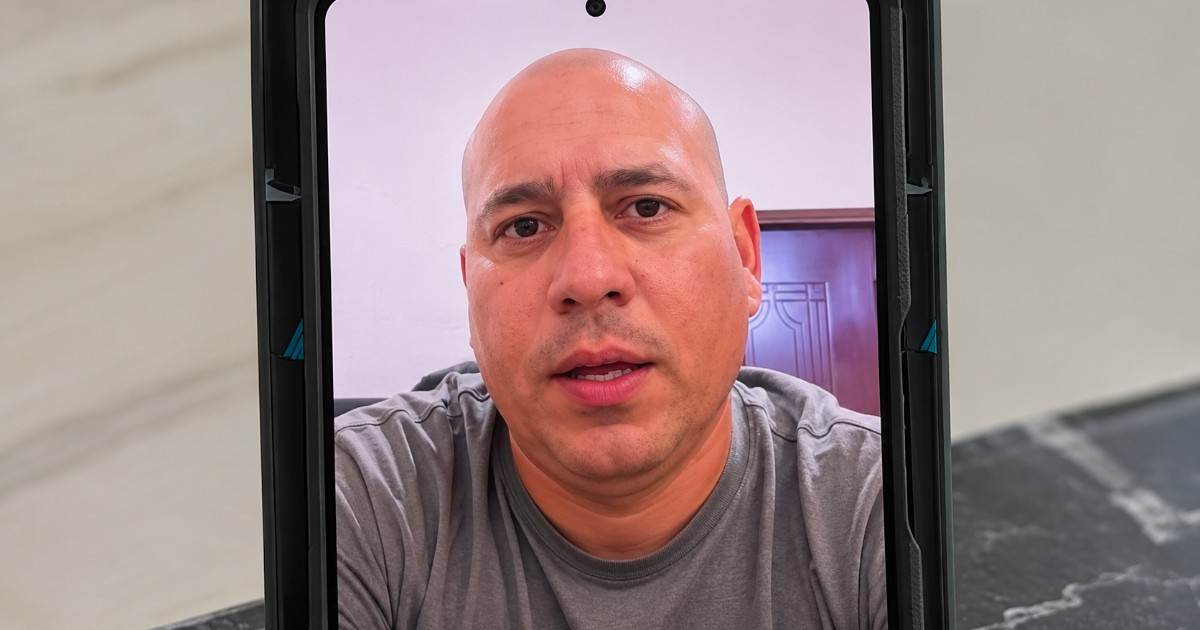
Eric González Peña, a 44-year-old Cuban residing in Texas, reported in a video from Bangui the precarious conditions in which he lives after being deported to the Central African Republic on October 21, despite having an approved family petition and being married to a U.S. citizen.
González was transferred on a flight that departed from Alexandria, Louisiana, along with approximately 90 migrants, of whom 69 were Cuban —64 men and five women—. According to his own testimony, the deportees did not know their destination until they were in the air, and the journey lasted between 50 and 60 hours.
From the detention centers, González and other migrants were taken out handcuffed and shackled; some were additionally restrained with straitjackets and gags.
El caso de Eric González refleja las complejidades del sistema migratorio estadounidense. Sigue todos los detalles sobre deportaciones, visas y derechos de los inmigrantes en nuestra sección de
In an interview with Telemundo 51, González described sharing accommodation with about 32 people, mostly Hispanic migrants, without official documents, without legal status, without work authorization, and facing a shortage of medications.
His wife, Isabel Estua, a U.S. citizen born in that country, stated that she did not know where her husband was for almost "60 hours" after the deportation. The couple has a three-year-old son.
Estua also reported that her husband's name did not appear in the public locator of the Immigration and Customs Enforcement (ICE) even during the detention period.
González arrived in the United States under the “Remain in Mexico” program (Migrant Protection Protocols). He was supposed to wait for his appointment in Mexico but crossed the U.S. border and subsequently failed to appear at his immigration court hearing, resulting in a deportation order against him.
That order remained in effect despite his wife submitting and obtaining approval for a family petition I-130, but that was not enough to stop the deportation.
The immigration attorney Rosaly Chaviano, who does not legally represent González, explained that a petition of this nature does not, by itself, prevent deportation when there is a removal order. However, it can serve as part of a subsequent legal strategy.
The wife claims that a judge had set November 1 as the protection date against deportation, but González was expelled on October 21. He also had a pending habeas corpus appeal before the courts. His family asserts that he has no criminal record.
ICE arrested him in March 2026 at his workplace, an oil company in Texas, and transferred him to detention centers in El Paso and Louisiana before the flight to Bangui.
The case falls within a broader policy of the Trump administration to deport migrants to third countries in Africa.
Others Cuban deportees previously sent to Bangui had reported symptoms of malaria and inadequate medical attention. At least one fellow citizen managed to leave for Bolivia with the help of UN agencies, although that option is not guaranteed for everyone.
Related videos:
Filed under: