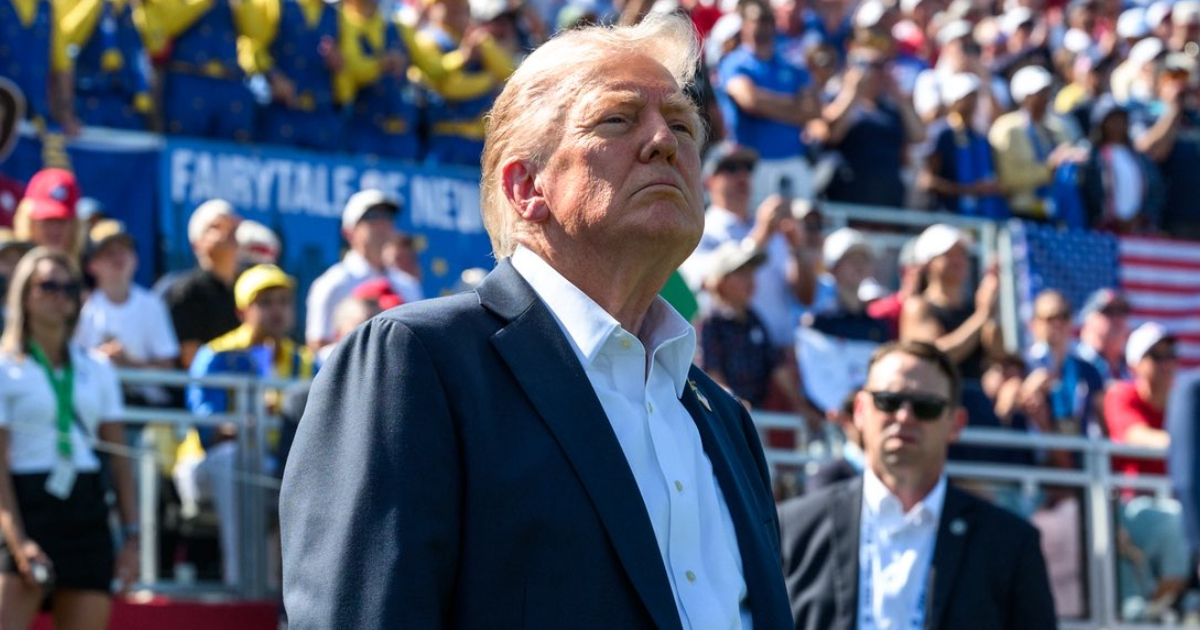
President Donald Trump signed a presidential proclamation this Tuesday designating the week of November 1 to 7 as Anticommunism Week in the United States, in a gesture that coincided with the country's midterm election day.
The official White House account on X summarized the spirit of the document with a straightforward message: "President Trump will always be committed to the fight against state tyranny. The United States will never be a communist country."
In the proclamation, Trump states that "for more than a century, human freedom has been threatened by communist and socialist ideologies that eliminate individual opportunity, subjugate people to the State, and extinguish the God-given rights upon which free nations are built."
The text warns that the "American experiment" faces renewed threats from the presence of "socialist, communist, and radical left ideologies" within the country itself, and calls on citizens to remain vigilant so that "the lessons of history are neither forgotten nor repeated."
Trump was emphatic in stating that under his leadership, the United States "will never fall victim to these wicked ideologies" and called on all Americans to "stand firm in their defense against any threat to the American way of life and to protect the burning flame of freedom from the darkness of communism."
This is the second consecutive edition of the proclamation: the first Anticommunist Week was signed in November 2025, when Trump stated that communist regimes had caused over 100 million deaths worldwide.
This year's event is part of a broader rhetorical and ideological offensive by the Trump administration against communism throughout 2026.
In July, the State Department published a report of nearly 100 pages titled "Cuba: The Capital of 21st-Century Communism," which portrays the Cuban regime as a political and regional security threat, alongside the proclamation of Captive Nations Week.
In September, before the UN General Assembly, Trump declared that Cuba was experiencing "the greatest pressure" in its history and promised, "Communism will never reach the United States, but freedom will come to Cuba."
The Cuban delegation led by Chancellor Bruno Rodríguez Parrilla left the UN chamber during that speech in protest, while the leader Miguel Díaz-Canel responded the following day with a phrase that encapsulates the regime's stance: "The freedom of Cuba came on January 1, 1959."
Several media outlets noted that the choice of the day of the legislative elections to sign the proclamation was not coincidental, as the language used—warning of “socialist, communist, and radical leftist threats” within the country—aligns with the rhetoric that Trump has employed to mobilize Latino voters, particularly in Florida.
The proclamation has commemorative and ideological significance and does not, on its own, impose new sanctions or specific measures against Cuba, Nicaragua, or other regimes.
Related videos:
Filed under: