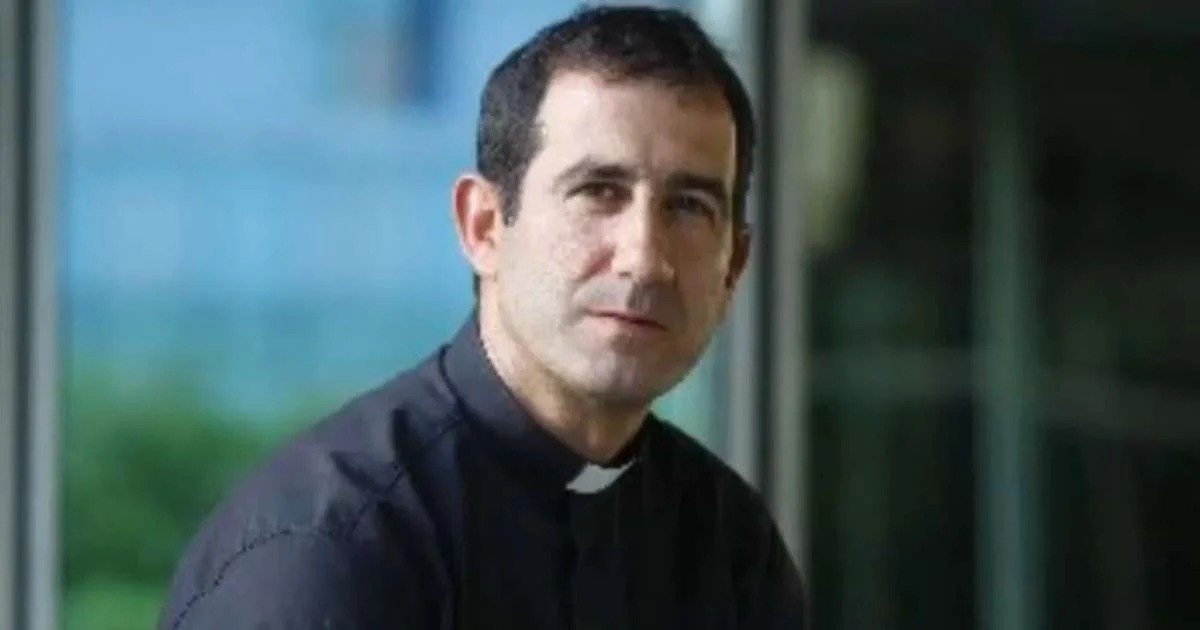
The Cuban priest Alberto Reyes Pías published a new reflection this Friday on Facebook, warning about one of the most serious effects of the crisis facing Cuba: the risk that prolonged suffering could lead citizens to retreat into themselves and abandon solidarity with those around them.
In the piece titled "I Have Been Thinking About Something We Cannot Allow," the parish priest of Esmeralda, Camagüey, points out that extreme scarcity instills uncertainty in the soul and drives people toward "terrible scenarios."
"Cuba is suffering, has been suffering for a long time, and suffering has a dangerous reaction: it can cause us to focus only on our own shortcomings," he writes at the beginning of his text.
The priest identifies in that reaction a specific temptation: the temptation to withdraw, to protect what little remains, and to conclude that it is no longer possible to do anything for others.
In the face of that temptation, it suggests a response that does not require significant resources or structural solutions, but rather everyday gestures that are accessible to anyone.
"In difficult times, every gesture counts: sharing what little we have, caring for the sick, accompanying the elderly, easing the loneliness of those who are alone, giving time, listening to those who are overwhelmed, lending a hand to the neighbor, or simply asking: 'How are you?', 'What do you need?'," he lists.
For Reyes, solidarity is not a luxury of prosperous times, but rather the very tool that can sustain a society when everything else fails: "Solidarity can keep a society alive when everything else seems to crumble."
The parish priest also questions the exclusive role of institutions as a social support system and asserts that the connections between individuals are the true backbone of any community.
"A society is not sustained solely by its institutions; it is also upheld by the connections among its people, as it is precisely these connections that allow us to uncover one of the greatest strengths of a society: the ability to bear the weight of life together," he argues.
And it expands the concept of solidarity beyond the material to include dimensions that carry political weight in Cuba: it states that this attitude is also valid "in the face of the personal and community need for freedom, justice, and security."
"When we share what we have, when we become aware of the needs of others and extend a helping hand, we discover something that no one can take away from us: the ability to care for one another," concludes Reyes.
Cuba is experiencing a humanitarian emergency recognized by the UN in May, which includes a critical shortage of food, medicine, fuel, and electricity, leading the international organization to provide food assistance to around 900,000 people on the Island.
This Friday's publication is the most recent installment of a weekly column that the priest has maintained since 2020, which has now amassed over 180 entries.
Throughout 2026, Reyes has described Cuba as "a country in ruins" that needs profound change, has urged military and police to reconsider their role in relation to the people, and has reflected on the cost of telling the truth in Cuba.
That visibility has come at the cost of direct pressure from State Security: he was summoned and interrogated several times and received warning notices under the threat of prosecution for alleged "promotion of hate."
Related videos:
Filed under: