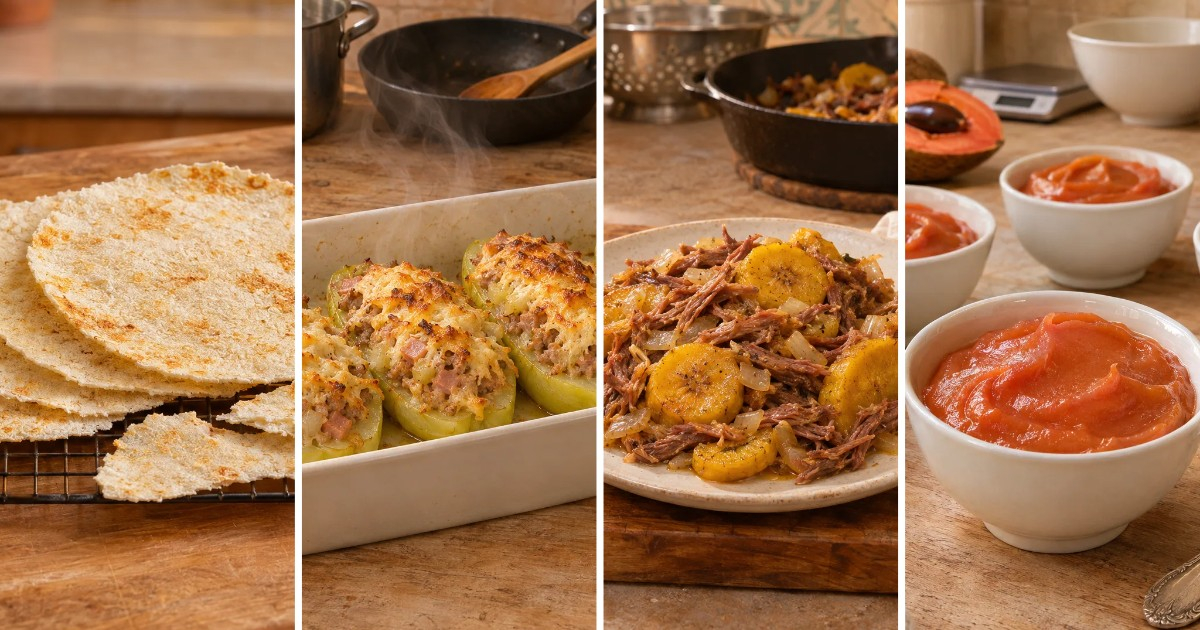
A crispy casabe alongside a stew, a dish of gratin chayotes, or a sweet mamey served with a spoon: there are many ways to reimagine Cuban cuisine. This selection brings together ten recipes to diversify lunch, prepare something sweet, or discover another way to bring fruit to the table.
Six of these proposals adapt recipes gathered in Delicias de la mesa, by María Antonieta Reyes Gavilán y Moenck, published in Havana in 1925. The selection also includes other documented recipes, a homemade version of cassava bread, and a contemporary cachucha sauce. All include explanations for preparing them at home, with simple options as well as others that require more time and dedication.
1. Yuca casabe: fine, crispy, and ready to accompany
Casabe invites you to dip a piece in the broth or to break it alongside a stew with sauce. This homemade version starts with catebía or commercially processed yuca dough that is specifically suitable for making casabe. The cakes are cooked on both sides on the grill and then finished drying in the oven.
The explains how to keep an even thickness and ensure that the center is dry and crispy before storing it.
2. Mamey-colored sweet dessert to eat with a spoon
The ripe pulp of the mamey colorado and sugar are enough to prepare a dense, smooth sweet treat full of fruity flavor. Its precursor appears in the recipe book from 1925; the current adaptation standardizes the weights and moderates the sugar ratio.
In this , the perfect consistency is identified by the groove left by the spatula. It finishes setting as it cools and can be served warm or after being refrigerated.
3. Sesame joy with the flavor of syrup
The aroma of toasted sesame seeds heralds this sweet before it's even ready. The seeds are mixed with cane syrup, and the mixture is spread onto a tray to form small tablets. The current version adds a measured amount of sugar to ensure a firm finish.
The also originates from a documented recipe from 1925. Here you will find how to recognize the consistency of the syrup and when to mark the portions before they cool down.
4. Stuffed chayotes, juicy and baked until golden
The halves of chayote serve as a vessel for a filling of pork, cooked ham, its own pulp, and sofrito. Grated cheese adds the golden finish from the oven. It’s a way to turn this mild-flavored vegetable into the centerpiece of the dish.
These simplify the preparation of the traditional recipe. The recipe provides a crucial detail: drain the pulp well and reduce the sauté to maintain the juiciness without leaving excess water.
5. Shredded tasajo with green plantain
Threads of meat, tender pieces of plantain, onion, garlic, and bitter orange come together in a skillet. The semi-ripe plantain adds its flavor and holds its shape when mixed; it is cooked separately to better control its texture.
The preserves a combination established in 1925. It is advisable to plan ahead: the desalting takes place in the refrigerator and usually begins the day before. Then, the patient cooking allows the meat to be shredded and completes the dish with a hint of sour orange.
6. Peanut and pineapple treat, a sweet with texture
Grated pineapple and roasted peanuts create a thick sweet treat, bound together with cooked egg yolks and finished with chopped peanuts. It is served cold, in small portions, accompanied by tender fruit and a crunchy sprinkle of peanuts on top.
The is adapted from a recipe in Maní: recetas variadas, by Zoila Fundora Mayor and other researchers from INIFAT. Set aside time for cooling: allowing it to rest in the refrigerator helps it to set before serving.
7. Freshly made, well-chilled cashew juice
The fleshy part of the ripe cashew is blended with cold water and sugar, then strained and served immediately. The recipe exclusively uses that juicy part: the outer nut and its shell are excluded from the preparation.
This adapts the recipe found in Drinking in the Cuban Tropics, by Madelaine Vázquez Gálvez and Alejandro Montesinos Larrosa, published in 2011. The straining removes the coarse fibers and leaves a beverage to share in four glasses.
8. Okra salad with a simple dressing
Okra also has a place in a warm salad. Small, tender pods are selected, cooked whole, and dressed with oil, vinegar, salt, and pepper. Good draining helps prevent the water from diluting the vinaigrette.
The revives another recipe from the 1925 cookbook. It can accompany fish, chicken, or rice, and it can also be served cold. It preserves the characteristic texture of the ingredient: it's advisable to handle the pods gently to keep them intact.
9. Oyster soup with lemon and saffron
A gentle fish broth, fully cooked oysters, saffron, and lemon create a delicate soup. The egg yolks add a light creaminess, and the toasted bread is served on the side to accompany it.
The adapts the recipe from 1925 and organizes the preparation in two phases: first, the seafood is cooked, and then the yolks are added. The instructions detail the temperature control to cook the mixture and maintain the broth's smoothness.
10. Roasted ají cachucha sauce for root vegetables, fish, and pork
The selection is complemented by a contemporary proposal with Cuban flavor. The sweet cachuchas are roasted with onion and garlic, while the sour orange balances the dish. The result is a thick and aromatic sauce that can be served warm or cold.
This complements root vegetables, fish, or pork dishes. The recipe explains how to adjust the acidity and texture, and provides an alternative using sweet orange and lemon when sour orange is not available.
Choose the recipe you feel like preparing and keep exploring : there are more ideas to diversify your table and share flavors at home.
Related videos:
Filed under: