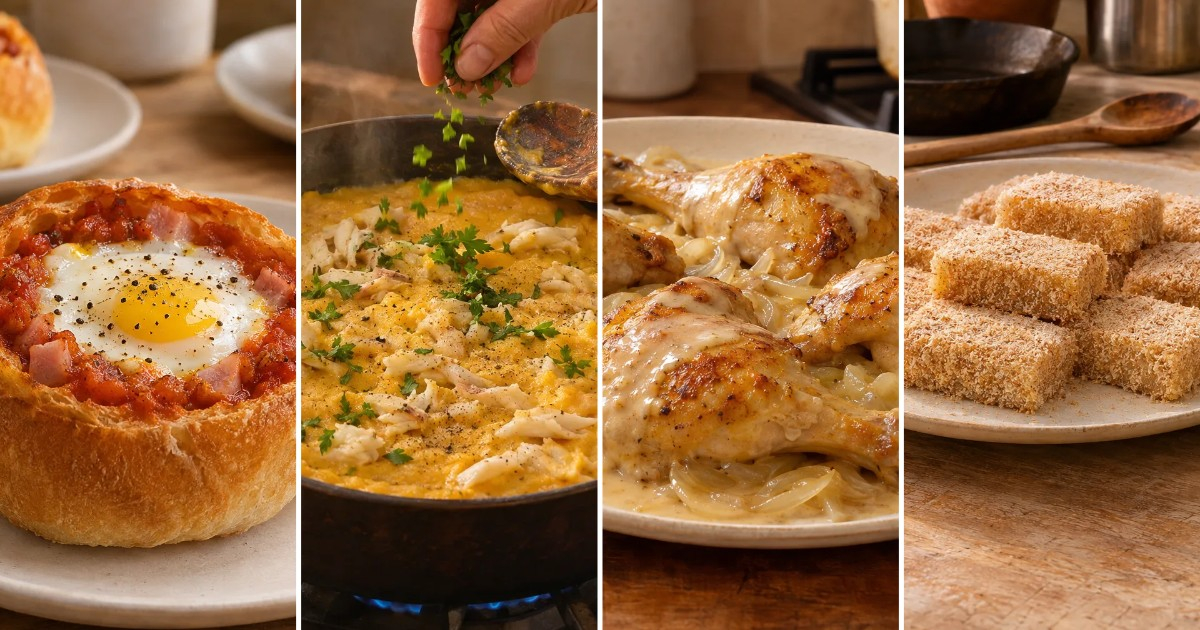
A sweet cassava dessert with syrup and cloves, baked eggs inside a roll, or a tortilla with avocado: old Cuban cookbooks hold recipes that invite you to light the stove and discover new ways to use familiar ingredients.
Six of these proposals have been incorporated into in current versions, with quantities, times, and instructions for preparing them at home. The selection includes breakfasts, lunch dishes, savory pastries, and a spiced dessert, inspired by books published in Havana during the first half of the 20th century.
1. Eggs in acemitas: the breakfast is baked inside the bread
The are prepared inside hollow round rolls. In the published version, each one contains cooked ham, thick tomato sauce, and an egg that is cooked directly in the oven.
The bread serves as both a vessel and an accompaniment. It is baked open to ensure that the egg is set, while the toppings are toasted at the end. This is a suggestion for a leisurely breakfast or a simple meal, with a total preparation time of about 40 minutes.
2. Flour with crabs: corn and crab in the same pot
The combines corn flour, a sauté of tomato, onion, bell pepper, and garlic, along with cooked and cleaned crab meat. Parsley finishes the dish just before serving it at the table.
The adaptation suggests a creamy texture and adds the seafood at the end to preserve its tenderness. This finish is a modern adjustment: the recipe in the book ends up drier. The guide explains which flour to use and how to add the broth depending on how much the corn absorbs.
3. Chicken 1806: onion, cream, and a hint of sherry
The is baked over a layer of onion and finished with a smooth cream sauce. The juices from the chicken are used to enhance the overall flavor, and it can be served with white rice.
The current version uses less butter than the historical formula and specifies the temperature and cooking point. Its name has a peculiar detail: "1806" identifies the dish, but the consulted source does not prove that it was created in that year.
4. Corn flour cakes: savory little cakes to be served warm
The begin with a base of cooked corn that is allowed to cool before adding egg, cornstarch, and milk. Then, small patties are formed and browned on both sides in a lightly greased skillet.
The result can be served as a side dish or savory snack. It’s important to account for the cooling time and the different batches in the pan. The recipe includes both stages and provides guidance on the consistency the dough should have.
5. Avocado tortilla: a simple and quick combination
The combines eggs, milk, butter, and cubes of ripe yet firm avocado. These are added when the eggs are almost set, so they maintain their shape and are gently heated.
The published version folds in the pan and is divided into two servings. With about 15 minutes of total preparation time, it is the quickest offering in this selection and a great way to make use of that avocado that is already perfectly ripe.
6. Casabe alfajor: small bites with syrup and spices
The transforms toasted casabe into a compact sweet treat made from a single piece. It is bound with syrup, cloves, a pinch of pepper, and salt, cooled down, and then cut into bite-sized pieces that are coated with ground casabe.
The recipe starts with pre-made casabe that is ready to eat. Cooling allows the mixture to set before slicing it. For those who enjoy spiced sweets, it can be a unique option to pair with coffee.
Three books to continue discovering Cuban cuisine
The alfajor, the flour with crabs, and the keques are inspired by Delicias de la Mesa, by María Antonieta Reyes Gavilán and Moenck, published in 1925. The eggs in acemitas and the avocado tortilla appear in Cuban Cookery, by Blanche Z. de Baralt, published in 1931.
The Chicken 1806 was contributed by Miss Lucilla Morales to the Cookery Book, published in Havana in 1941 by The British Ladies’ Committee in Aid of War Relief. The dates correspond to the reference editions; the quantities, times, and adjustments explained in the notes pertain to the current versions of Cocina Cubana.
Each link leads to the ingredients and the step-by-step preparation. You can start with the dish that most catches your attention and continue exploring the to find other ideas to bring to your table.
Related videos:
Filed under: