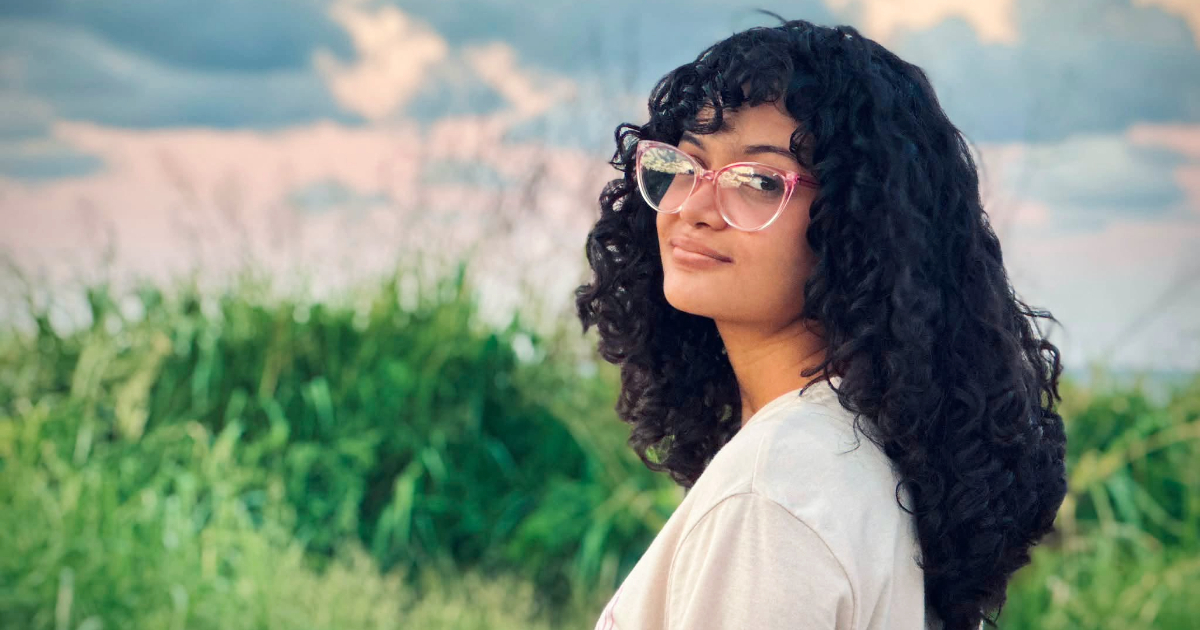
The Cuban activist Anna Bensi reported this Sunday that State Security agents besieged her building in Alamar, Havana, throughout the entire day on Saturday, as part of a broader repressive operation that impacted journalists, activists, and independent content creators across the capital.
"As you know, from very early on, my mom and I were surrounded. There was surveillance at all entrances and exits of my building until nightfall," Bensi wrote on her social media, where she described in detail, with a mix of indignation and humor, the day she experienced alongside her mother, Caridad Silvente.
The activist reported that undercover agents of various profiles paraded in front of her building for hours, pretending to be nurses, street vendors selling small cakes, donuts, and bleach, and even a baker. “Just to tell you, a baker passed by and wasn’t carrying a single loaf of bread,” she wrote, noting that the situation made her laugh despite the seriousness of the harassment.
The objective of the operation, as reported, was to prevent him from attending a cultural event at the United States Embassy in Havana. "I couldn't enjoy the parade at the American Embassy Cultural House, but I had the opportunity to see people parade all day who are willing to play along with State Security," he remarked sarcastically.
The communication restrictions further exacerbated their situation: "It was tough for me not to be able to support some of those who were summoned physically. And I could hardly do it virtually, as communications, as you know, are terrible. One feels helpless in these situations."
The site of Bensi and his mother was part of a repressive wave that broke out in early November and affected figures such as Yoani Sánchez —detained for nearly nine hours and then besieged—, Camila Acosta —handcuffed and held for over eight hours—, and activist Anthony Martínez Román, released after more than 20 hours of detention.
In Santiago de Cuba, special forces , a promoter of a humanitarian project that assisted over 400 people.
This pattern of denying access to activists at events held at the U.S. Embassy had occurred at least twice before in 2026: during the July 4th celebration and at the "American Nights" event in September.
The case of Bensi has a long history of repression. On October 1, the People's Municipal Court of Havana del Este sentenced her and her mother to two years of restricted freedom for recording and disseminating the visit of a MININT agent who delivered a summons at their home.
The sentence was condemned by the U.S. Embassy — which published "Thinking differently is not a crime" — and labeled as "cowardice" by Deputy Secretary of State Juan Pablo Segura.
The Cuban Observatory of Human Rights documented at least 387 repressive actions in October 2026, with a total of 3,438 for the year so far, including 145 surveillance operations and home lockdowns, figures that foretold the escalation in November.
Despite everything, Bensi concluded his message with a call to resistance and unity: "The more they try to harm us, the more we will unite and support each other. And the result of their actions will be the very exposure of their wickedness."
Related videos:
Filed under: