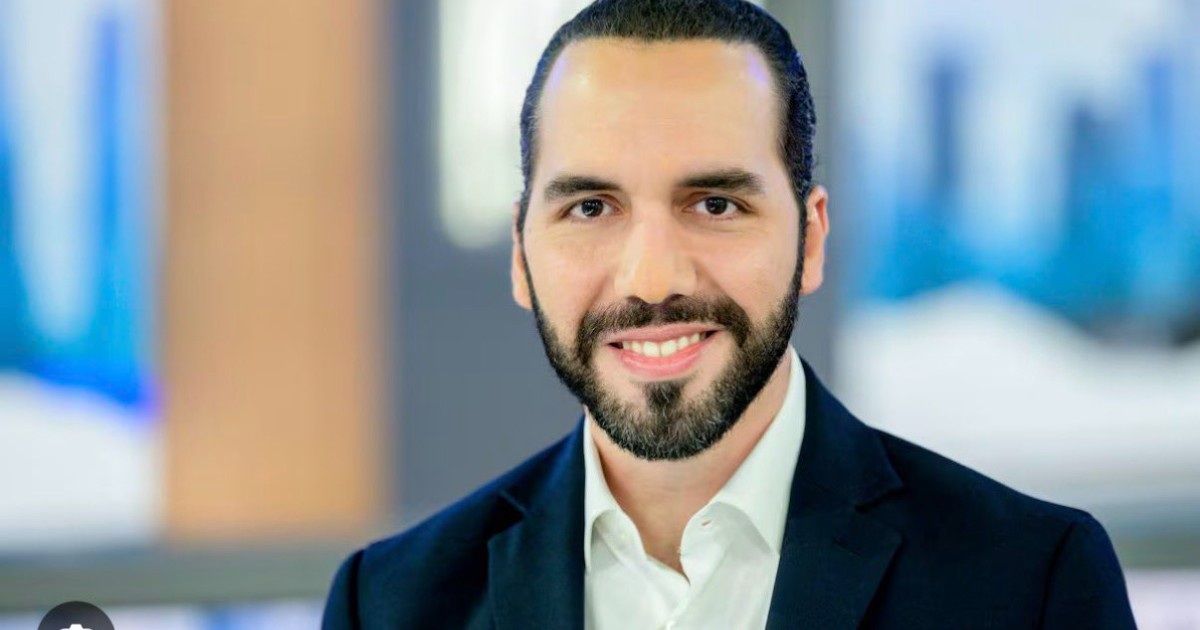
The president of El Salvador, Nayib Bukele, extended his offensive against gangs to Haiti with the promise to
Romain Le Cour Grandmaison, director of the Haiti Observatory for the organization Global Initiative Against Transnational Organized Crime, warned of this in an interview with BBC Mundo.
The specialist analyzed the dangers of the deployment of more than 2,000 Salvadoran soldiers, ordered after the disappearance of four aviation technicians from that country.
Le Cour considers it misguided to equate the military offensive in Haiti with the security model implemented by Bukele in El Salvador, because although both operations aim to confront criminal organizations, their characteristics and challenges are different.
In his country, the leader promoted a policy of mass incarcerations and built a prison system aimed at keeping thousands of alleged gang members in custody.
In Haiti, on the other hand, their soldiers are involved in a military operation outside of Salvadoran borders, in a territory they are unfamiliar with and where the State has lost control over vast areas.
The expert noted that this is an extraordinary experience for El Salvador and quite unusual in Latin America, where it is rare for a country to send forces for combat operations to another territory in the hemisphere outside of a United Nations peacekeeping mission.
The greatest danger, according to his analysis, is that Bukele becomes involved in a war that is difficult to win and even harder to abandon.
Le Cour warned that the deployment could become "tremendously bloody and very costly" for the Salvadoran troops, without producing the expected results.
He recalled that numerous armies have become trapped in operations against armed groups that, although inferior in number and equipment, are well acquainted with the territory where they fight.
Haitian gangs represent exactly that type of adversary. As explained, some operate as true militias, equipped with semi-automatic weapons, controlling highways and entire neighborhoods, and have established barricades, trenches, and escape routes that complicate military operations.
According to the estimates cited by Le Cour, Haitian criminal groups number between 15,000 and 20,000 members, a figure that varies depending on the organizations and their alliances.
The most powerful groups control extensive areas of Port-au-Prince and its surroundings, where they maintain networks of extortion and connections with political and economic sectors.
For Salvadoran military personnel, one of the main issues is the lack of knowledge about the communities and the organizations operating within them.
Their troops do not speak Haitian Creole and lack their own intelligence networks, a significant disadvantage when they must fight in densely populated neighborhoods.
The mission also faces questions regarding its organization. In Haiti, the National Police, the Haitian Armed Forces, international contingents, and private military contractors operate, but Le Cour believes that coordination among these structures remains limited.
The expert emphasized that neither the rules of engagement of most Salvadoran military personnel nor the extent of their mandate are publicly known.
The United Nations has pointed out that a large part of the contingent sent by Bukele is not formally integrated into the Gang Suppression Force supported by the international organization.
The massive deployment of reinforcements began after four Salvadoran aviation technicians disappeared on October 18 during an ambush in Croix-des-Bouquets, northeast of Port-au-Prince.
Before that attack, El Salvador already had about 125 personnel in Haiti, mainly dedicated to air operations and medical evacuations.
After the disappearance of the technicians, Bukele ordered to expand the military deployment to exceed 2,000 personnel and issued a warning to those responsible for the ambush.
According to a report by Associated Press this Monday, the Salvadoran contingent in Haiti has now reached at least 2,500 troops. Additionally, the Haitian and Salvadoran forces destroyed a house linked to the leader of the 400 Mawozo gang, Wilson Joseph, although he was not captured.
The president assured that his soldiers would take action to confront the gangs and locate the missing persons.
Until the date of the interview, the four Salvadorans remained officially missing. Le Cour explained that, despite the intensity of the operations, the authorities had not yet provided conclusive results regarding their whereabouts.
The risk is not limited to the military. The specialist pointed out that the escalation of confrontations had already displaced at least 2,000 people, according to figures from the International Organization for Migration, and that Doctors Without Borders had treated individuals injured by gunfire and explosions, in addition to suspending some mobile activities for security reasons.
Le Cour acknowledged that the Salvadoran troops could reclaim territories and temporarily reduce the capabilities of certain gangs. However, he maintained that these operations will not resolve the crisis on their own if the Haitian authorities do not succeed in restoring justice, public services, and permanent control over the reclaimed areas.
The intervention could also have political consequences for Bukele. The analyst noted that the president could gain international recognition if he achieves significant results, but warned that a prolonged operation, with military casualties and high expenses, could create pressures within El Salvador.
Le Cour pointed out that, according to Bukele, El Salvador covers 90% of the operational costs, and questioned how long this effort can be sustained if the intervention lasts for months.
The intervention also received backing from Donald Trump. According to a report from Axios published at the end of October, the American president told Bukele during a phone call, "Do what you have to do."
The exchange did not involve an announcement of direct military involvement by the United States, although Washington has provided logistical support for the transfer of troops.
The specialist believes that the relationship with Washington could allow Bukele to emerge as a more significant player in regional security, although the outcome will depend on the evolution of the fighting and the ability of Haitian authorities to sustain any progress.
The threats from the Salvadoran president have also provoked reactions among the leaders of criminal organizations. The head of the 400 Mawozo gang, Wilson Joseph, also known as Lanmò San Jou, requested mediation from the United Nations and warned of a possible escalation of violence.
Her request arrived following the clashes reported in the areas where the four Salvadorans are being sought.
Le Cour had already warned at the end of October about the possibility that the offensive could reunite Haitian gangs, some of which had begun to distance themselves from the criminal coalition Viv Ansanm before the arrival of Salvadoran reinforcements.
Related videos:
Filed under: