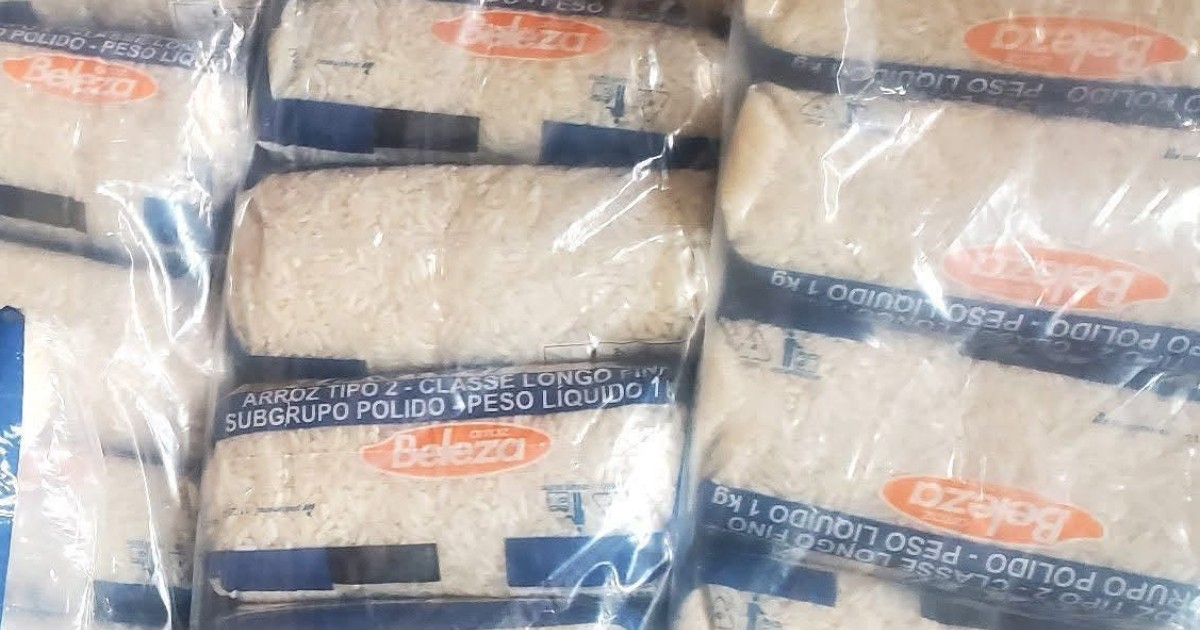
A Cuban woman sparked a wave of outrage in a Facebook group from Holguín after stating that she paid 1,000 Cuban pesos for a bag of rice. "How long is this dictatorship going to keep killing us slowly?" she questioned.
Cubans from various provinces confirmed prices that are equal to or higher for the same product, a staple that has become a luxury. From Puerto Padre, Las Tunas, a commentator responded: "For me, 1,200. And we're going for more." In Isla de la Juventud and Matanzas, the reported price was also 1,200 pesos; in Ciego de Ávila, it was 1,100; and in Las Tunas it reached 1,300 pesos at some points of sale, according to testimonies.
"What doesn't rise is the salary of those of us who truly work; this is the law of the funnel, wide at the top and very narrow at the bottom," lamented a user. "We are doomed to perish en masse; there isn't a human being who can endure this. One cannot live without food or medicine." "How much longer are we going to tolerate this situation? How many people today have nothing to eat, and no one cares?" commented other Cubans.
Behind the high prices lies a specific economic policy decision. Decree 156/2026, signed by Prime Minister Manuel Marrero Cruz on June 29, 2026, and published in the Official Gazette on July 16, removed the maximum price limit of 155 pesos per pound that had been in place since March 2025, and transferred to the Ministry of Finance and Prices the authority to set new limits by ministerial resolution.
The result is that rice is selling this month between 390 and 500 pesos per pound in most provinces, with peaks of up to 1,300 pesos per kilogram in some areas, according to reports from Cubans in various provinces.
The contrast with income is striking. The minimum wage in Cuba is 3,210 pesos per month since July 2026, meaning that a kilogram of rice can consume between 31% and 40% of a worker's monthly salary. The Ministry of Labor itself acknowledged that this amount is not enough to cover the basic basket.
Due to the inability to buy rice, some Cubans have started to replace it with cassava, whose price is around 70 pesos per pound, a fraction of the cost of the cereal.
Meanwhile, the Vietnamese company AgriVMA delivered this week a fourth batch of 1,500 tons of rice grown in Cuba under bilateral cooperation, bringing the total delivered in 2026 to 3,500 tons, an amount that does not even cover a fraction of the country's annual consumption.
Related videos:
Filed under: