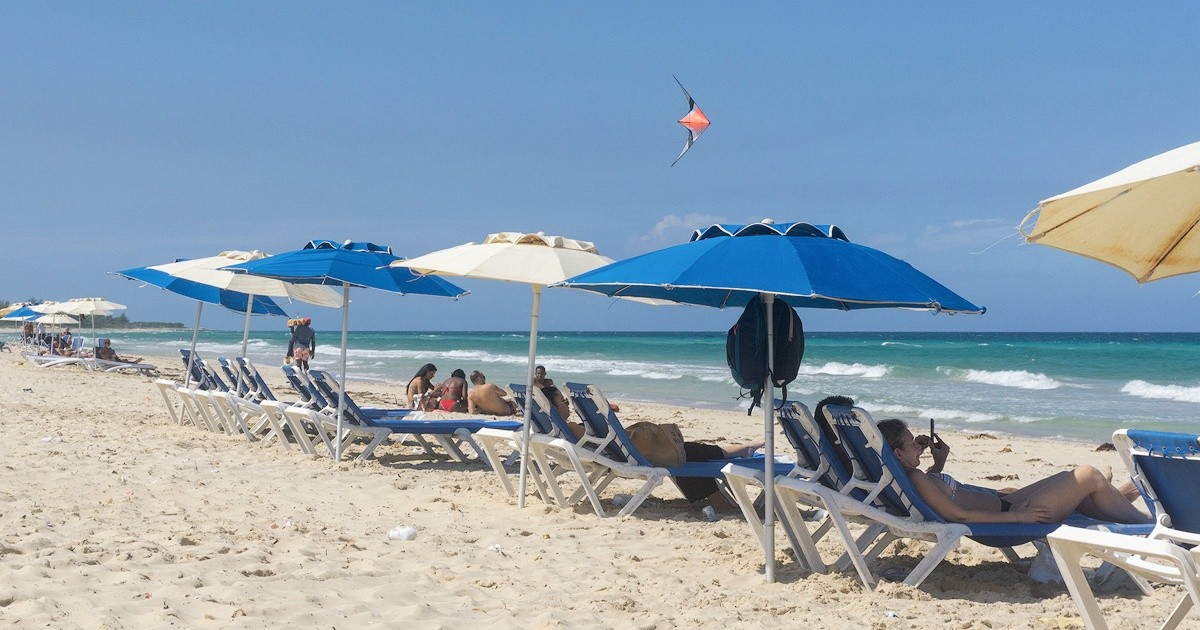
The Cuban regime requested Canada to lower its travel advisory for the island and acknowledged that numerous hotels have closed due to the decline in tourist demand, during an investment forum held on November 13 in Mississauga, Ontario.
Representatives from the Cuban Tourist Office and the Cuban ambassador in Canada, Rodrigo Malmierca, participated in the meeting to present new foreign investment opportunities and promote the return of Canadian visitors, according to the specialized magazine Travelweek.
The travel alert, the obstacle that Cuba wants to eliminate
The director of the Cuba Tourism Office in Toronto, Gihana Galindo, identified the travel advisory from the Canadian government, which recommends avoiding non-essential travel to the island, as one of the main obstacles to recovering that market.
"First, the travel advisory needs to be changed," he stated to Travelweek.
Nieves Ricardo, marketing manager of the Cuba Tourism Office, agreed that the warning makes it difficult for Canadian travel agencies and tour operators to promote the destination again.
“I believe that once the recommendation changes, flights will resume and hotels will respond to the demand,” he stated.
Galindo acknowledged that there are currently no direct air connections from Canada, although some travelers continue to arrive on the island via third countries.
“Currently, we have no flights from Canada, but we do have them from Panama, Venezuela, China, Europe, and the United States. What we're missing is Canada”, he explained.
According to Travelweek, some Canadians are still traveling to Cuba through connections in countries like Panama, although in significantly lower numbers than usual.
"Once demand is restored, the hotels will reopen."
During the meeting, Ricardo acknowledged that many hotel establishments have closed due to the decline in tourist demand, an explanation that places the lack of customers among the factors affecting the sector.
“Once demand recovers, the hotels will reopen,” he stated.
The official explained that Havana and Varadero account for a significant portion of international flight connections and have numerous operational hotels, while other tourist areas receive fewer flights and have fewer establishments open.
Ricardo insisted that the closures do not necessarily mean that Cuba lacks hotel capacity to accommodate visitors, but rather that part of that infrastructure remains closed due to low demand.
The marketing manager stated that the Canadian market still retains interest in the destination despite the current difficulties.
“Even under the current circumstances, Canadians still want to visit Cuba. They have a special fondness for that destination,” he stated.
Cuba offers new facilities to foreign investors
In the forum, the Cuban representatives presented a set of 176 economic and social measures across 23 areas, aimed, as they explained, at attracting foreign investment, expanding private participation, and reducing administrative barriers.
Among the possibilities presented are surface rights on land for up to 99 years, long-term usufruct agreements, and new opportunities for tourism projects with foreign capital participation.
Galindo and Ricardo also presented an expansion of the possibilities for foreign participation in companies, including 100% ownership in certain operations.
Foreign investment was already contemplated in Cuban legislation, so the specific scope of the announced changes must be distinguished from the existing modalities.
The government also aims to promote tourism projects in areas where restrictions on certain developments previously existed.
"We are opening up areas like Old Havana, which were previously protected zones where foreign investors could not develop projects," stated Ricardo.
According to Galindo, the Cuban government received 346 tourism investment applications between June and November, originating from countries such as China, Germany, Spain, and Canada.
The figure corresponds to requests communicated by the official, without specifying how many had been approved or had turned into actual investments.
Malmierca presented the reforms as part of a greater openness to foreign capital and private Cuban enterprise, accompanied by a reduction in the state's administrative intervention.
"We are moving towards greater openness to foreign capital, more openness to private Cuban enterprise, and a reduction in the State's administrative intervention in favor of market mechanisms," he stated.
The ambassador stated that the measures include streamlined documentation, digital procedures, and greater municipal authority to approve certain projects.
"We do it because it is necessary. Of course, it will help investors, but it will also help us. We are not doing it just to please others. We do it because these changes are needed," he stated.
Private agencies, car rentals, and new tourism businesses
One of the new developments presented in Mississauga was the expansion of opportunities for private travel agencies and destination management companies, activities that have traditionally been dominated by state entities.
According to the officials, the new measures will allow for greater participation of both Cuban and foreign private companies in tourism services, including visitor assistance activities and tour guides.
It was also announced that private operators could be incorporated into the car rental business, another segment that has historically been controlled by the State.
"When the Cuban tourism industry recovers, there will be new players in the market. This means more companies, increased competition, and potentially, better service," declared Ricardo.
The government is also seeking to attract investments in marinas, restaurants, retail, real estate projects, and ecotourism, in addition to promoting new economic development zones with special incentives.
"We need to revitalize the entire economy. We need new players who can bring new energy," stated Ricardo.
A new visa system to facilitate travel
Officials also highlighted the launch of a centralized portal for electronic visas, announced on November 12, which consolidates applications managed by Cuban consulates abroad.
The system aims to simplify the procedures for those who still travel to Cuba through connections in third countries and for business visitors who may arrive as a result of new investments.
However, according to Ricardo, it has not yet been determined whether the previous system of including tourist visas in Canadian vacation packages will be used again when direct flights resume.
The Cuban tourism crisis and international warnings
The Cuban government's offensive to regain the Canadian market comes after months of difficulties in the tourism sector, exacerbated by fuel shortages, disruptions in air transportation, and a decline in visitors.
Canada maintains an orange level alert, recommending to avoid non-essential travel to Cuba, since February 2026, when the aviation fuel crisis caused significant disruptions to flights.
While Cuban authorities are trying to achieve a reduction of that warning, other countries have strengthened their security recommendations. This Tuesday, Germany updated its travel alert for Cuba, including warnings about crime, theft, and power outages.
The challenges faced by the tourism sector have also impacted employment.
The Minister of Tourism, Juan Carlos García Granda, recently acknowledged a reduction of approximately 20,000 workers in the sector, from 103,000 to 83,000.
The announced opening to new investors occurs, moreover, in a sector where the military business conglomerate GAESA, through its tourism and hotel structure, maintains a significant presence.
The specific conditions for the participation of new investors will depend on the projects, the entities involved, and the applicable regulations.
Related videos:
Filed under: