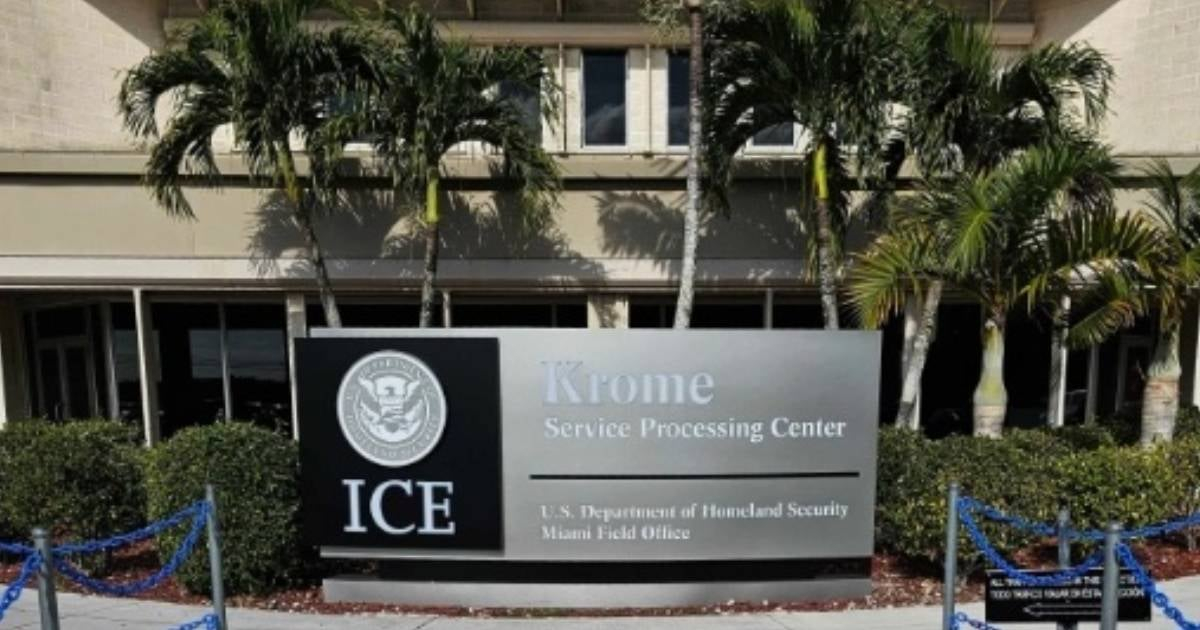
Six immigrant advocacy organizations called for the immediate release of individuals held at the Krome Detention Center in Miami, following reports of a shingles outbreak that is said to have affected several detainees.
The request was submitted this Wednesday via a letter addressed to members of the U.S. Congress and circulated by Detention Watch Network.
The document warns about health risks at the Krome North Service Processing Center and demands urgent measures from the Immigration and Customs Enforcement (ICE).
According to the information provided by the organizations, on November 13 there were three people in quarantine and, since then, at least ten detainees deemed medically vulnerable had been diagnosed, in addition to other positive cases.
The figures come from the complaint filed by the signing entities and not from an official epidemiological report published by ICE.
The letter is supported by Americans for Immigrant Justice, the American Civil Liberties Union of Florida (ACLU), Detention Watch Network, Florida Immigrant Coalition, Southern Poverty Law Center, and The Workers Circle.
Organizations demand that ICE immediately release detainees to protect their health, prioritizing those with weakened immune systems and individuals with no known immunity to chickenpox.
They also request immediate medical evaluations, transparent information about the cases, and an independent public health inspection.
The claim is particularly relevant for Cuban families in Miami, as Krome has been the site of numerous arrests of citizens from the island, including immigrants with deportation orders and individuals undergoing immigration procedures that can extend for months.
For the families of individuals held at Krome, knowing the health status of their loved ones is especially important. If a detainee shows signs of rashes, intense pain, fever, or other symptoms, their relatives can request that they receive immediate medical attention and inform their immigration attorney of the situation.
Families can also use the ICE Online Detainee Locator System to check where a person in custody is located.
The agency also offers the toll-free number 1-888-351-4024, which receives inquiries and complaints about serious or unresolved issues within its detention centers, with assistance available in Spanish.
Shingles is a disease caused by the reactivation of the varicella-zoster virus, the same virus that causes chickenpox.
It often manifests as a painful rash, often with blisters, and can lead to significant complications, especially in older adults and individuals with weakened immune systems.
According to the Centers for Disease Control and Prevention (CDC), a person does not directly contract shingles by being near someone who has it.
However, someone who has never had chickenpox or received the corresponding vaccine can become infected with the virus by being exposed to the lesions of a person with shingles and develop chickenpox.
The risk of complications from shingles increases with age, particularly after the age of 50, and among those suffering from illnesses or undergoing treatments that weaken the immune system.
Therefore, organizations consider it urgent to identify and protect the most vulnerable detainees.
Krome has frequently been the subject of complaints. In September, a report from the Office of the Inspector General of the Department of Homeland Security revealed serious issues with overcrowding, deficiencies in sanitary conditions, and shortages of medical staff.
The report documented issues with the availability of toilets, sinks, and showers, as well as deficiencies in the procedures for handling medical complaints. ICE accepted all nine recommendations made by the inspectors to address the identified problems.
The situation of the Cubans detained in Krome has recently reached federal courts. On November 13, a judge in Miami ordered the release of a Cuban citizen after determining that the Government had not proven that his deportation could be carried out in the reasonably foreseeable future.
In that case, the Cuban regime had rejected the repatriation of the detainee, and U.S. authorities were trying to send him to Mexico. The judge concluded that his refusal to sign the documents related to that deportation did not justify keeping him in detention indefinitely.
Related videos:
Filed under: