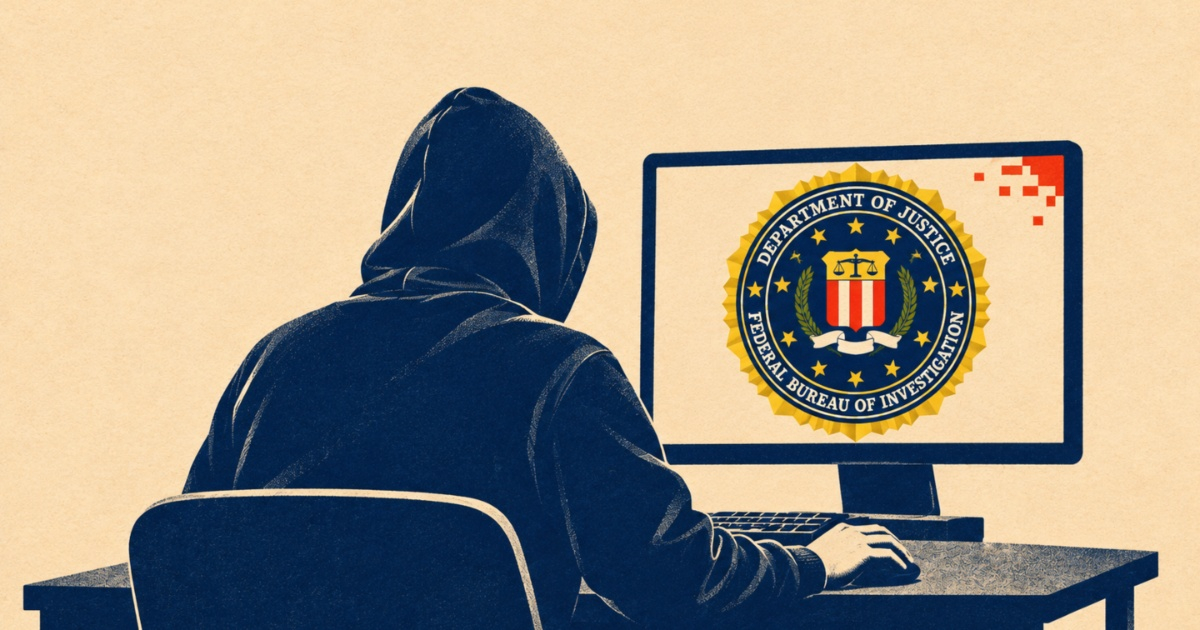
Donald Trump confirmed this Saturday that the FBI experienced a breach at its National Crime Information Center (NCIC), the most critical criminal database in the U.S. justice system, and he took the opportunity to revive his longstanding grievances against the agency.
In a telephone interview with Fox News, Trump downplayed the cyberattack on the NCIC but immediately connected it to the investigations and controversies that have marked his political career.
"We just found out and I will say that it is not good. I don't like it, but perhaps we will learn things that we would have never known otherwise," the leader declared.
The president went further and listed what he calls "deceptions" against him: "There was the Russia deception; all those other deceptions; what we call the Ukraine deception. All that about the phone call, the perfect call, as I say. There are many other things, and perhaps we will know more about it. Perhaps we will know about the electoral fraud, all the electoral fraud that took place."
Trump did not provide details on how the breach occurred, who might be behind it, or whether the attackers were able to extract or modify information from the database.
The NCIC is consulted daily by hundreds of thousands of agents and patrols across the country to verify arrest warrants, identify fugitives, check criminal backgrounds, and locate missing persons.
A former FBI official warned CNN that the most serious risk is not necessarily the exposure of data, but the potential alteration of records that agents consult in real time during traffic stops: "My concern is not simply whether hackers accessed sensitive information, although that is also an issue, but whether they were able to compromise the accuracy of the information that agents rely on."
Three sources familiar with the matter confirmed the breach to Fox News, which was the first to report it on Friday.
At the time of closing this report, the FBI had not issued any public statements regarding the incident nor confirmed whether the system experienced operational disruptions.
This is the second significant cyber incident against the FBI in a few months. In September, the cybercriminal group ShinyHunters breached the agency's job portal and compromised personal data of tens of thousands of employees and applicants.
In October, the Canadian Edward Dubrovsky, a 54-year-old cybersecurity executive, was arrested in Pennsylvania in connection with that attack.
The incident also occurs amid a wave of technological failures that affected U.S. institutions between November 12 and 17, with disruptions impacting Microsoft, the Federal Aviation Administration (FAA), JPMorgan Chase, United Airlines, the National Security Agency (NSA), and Apple, although the government ruled out the possibility of a coordinated systemic attack.
On Thursday, the White House dismissed the national director of Cybersecurity, Sean Cairncross, and temporarily replaced him with Kirsten Davies, the director of Information at the Pentagon.
That same day, the director of the FBI, Kash Patel, appeared on Fox News to boast about Operation Winter Shield—a 60-day cybersecurity campaign that had already concluded months earlier—presenting it as if it were currently active, which drew criticism.
"Other administrations could have made these updates, but they did not. We are ahead and making up for lost time," Patel stated.
Related videos:
Filed under: