The Russian ambassador in Cuba, Víctor Koronelli, revealed this Tuesday that exchanges between Havana and Washington have come to a halt, ruling out the existence of a formal negotiation process between the two governments. The statements were made in an interview granted to the TASS agency and reproduced by the Cuban state media Cubadebate.
"I wouldn't say that the negotiations in Havana with Washington have failed. In reality, according to our Cuban partners, there is no comprehensive dialogue with the United States, but rather sporadic contacts that are currently suspended," the Russian diplomat stated.
Koronelli recalled that in the months leading up to it, high-ranking officials from the State Department and the CIA visited the island and met with their Cuban counterparts, although these meetings did not yield concrete results.
The Cuban Deputy Minister Carlos Fernández de Cossío confirmed in July that the regime accepted a communication channel proposed by Washington, but that the contacts did not progress due to the conditions set by the U.S.
According to Koronelli, Havana is willing to discuss migration and humanitarian aid— including that funneled through Catholic organizations— but firmly rejects any discussion regarding its political system. "The demands from U.S. authorities to modify the political system and the internal organizational structure of the country are absolutely unacceptable to the Cuban leadership; they will never agree to discuss these issues," emphasized the Russian ambassador.
That position was reiterated by Miguel Díaz-Canel four days earlier, when he offered dialogue to Washington but imposed his conditions: "without pressure, without conditioning, and without questioning our political system, our sovereignty, and our self-determination."
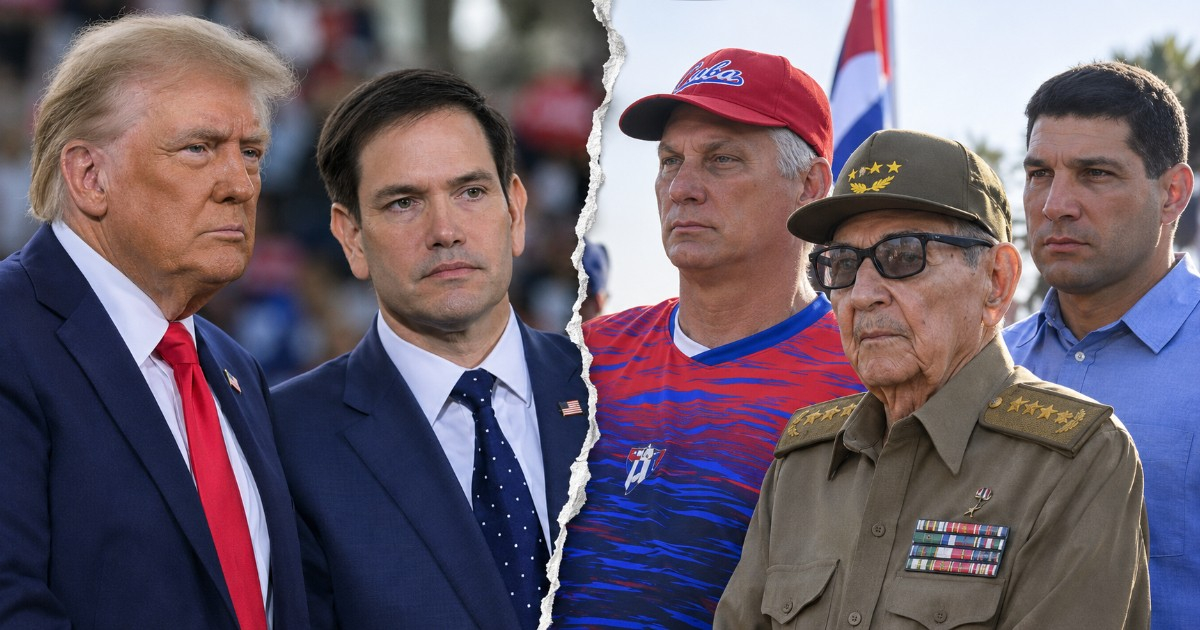
The statements from the Russian ambassador come at a time of heightened bilateral tension. On November 12, Trump declared that he would consider a brief military campaign against Cuba and that he wanted to "end Cuba" before leaving office. Secretary of State Marco Rubio warned from Paris on November 9 that the regime "is afraid to grant its people any kind of freedom" and that change will depend on whether its leaders "wake up and understand that there is no future on the path they are taking."
In the multilateral context, the UN resolution against the embargo on Cuba approved on October 28 obtained only 130 votes in favor, compared to 165 in 2025 and 187 in 2024, marking the lowest support since this series of votes began in 1992. Koronelli attributed this decline to "an unprecedented campaign" by Washington to undermine international support for Havana.
The diplomat also acknowledged that Russian-Cuban cooperation faces concrete obstacles: he cannot guarantee that Russian companies will realize new investments in the island, citing the risk of secondary sanctions from the U.S. as the main deterrent.
Despite this situation, Koronelli concluded his interview with a message of confidence in the Cuban resilience, recalling the slogan that circulated during the Special Period of the 1990s: "They will resist now, just as they did in the 1990s. Simply because no one gives up here."
Related videos:
Filed under: