
Related videos:
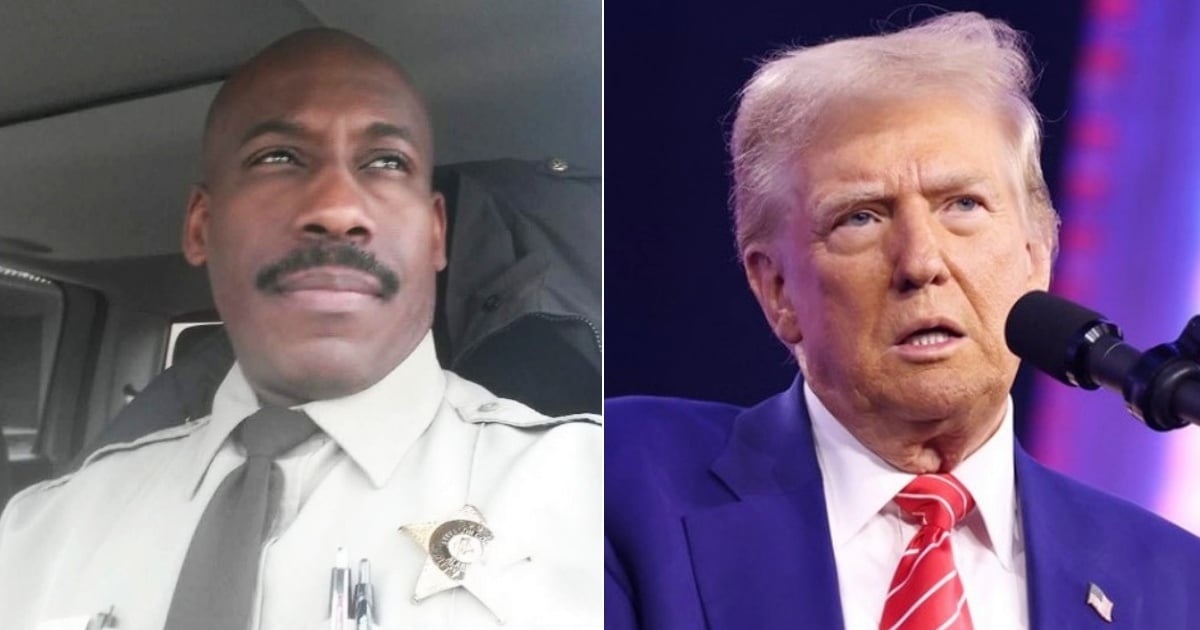
The Cuban-American police officer, Sergio Rodríguez Beristain, criticized Cuban-Americans who voted for Trump despite numerous warnings about the consequences that are now putting thousands of migrants from the island at risk.
In a strong message posted on Facebook, the official reported that many of those who supported the more restrictive measures now see their own family members facing the threat of arrests and deportations.
“When I warned many that this would happen, they did not believe me. They said I was crazy, that I think this way because I'm a 'snitch' and 'communist'... the favorite insults of Trump supporters,” expressed Beristaín.
"What are they going to say now? I've been warning about this for a while, and those who legalized after entering without permission are now in the spotlight. Don’t believe me? Just like what just happened now... Live and learn. Now those who voted for Trump will see their family members with humanitarian parole and I-220A documents in imminent danger of arrest and deportation," he added.
Beristain also pointed out that Cubans who have already obtained residency through parole could lose their legal status if their permit is revoked or expires.
“Many of these Cubans sold everything and have absolutely nothing to return to. It’s sad... very sad,” he lamented.
"They did not consider these consequences, and when I warned them that this could happen, they bombarded me with insults and all kinds of vulgarities.
But everyone has the right to choose who best represents them and with whom they identify the most," added the official, who warns that even in the current circumstances, some Trump supporters "will not acknowledge that they were deceived."
Beristain concluded with a quote from the famous American writer Mark Twain: "It's easier to fool them than to convince them that they have been fooled...".
Mixed reactions
Beristain's statements sparked a wide debate on social media, where some users shared the official's concerns while others were critical.
From indignation over the human consequences to more religious perspectives, some expressed that "it is incredible to see this in the land of freedom," while others pointed out that the situation "is getting worse and worse."
There were also those who advocated for faith, asserting that “God reins in the wildest horse.”
Amid the criticisms, questions arose regarding the responsibility of Cuban-American political figures.
“Where are those who defended these policies so passionately?” some wondered; while others pointed out: “They are the ones asking for all rights to be taken away from their own people.”
Other voices of the debate
Some comments pointed out that “many were pleased by the misfortunes of others” when they managed to regularize their status, and now “they will see how those same measures affect their relatives.”
Others were more critical, warning that “the parole was like the road to hell: the repressor, the criminal, the slacker entered, and without control,” although they acknowledged that it also allowed the arrival of “honest and persecuted people.”
There were also users who recalled that Trump had been clear in his promises since the campaign and that “those who didn’t see it coming were disconnected from reality.”
The official, for his part, insisted that "there are law-abiding and hardworking individuals who will suffer the same consequences as those undesirable individuals," and denounced the elimination of the right to Due Process with the revocation of the I-220A.
While some defended the harshness of the measures as a "forceful statement to teach the value of freedom," others argued that "many people have nothing to go back to" if they are deported.
The conversation also led to criticisms of the previous immigration system: “Parole has become a pathway for human trafficking and corruption,” they stated, warning that the lack of controls facilitated the entry of “criminals and front men” from the Cuban regime.
Amid this situation, uncertainty persists among affected Cuban migrants regarding the possibility of mass deportations and the loss of legal status.
Revocation of humanitarian parole
The Department of Homeland Security (DHS) of the United States announced the revocation of the humanitarian parole programs for citizens of Cuba, Haiti, Nicaragua, and Venezuela, as well as their immediate family members, known as the CHNV programs.
The decision responds to the Executive Order 14165 from President Donald Trump, issued on January 20, 2025, which orders securing the border and ending categorical parole programs.
The DHS argues that these programs did not succeed in reducing irregular migration or significantly improving border security, and they created increased pressure on local communities, public resources, and the already collapsed immigration judicial system.
More than 532,000 people entered the United States under these programs between 2022 and 2025. The DHS claims that these mass admissions, although legal under the parole provision, were contrary to the original spirit of the law, which states that such permits should be granted on a case-by-case basis.
The current paroles will be void 30 days after the official publication of the notice, unless the Secretary of Homeland Security determines otherwise for individual cases. Those without any other legal basis to remain in the country must leave or face deportation proceedings.
Filed under: