The official program Mesa Redonda was dedicated this Friday to the impact of the Reparto on current Cuban society, its cultural, social, and political implications, as well as its growing influence on popular taste.
Cubans interviewed on the streets of Havana agreed that the lyrics of many reggaeton songs "are not correct" and that "it is getting out of hand." However, they acknowledged that there are artists who have managed to distance themselves from these codes, thereby gaining public acceptance. Among the names mentioned as representatives of "good lyrics" were Jacob Forever and El Chacal.
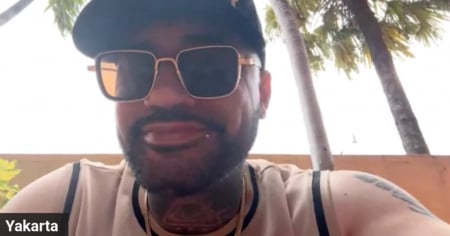
The experts who participated in the program avoided mentioning the musicians who advocate for this artistic expression. However, recognizable faces from the scene appeared in the supporting images, such as El Taiger, Oniel Bebeshito, Ja Rulay, the duo Charly & Johayron, Velito el Bufón alongside Alexander Abreu, Chocolate MC, Lenier Mesa, Dany Ome, and Kevincito el 13.
Is Reparto a musical genre?
The musicologist Lea Cárdenas explained that within the academic field, there is still no consensus on whether the Reparto can be considered a musical genre in its own right.
"The Cuban musicological academy has not reached a consensus on whether it is a musical genre or not. For an expression to be considered a genre, a period of time must pass that solidifies special characteristics, behaviors in the expressive mediums of music, and defines a determining rhythmic cell."
According to Cárdenas, the Reparto emerged around 2010 as an evolution of Cuban reggaeton. Its origins can be traced back to tracks like "El Guachineo" and "Bajanda," authored by Yosvanis Arismin Sierra Hernández, better known as Chocolate MC.
"El Reparto is an expression of music that is completely native to Cuba. It has many connections to popular dance music," added the musicologist.
In response to a comment from the official journalist Arleen Rodríguez Derivet, who questioned whether this music remains Cuban when performed in Miami, the musicologist stated clearly: “It is Cuban.”
A meaningful expression with social weight, but also with risks
The director of the Juan Marinello Institute, Luis Emilio Aybar, stated that “the neighborhood has a significant influence in Cuban society, in taste and in cultural practices.” From his perspective, discussing this urban expression “is to talk about politics.”
Aybar acknowledged that there are negative elements in this type of music, although he defended that they are not exclusive to reggaeton or its artists.
"It is the discourse of superiority from the man who has more women, more money, more possessions, success, popularity, and even ways of imposing himself violently. It often features a vulgar, sexual language that generates a certain level of aversion."
The institutional stance, according to Aybar, has been clear: “Demonizing the Reparto is not helpful, nor is praising it uncritically.”
Urban music and the Cuban cultural industry
The Deputy Minister of Culture, Fernando León Jacomino, discussed the structural difficulties facing the music industry in Cuba. He stated that they lack resources to organize concerts and activities to incorporate the proposals of the groups.
"The total value of complementary costs for a performance is higher than the artistic value of the presentations. It can be three, four, or even five times higher," he said while explaining why even well-known artists like Van Van, Alexander Abreu, or Manolito Simonet cannot undertake regular tours across the provinces of the country.
Regarding the official promotion circuits, the deputy minister stated that urban genre artists must be evaluated by cultural institutions in order to be integrated.
"They are in groups that operate on a supply and demand basis. They earn according to what they invoice. They are required to meet certain levels of quality and aesthetic rigor, but they work independently, based on the demands they generate. This has other mechanisms of regulation."
Jacomino also stated that the music industry is affected by the U.S. embargo and that traditional promotion “no longer works as it used to,” referring to the impact that social media has in this regard, which is often much greater than that of official media.
A culture that reflects society
The researcher Yanelis Despaigne warned about the risks of ignoring the social background of the urban phenomenon. "The consumption of this music occurs across all social strata in Cuba," she stated.
She cited recent studies indicating that some people see being "reparteros" as a pathway to upward mobility and prosperity. "These are emerging studies that we should pay attention to," she added, concerned about the direction of Cuban society.
In this regard, Aybar concluded: “We should be concerned not only about what is expressed in songs, but also about what is happening in the various social groups in the country.”
Despite the conciliatory approach of the regime's cultural institutions, which try to balance the phenomenon of Reparto without openly condemning it, it is clear that many of the values promoted by this music contradict the principles that the State itself claims to uphold.
The official discourse avoids taking responsibility for the ecosystem that allowed the rise of this type of expression, while pointing out its effects without thoroughly addressing its causes: a social, economic, and educational crisis that permeates all of Cuban society.
If the Reparto is a reflection of what happens in the streets, then the problem lies not only in the music but in the society that listens to it.
Filed under: