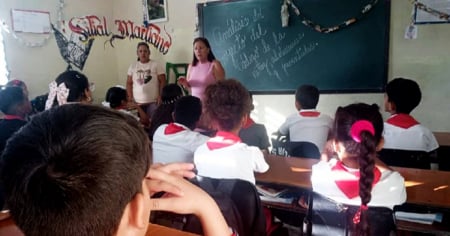
After more than 25 years of living under threats, mistreatment, and harassment from their own father, sisters Margarita and Melissa Leonard Cantero have succeeded in getting Cuban justice to hear them, in a context of rising violence against women on the island.
A court recently granted them a restraining order against their parent, allowing them to stay in the house where they were born, which he tried to take from them after separating from their mother.
For decades, young girls were victims of psychological violence and constant threats, especially after their mother left the family home.
The father, as reported in statements to National Television, even tried to evict them from the home, warning them that they would end up on the street.
"It's been just a month since we’ve been living more peacefully, that we can do simple things like mowing the yard without fear," shared one of the sisters.
The case, which has been supported by the Federation of Cuban Women (FMC) and the House of Women and Families, highlights the enormous difficulties many women in Cuba face in obtaining justice in situations of domestic violence.
The victims reported that, on one occasion, when they approached the police to file a complaint, the officers told them that “a father cannot harass his daughters,” and ignored their report and the seriousness of the situation.
Organizations like FMC have pointed out that, although it is recommended to report these cases to the authorities, many times victims must return to live with their abuser due to the severe housing crisis the island is facing, which perpetuates the cycle of violence.
In this context, the brief television report calls for "law operators—judges, prosecutors, police officers—to act with greater responsibility and sensitivity when assessing these types of complaints."
"Violence is not solely the responsibility of the FMC or the Prosecutor's Office. It is a responsibility of the entire society. Much more community support and institutional will are needed to ensure that cases like this do not happen again," expressed one of the voices that has been following the process.
This case, although colored by propaganda in its state coverage, seems to reflect a real and painful situation.
It also underscores the urgent need to transform the institutional culture in Cuba, where for years reports of domestic violence have been ignored or downplayed, even by the state-controlled media.
Frequently Asked Questions about Domestic Violence and the Situation of Women in Cuba
What did Margarita and Melissa Leonard Cantero achieve after years of domestic violence?
Sisters Margarita and Melissa Leonard Cantero have obtained a restraining order against their father, who subjected them to threats and psychological violence for over 25 years. This court ruling allows them to remain in their home without the fear of being evicted by him.
What is the current situation of gender-based violence in Cuba?
Gender-based violence in Cuba is a serious and persistent problem. Official figures have shown an increase in cases, with 117 femicides reported by October 2023. However, femicide is not classified as a crime in the Cuban Penal Code, which complicates its recognition and proper legal treatment.
What measures has the Cuban government taken to combat gender-based violence?
The Cuban government has implemented a national system for the registration, attention, follow-up, and monitoring of gender-based violence. This system is made up of experts from the Ministry of the Interior and the People's Supreme Court, but its effectiveness is limited by the lack of classification of femicide as a specific crime.
How do the limitations of the Cuban legal system affect victims of gender-based violence?
The limitations of the Cuban legal system, such as the lack of recognition of femicide as a crime, leave victims in a state of vulnerability and hinder the implementation of effective public policies. This prevents an adequate legal response and complicates the collection of accurate statistics.
Filed under: