
Related videos:
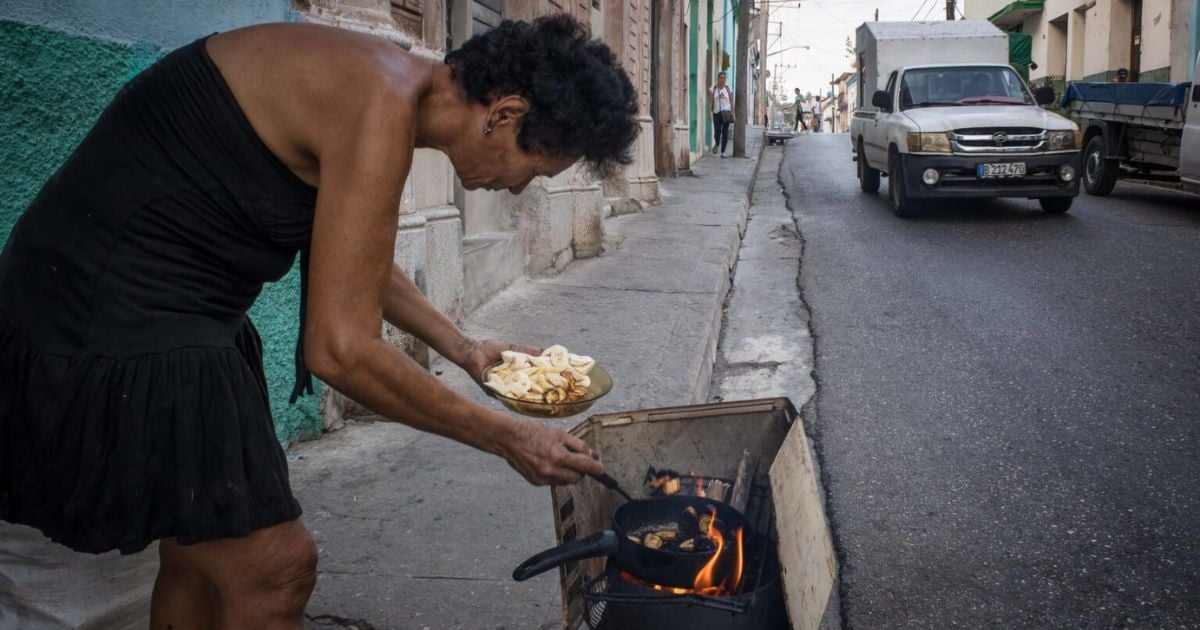
Amidst one of the worst phases of the energy crisis that Cuba is experiencing, more than 9 million people are cooking today under precarious, unsanitary, and dangerous conditions, as alerted by the Food Monitor Program (FMP), an independent organization that has been monitoring access to basic services on the island for three years.
The figure comes from the analysis of the latest Population and Housing Census in Cuba and from proprietary studies by the FMP, which estimate that approximately 1.7 million households use liquefied gas (LPG), another 2 million rely exclusively on electricity, and about 220,000 cook with manufactured gas.
The rest of the population is left completely exposed to power outages, interruptions in gas supply, or rudimentary means.
Considering an average of 3 to 4 people per household, more than 9 million Cubans are facing
The report indicates that, with power outages lasting up to 20 hours daily, families cook whenever there is electricity, regardless of the time.
Food is prepared early in the morning, eaten cold or immediately, and many people have reduced the number of daily meals.
Before the most recent collapse, 33% of households had already begun to skip meals as a survival measure, while a 25% admitted to going to bed hungry.
The most dramatic scenario is the increase in cooking with firewood and charcoal. Thousands of families, faced with the inability to use electricity or gas, are building improvised stoves with recycled materials.
These practices have caused house fires and produce highly toxic gases, which the WHO associates with chronic respiratory diseases, lung cancer, and cardiovascular problems.
Women, who predominantly manage cooking in Cuba, are the most exposed to this risk, which exacerbates their physical and emotional vulnerability.
The energy situation is a result of an aging system reliant on imported fossil fuels.
Since 2017, as acknowledged by the director of the Electric Union, there has not been adequate maintenance provided to the thermoelectric plants in the country, many of which have been in operation for over four decades, FMP reported.
The "patches" implemented, such as generators and Turkish floating plants, have not prevented prolonged blackouts, including four total collapses of the national system since October 2024.
Water is also in crisis, as more than 50% of households receive the service in cycles ranging from two to fifteen days, which forces them to store it under inadequate conditions, use electric pumps (which are useless during power outages), or rely on leaks and water hauling.
54% of the respondents in the FMP survey stated that they need to purify the water before consuming it, and the risk of digestive diseases increases with the onset of summer.
All of this directly impacts food security, hygiene, and food preparation, they emphasized.
The report denounces that the State has opted to impose restrictions on domestic energy consumption, recommend light meals, and maintain a discourse focused on “resistance,” while normalizing scarcity as part of the management model.
For citizens, however, resistance is not a slogan: it is a daily imposition with no alternatives.
The organization concludes that the energy crisis is part of a broader polycrisis that includes the deterioration of public services, mass exodus, an aging population, and the collapse of productive sectors.
In that context, millions of Cubans are subjected to a reality that not only prevents them from properly feeding themselves but also from maintaining a minimal stability in their lives.
"In every blackout, in every dawn without water, a part of the right to live with dignity also diminishes," the report warns, urging a focus beyond the technical data to highlight the human tragedy behind each extinguished stove and every meal that goes unserved.
Frequently Asked Questions about the Energy and Food Crisis in Cuba
How many Cubans are affected by the current energy crisis?
More than 9 million Cubans are cooking in precarious conditions due to the energy crisis in Cuba. The lack of electricity and gas has forced many families to resort to outdated and dangerous methods to prepare their food, such as using firewood and charcoal.
What is the impact of the energy crisis on the food supply for Cubans?
The energy crisis has reduced families' ability to cook properly, leading to a decrease in the number of daily meals and unhealthy eating practices. Many people cook at unusual hours when there is electricity, and a large number have been forced to skip meals or consume cold food.
What risks are associated with cooking with wood and charcoal in Cuba?
The use of firewood and charcoal for cooking generates toxic gases that can lead to chronic respiratory diseases, lung cancer, and cardiovascular issues. Furthermore, these practices have caused domestic fires, increasing health risks for families, especially for women, who often bear the primary responsibility for cooking.
What has the Cuban government done to address the energy crisis?
The Cuban government has imposed restrictions on domestic energy consumption and has recommended light meals, but these measures have not resolved the crisis. Additionally, "patches" such as generators and floating power plants have been implemented, which have not prevented prolonged blackouts, reflecting an ineffective management of the issue.
Filed under: