
Related videos:
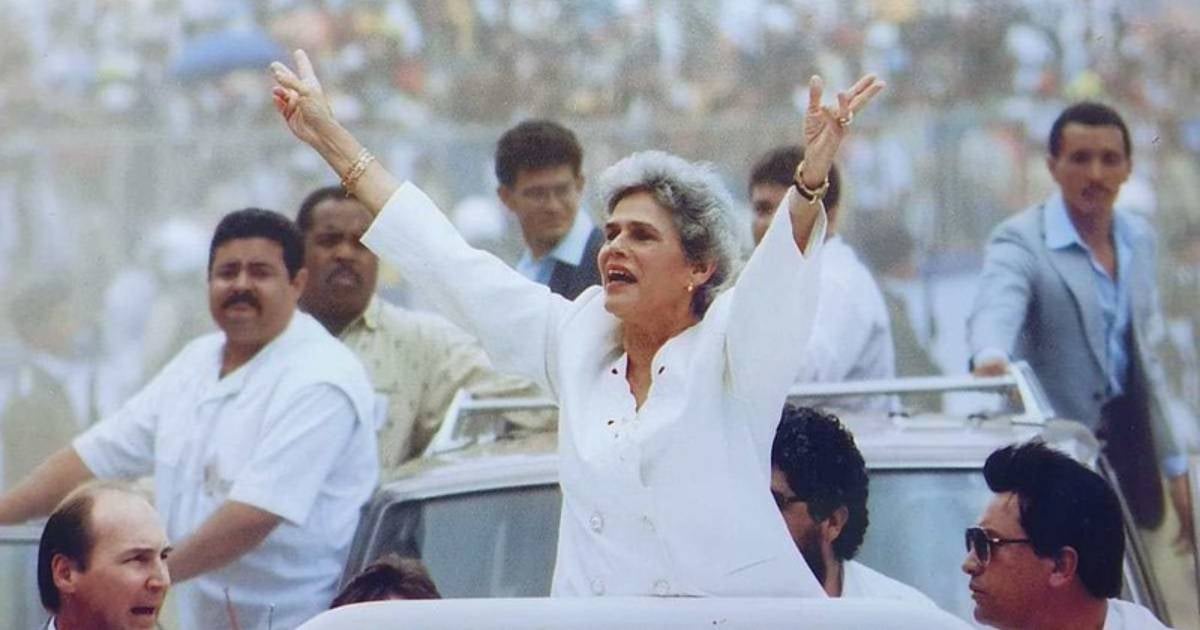
Violeta Barrios de Chamorro, the first elected president of Nicaragua and a symbol of reconciliation after years of civil war, passed away this Saturday at the age of 95 in San José, Costa Rica, as confirmed by her son, journalist Carlos F. Chamorro. The former leader died peacefully, surrounded by her children and loved ones, after years of battling a long illness.
With her passing, a key figure in the recent history of Central America is lost. Barrios de Chamorro was not only the first woman to govern a Central American country through direct election, but also a symbol of hope for a people wounded by decades of dictatorships and armed conflicts. Her presidency (1990-1997) marked the end of an era of fratricidal war and the beginning of a democratic transition that today seems distant for many Nicaraguans.
Violeta came to power at the head of an opposition coalition to the Frente Sandinista de Liberación Nacional (FSLN), surprising both allies and foes by defeating Daniel Ortega in the 1990 elections. This victory was built on pain: her husband, the journalist Pedro Joaquín Chamorro, was murdered in 1978 by the Somoza dictatorship, which, almost unintentionally, led her into political life.
During her term, Barrios de Chamorro advocated for peace in a country divided and exhausted by war. She delegated many of the government tasks, but her image as the mother of the nation, as a serene and devoted woman, was enough to unite broad sectors of Nicaraguan society. She renounced revenge, facilitated the disarmament of armed groups, and laid the foundations for a fragile democracy.
Exiled until Nicaragua is free
In October 2023, due to the deterioration of her health and the siege from the Ortega regime, she was discreetly moved from Managua to Costa Rica, a country that welcomed her until her final days. Her family reported that her remains will temporarily rest in San José, "until Nicaragua returns to being a Republic," a message that resonated deeply within the Nicaraguan exile community.
“She concluded her presidency by making room for other political leaders; what exists today in Nicaragua is vastly opposed to what Doña Violeta wanted,” stated political scientist Elvira Cuadra, one of the critical voices in exile.
A legacy that transcends borders
Her life was marked by contradictions and sacrifices. Belonging to one of the most influential families in Nicaragua, Violeta was the wife of a martyr, the mother of children ideologically opposed during the war, and ultimately, a symbol of a possible country.
From Cuba, her figure can evoke deep reflections: what is the role of a woman with convictions in the midst of authoritarianism? What can a nation achieve when it embraces forgiveness, transition, and democratic openness? Her example, far from being foreign, resonates with the Cuban people who have also experienced repression, exile, and shattered hope.
“Doña Violeta passed away peacefully,” her family said, “and now she rests in the peace of the Lord.” May her legacy inspire new struggles for democracy and justice in every corner where freedom still resists.
Frequently asked questions about Violeta Barrios de Chamorro and her legacy in Nicaragua
Who was Violeta Barrios de Chamorro and why is she an important figure in the history of Nicaragua?
Violeta Barrios de Chamorro was the first elected president of Nicaragua, and her term marked the end of the civil war and the beginning of a democratic transition in the country. Her leadership was characterized by promoting peace and reconciliation among Nicaraguans, laying the groundwork for a fragile democracy that, unfortunately, seems distant today.
How did Violeta Barrios de Chamorro come to the presidency of Nicaragua?
Violeta Barrios de Chamorro came to power in 1990 leading an opposition coalition against the Sandinista National Liberation Front (FSLN). Her electoral victory was surprising, defeating Daniel Ortega, and was seen as a symbol of hope for a people weary from decades of dictatorships and armed conflict.
What legacy did Violeta Barrios de Chamorro leave after her presidency?
The legacy of Violeta Barrios de Chamorro centers on her role as a promoter of peace and reconciliation in Nicaragua. She renounced revenge and facilitated the disarmament of armed groups, laying the groundwork for a democracy that, although fragile, was a significant step towards stability and dialogue in the country.
What was the situation of Violeta Barrios de Chamorro in her last years of life?
In her later years, Violeta Barrios de Chamorro lived in Costa Rica due to the deterioration of her health and the siege of the Ortega regime. She passed away peacefully at the age of 95 in San José, Costa Rica, surrounded by her loved ones, leaving a message of hope for a democratic future in Nicaragua.
Filed under: