
Related videos:
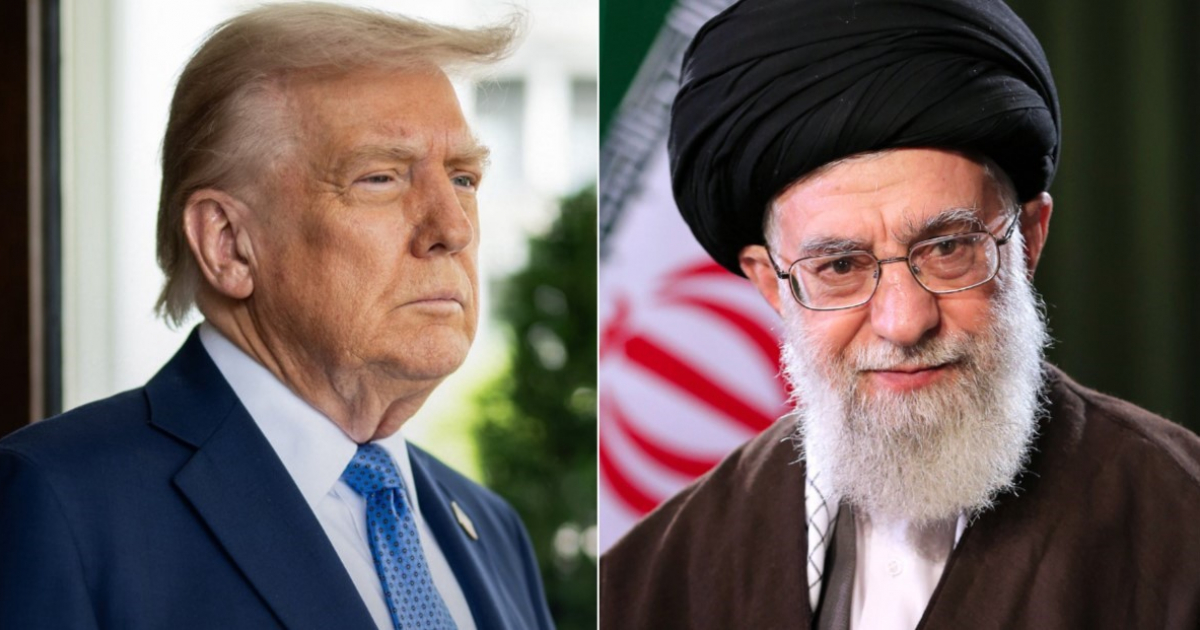
The President of the United States, Donald Trump, stated this Tuesday that his administration knows the whereabouts of Iran's supreme leader, Ali Jameneí, and described him as an “easy target,” but ruled out, “at least for now,” making the decision to kill him.
"We know exactly where the so-called 'Supreme Leader' is hiding. He's an easy target, but he's safe there. We're not going to eliminate him (kill him!), at least not for now," Trump wrote on his official account on Truth Social.
The Republican leader also warned that he would not tolerate attacks against civilians or American troops, hinting at a potential hardening of his stance: "Our patience is wearing thin. Thank you for your attention to this matter!"
In another message, he demanded "unconditional surrender," raising the stakes even further amid a climate of high tension in the Middle East.
Trump's statements come following a new escalation of the conflict between Iran and Israel, which erupted last Friday when the Israeli government carried out a series of airstrikes on Iranian nuclear facilities and military targets.
Since then, both countries have exchanged attacks with a tragic toll: over 200 dead in Iran, including civilians, and 24 fatalities in Israel from Iranian missiles.
Although the White House has denied direct involvement in the Israeli bombings, Trump suggested that these could have been triggered by the expiration of the deadline imposed on Tehran to finalize a new nuclear deal.
In parallel, Israeli Prime Minister Benjamin Netanyahu stated this Monday that his government "will do whatever is necessary" when asked about the possibility of assassinating Ayatollah Khamenei.
Some media outlets have reported that Trump had previously rejected an Israeli plan to eliminate the Iranian leader, fearing uncontrollable regional escalation.
Trump made an abrupt return to Washington this morning after leaving the G7 summit in Canada to meet with his National Security team.
In that context, he stated that the United States has "total control over the skies of Iran" due to an air surveillance network that is more advanced than that of the Persian nation.
"Now we have total control over the skies of Iran. Iran had good air trackers and other defensive equipment, and in abundance, but they do not compare to those made in the United States," he added.
In the same message, he concluded: “No one does it better than the United States,” reinforcing his recurring narrative of national supremacy, especially on issues of defense and security.
Frequently Asked Questions about the Tension between the United States, Iran, and Israel
Why did Donald Trump rule out eliminating the Supreme Leader of Iran?
Donald Trump ruled out eliminating Iran's supreme leader, Ali Khamenei, "at least for now", describing him as an "easy target" but noting that, currently, "he is safe." This decision comes amid a backdrop of high tension in the Middle East, where the patience of the United States appears to be wearing thin. Trump has also warned Iran of potential reprisals in the event of attacks against American civilians or troops.
What is Trump's stance on controlling Iranian airspace?
Trump affirmed that the United States has "total control over the skies of Iran", highlighting his country's superior military technological capabilities. This statement comes at a time of high tension due to the cross-attacks between Iran and Israel. Trump has reiterated that the United States will not tolerate attacks against its interests and has demanded the "unconditional surrender" of Iran.
How has the international community reacted to the conflict between Israel and Iran?
The international community has expressed its concern over the escalation of the conflict between Israel and Iran. Russia, China, Japan, and other countries have called for restraint, while the price of oil has surged by more than 13% due to fears of an energy crisis. The conflict has triggered a strong global reaction, with several countries activating defensive measures in response to a potential Iranian retaliation.
What role does the United States play in the conflict between Israel and Iran?
The United States has denied its direct involvement in Israel's attacks on Iran, but has expressed its support for Israel, one of its key allies in the region. Although Washington has not been directly involved, Trump has suggested that Israel's actions may have been motivated by deadlines he imposed for a new nuclear agreement with Iran. The United States has reiterated its commitment to protect its troops and has kept communication channels open with its allies.
Filed under: