
Related videos:
The south of Florida, known for its cultural diversity and strong Hispanic presence, has become the epicenter of more restrictive immigration policies during the current administration of President Donald Trump.
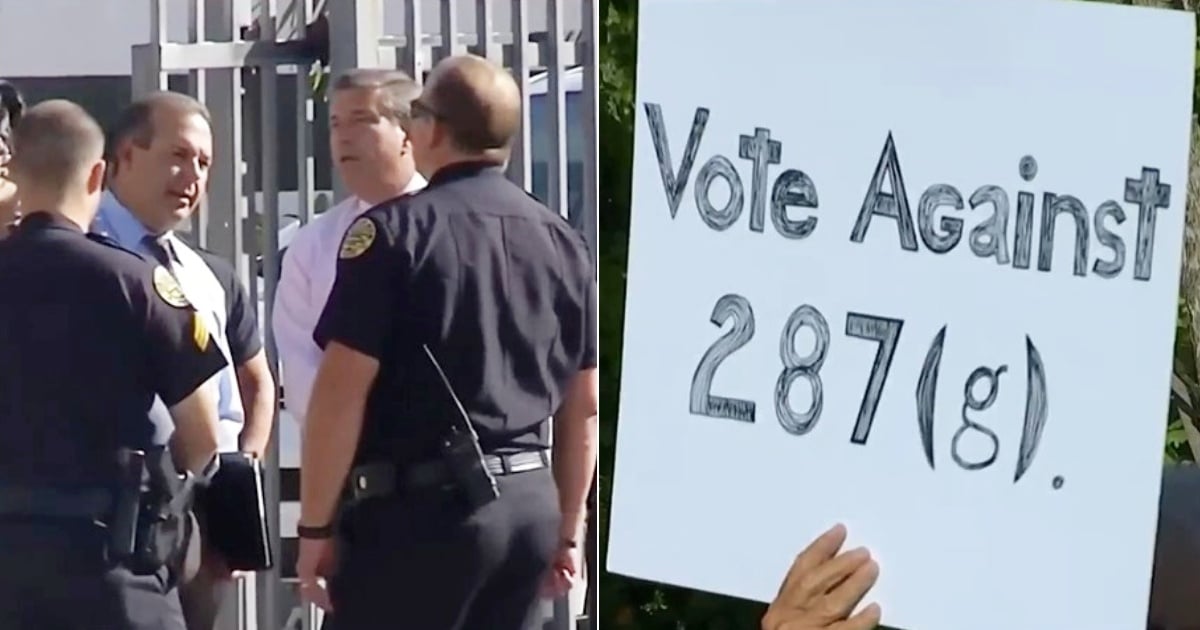
Despite the fact that many of its residents come from Latin American countries, most cities in Miami-Dade, Broward, and Monroe counties have entered into collaboration agreements with the Immigration and Customs Enforcement (ICE) through the 287(g) program.
This initiative allows state and local law enforcement agencies to work together with the federal government in the enforcement of immigration laws.
Cities in South Florida that collaborate with ICE
In the case of Miami-Dade, noteworthy are the agreements signed by cities that, paradoxically, have a markedly immigrant population:
-Miami: On June 17, the city commission approved -by a vote of 3 to 2- that its police force formally cooperate with ICE agents, enabling a direct collaboration to identify and process immigrants in irregular situations.
-Homestead: This agricultural-based city, where thousands of immigrants from Mexico, Central America, and South America live and work, formalized its collaboration with ICE in April.
-Hialeah: In a unanimous vote on March 12, the city council agreed for its police department to sign an agreement to actively support immigration operations.
-Doral: Considered the city with the highest concentration of Venezuelans in the United States, many of whom arrived under programs such as TPS or humanitarian parole -now without legal validity, Doral has also decided to join this initiative.
Other cities in Miami-Dade County that collaborate with ICE:
-Sweetwater.
Coral Gables.
-West Miami.
-Miami Springs.
-Sunny Isles Beach.
In Broward County, the following municipalities have joined: Davie and Pompano Beach, according to a recent list published by the network Univision.
In the archipelago of the Keys, in Monroe County, Key West and Key Colony Beach have been added.
Moreover, all sheriff's departments in the 67 counties of the state of Florida have signed agreements under this program, making Florida the only state in the country where all of its counties collaborate with ICE in this manner.
What is the 287(g) program?
The 287(g) program was authorized by Congress in 1996 and allows the Department of Homeland Security to delegate immigration functions to state and local law enforcement agencies.
Although its use was limited for years, under the presidency of Donald Trump and with the support of Governor Ron DeSantis, it has been aggressively reactivated and expanded.
These agreements allow local authorities to carry out tasks that traditionally fell to federal agents, such as:
-Verify the immigration status of individuals detained in prisons.
-Execute immigration arrest orders issued by ICE.
- Investigate individuals in irregular situations during patrols and local operations.
There are three operational modalities of the 287 (g) program
Control model in prisons: allows for the review of the immigration records of detainees.
Compliance model for arrest warrants: grants local police the authority to respond to ICE requests.
Work Team Model: empowers officers to act in operations and daily tasks with immigration identification authority.
A state-driven push: Florida as a leader in strict immigration policies
In February, Governor Ron DeSantis strongly relaunched the 287(g) program, clarifying that Florida would not be a sanctuary state.
Through a series of laws and agreements, his administration has strengthened the powers of law enforcement to directly enforce immigration laws.
"If all states did the same, this problem would disappear much faster," DeSantis declared from Homestead Air Force Base, flanked by representatives from the Department of Homeland Security.
The new legal framework includes:
-Criminalization of illegal entry into the state, with penalties of up to 9 months in prison.
-Mandatory detention of immigrants for up to 48 hours before being handed over to ICE.
Mandatory implementation of the E-Verify system in all businesses, including small ones, to verify the immigration status of workers.
Additionally, a budget of 250 million dollars has been approved to enhance police infrastructure and support local immigration operations.
Controversies and challenges
The policies have faced strong criticism from human rights organizations, such as the American Civil Liberties Union (ACLU), which warns about the risks of racial discrimination and the erosion of trust between immigrant communities and authorities.
"This law and the rhetoric surrounding it will foster racial discrimination and fear," stated Kara Gross, legislative director of the ACLU in Florida.
For his part, Polk County Sheriff Grady Judd minimized these concerns and assured that they are simply "following the law" to remove criminals and repeat offenders.
However, the capacity of prisons to accommodate detainees has already been pointed out as a potential bottleneck. Without an expansion of space, Judd warned, “the system will collapse in days.”
With all counties under cooperation agreements and an increasing number of cities joining individually, Florida solidifies its position as a model for strict enforcement of immigration law, while the debate over human rights, public safety, and justice continues to polarize society.
Frequently Asked Questions about the Collaboration of South Florida Cities with ICE
Which cities in South Florida collaborate with ICE?
In South Florida, several cities have signed collaboration agreements with Immigration and Customs Enforcement (ICE) under the 287(g) program. In Miami-Dade County, these cities include Miami, Homestead, Hialeah, Doral, Sweetwater, Coral Gables, West Miami, Miami Springs, and Sunny Isles Beach. In Broward County, the collaborating locations are Davie and Pompano Beach, while in Monroe County, Key West and Key Colony Beach have joined.
What is the 287(g) program and how does it affect immigrant communities?
The 287(g) program allows local law enforcement to collaborate with ICE in the enforcement of immigration laws, carrying out tasks such as verifying the immigration status of detainees and executing immigration arrest warrants. This program has faced criticism from human rights organizations, which fear that it promotes racial discrimination and instills fear in immigrant communities. In particular, it is warned that it could erode trust between these communities and local authorities.
What has been Governor Ron DeSantis's stance on immigration in Florida?
Governor Ron DeSantis has taken a firm stance against illegal immigration in Florida, promoting state laws that strengthen collaboration with ICE and criminalize illegal entry into the state. DeSantis has emphasized that Florida will not be a "sanctuary state" and has implemented measures to ensure that local law enforcement acts as immigration agents, following an agenda of strict immigration policies.
What controversies have arisen regarding the collaboration between cities and ICE?
The collaboration of the cities in South Florida with ICE has sparked controversies, especially regarding the impact on immigrant communities. Critics warn about possible violations of human rights and racial discrimination, as well as fear that these policies may erode trust between communities and the police. Some cities, such as South Miami, have sought judicial protection to avoid being forced to collaborate, arguing the need to maintain local autonomy.
Filed under: