
Related videos:
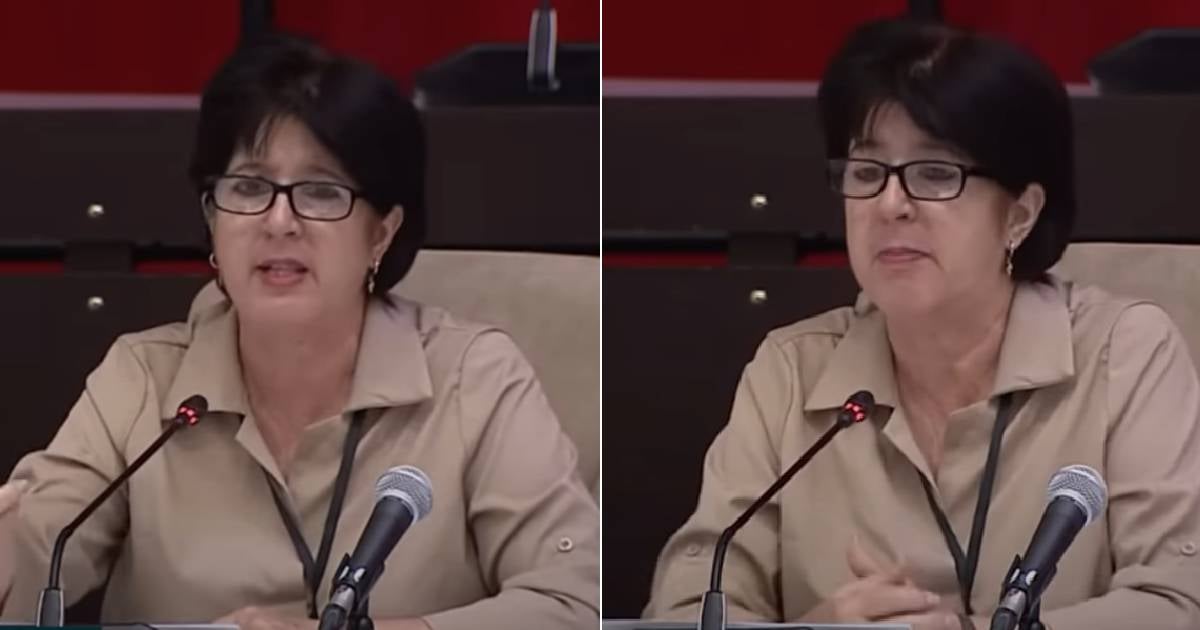
The Ministry of Labor and Social Security (MTSS) of Cuba remains completely silent in the face of the growing wave of outrage sparked by the controversial statements made by its head, Marta Elena Feitó Cabrera, who recently denied the existence of homeless individuals on the island during a parliamentary session, branding those who beg or sleep in doorways as “disguised as beggars”.
“When you look at their hands, when you look at their clothes, they are disguised. In Cuba, there are no beggars. They have found an easy way to make money without working,” Feitó asserted, a statement that many described as insensitive, arrogant, and completely disconnected from the social reality of the country.
Reactions of outrage and institutional silence
Social media quickly ignited following the dissemination of her words. Intellectuals, activists, artists, journalists, and everyday citizens have harshly criticized the minister's approach, deeming it a disrespect towards the most vulnerable sectors of Cuban society. The wave of comments has been almost unanimous in denouncing the institutional blindness to an everyday reality: the growing visible marginalization on the streets across the island.
Meanwhile, the MTSS has continued its digital activity as usual, without mentioning the controversy. On its official account on X, the entity published content this Tuesday about multiple jobholding, workplace safety and health, regulations for self-employed workers, and reminders regarding the consultation of the new Labor Code.
However, no reference has been made to the statement from her minister or to the uproar it has caused.
Feitó herself posted a message on X where, paradoxically, she discusses social programs for individuals in vulnerable situations. “The State extends a hand to those who truly need it. Progress, dissatisfactions, and challenges, analyzed with transparency. Participation and popular control: essential,” she wrote, without directly referring to her previous statements.
Díaz-Canel responds, without mentioning the minister
The pressure was such that even Miguel Díaz-Canel, the Cuban leader, was compelled to address the issue. On the morning of this Tuesday, he posted a message on his X and Facebook profiles, where, although he avoided naming Feitó, he pointed directly to the insensitivity displayed in the National Assembly.
"Very questionable is the lack of sensitivity in the approach to vulnerability during the Assembly's Commissions," he wrote.
"The Revolution cannot leave anyone behind; that is our motto, our militant responsibility."
Díaz-Canel added that the Parliament's committees are tasked with debating "actions to overcome the difficult moment the country is experiencing," emphasizing that many of these solutions must arise from "collective effort, intelligence, and creativity."
An obvious fracture
The omission of the minister's name and the lukewarmness of the institutional publications reveal an attempt to divert attention without taking direct responsibility. However, the public demands explanations, and for many, a public rectification or even the resignation of Minister Feitó would be the only gesture of dignity in the face of a social reality that no discourse can hide.
Meanwhile, the "disguised as beggars" —as the official referred to them— will remain visible to everyone, except for the Ministry that should protect them.
Frequently asked questions about the statements made by the Minister of Labor of Cuba and their impact
What did Cuba's Minister of Labor say about the homeless in the island?
The Minister of Labor and Social Security of Cuba, Marta Elena Feitó Cabrera, stated that there are no beggars in Cuba, but rather people "dressed as beggars", who have found an "easy" way to make a living without formally working. These statements have been perceived as insensitive and disconnected from the social reality of the country.
How did Cuban society react to the minister's statements?
The minister's statements unleashed a wave of indignation both inside and outside of Cuba. Intellectuals, artists, and ordinary citizens harshly criticized her words. They were seen as an affront to the most vulnerable sectors of Cuban society and sparked a series of reactions on social media, including criticism from public figures like actor Luis Alberto García and economist Pedro Monreal.
What was the response of the Cuban government to the controversy generated by the minister?
The government, through President Miguel Díaz-Canel, issued a vague response that did not directly name the minister, describing the “lack of sensitivity in the approach to vulnerability” during the Assembly commissions as “very questionable.” This response was seen as ambiguous and uncommitted, lacking a direct condemnation or concrete actions to address the issue.
What is the situation of poverty in Cuba according to the available data?
According to the Cuban Observatory of Human Rights, 89% of families in Cuba live in extreme poverty. These figures contrast with the claims made by Minister Feitó and reflect a critical reality affecting the majority of the Cuban population, amid one of the worst economic crises in the country's history.
Filed under: