
Related videos:
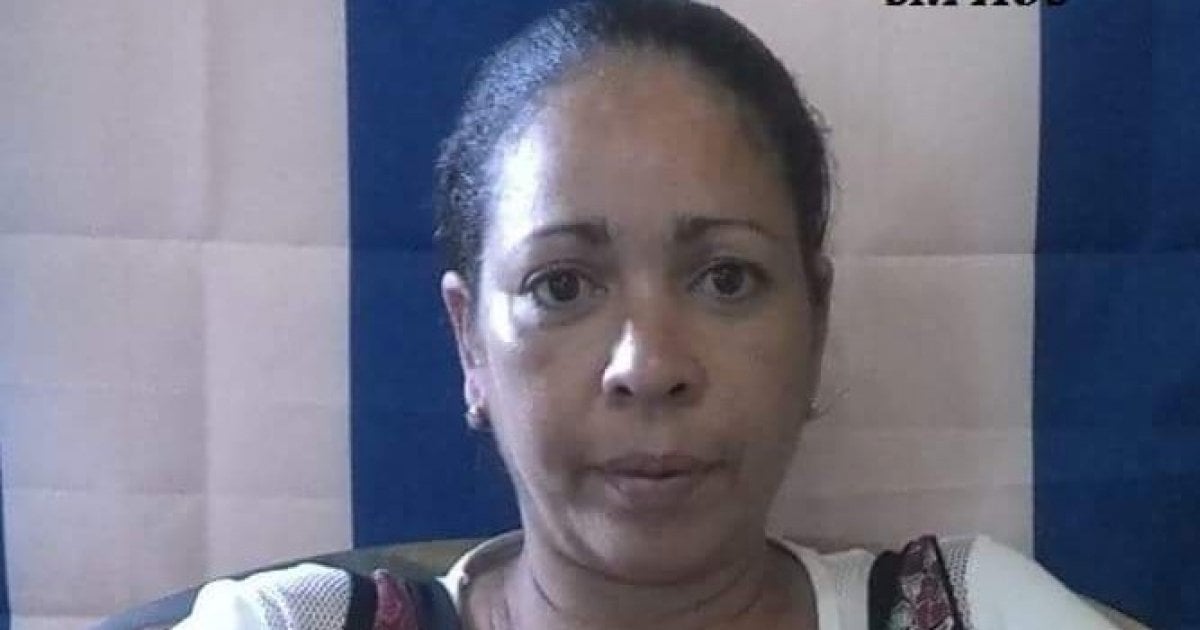
The Cuban opposition member and member of the Damas de Blanco, Aymara Nieto Muñoz, stated that she will continue to fight for the freedom of political prisoners from exile in the Dominican Republic, after being exiled by the Cuban regime after spending more than eight years in prison.
“The best I can do is settle in this country and continue fighting for my brothers, the political prisoners, because I know what it is to be a political prisoner, and in some way, try to help them,” she said in a phone interview with the agency EFE, just a few days after arriving in Santo Domingo with her husband, the also former political prisoner Ismael Boris Reñí, and their two young daughters.
The activist recounted that she is still coming to terms with her new reality. “I am really enjoying my freedom… Little by little, I am recovering from all the bad things that have happened to me in Cuba.”
Nieto acknowledges that his situation is uncertain. He has not received any document certifying the end of his sentence and is afraid that if he attempts to return to Cuba, he could be imprisoned again, as he officially had more than a year left of his prison term. "It's a risk," he warned.
The Lady in White was escorted by State Security agents to Havana airport, without being able to say goodbye to her entire family, and forced to board a flight that took her directly into exile.
According to her explanation, after years of pressure to leave the island, she finally relented when, during a prison "pass," she saw the harsh living conditions of her loved ones. "I'm going to have to accept that I must leave the country", she told herself.
Years of repression and punishment
During her seven years of imprisonment after being arrested in 2016 and again in 2018, Nieto endured punitive cells, isolation, and transfers over 600 kilometers away from her family, which prevented her from seeing her younger daughters for years.
In addition, she suffered from depression, high blood pressure, and dengue, amid reports of a lack of medical care.
His last sentence, of five years and four months, was imposed in 2022 for allegedly inciting a riot in prison, an accusation he has always denied.
He had previously served a four-year sentence for "assault" and "damage," following a violent arrest while participating in a peaceful protest.
However, exile has not erased the pain of separation. In Cuba, her eldest daughter remained, whom she could not embrace before leaving. Nevertheless, in Santo Domingo, she claims to have been welcomed by the Cuban community and solidarity organizations.
With a one-year humanitarian visa, Nieto is hopeful about rebuilding his life and that of his family. "I believe we will move forward", he expressed.
The NGO Cubalex reported that Nieto's case confirms that forced exile has become a repressive practice of the Cuban regime, aimed at neutralizing leaderships and silencing critical voices.
On its part, Prisoners Defenders recalled that by the end of July, there were 1,176 political prisoners in Cuba, the highest number since they began keeping records.
The story of Aymara Nieto connects with the darkest practices of repression on the island: from confinement and isolation to forced exile, a path she has chosen to transform into a new trench. "I will continue fighting for my political prisoners," she reaffirmed.
Frequently Asked Questions about the Exile of Aymara Nieto and Repression in Cuba
Why was Aymara Nieto exiled to the Dominican Republic?
Aymara Nieto was exiled to the Dominican Republic as part of a repressive practice by the Cuban regime, which aims to neutralize leadership and silence critical voices. The regime conditioned her freedom on her permanent departure from the Island, an action that has been denounced as a violation of international law.
What was Aymara Nieto's experience during her imprisonment in Cuba?
During her imprisonment, Aymara Nieto suffered from punishment cells, isolation, and transfers far from her family, which prevented her from seeing her young daughters for years. Additionally, she experienced depression, high blood pressure, and dengue, and reported a lack of adequate medical care.
What is the current situation of political prisoners in Cuba?
According to Prisoners Defenders, by the end of July there were 1,176 political prisoners in Cuba, the highest number recorded to date. This situation reflects a pattern of repression and systematic persecution against opponents and activists on the island.
What impact does exile have on the life of Aymara Nieto and her family?
Exile has meant a painful separation for Aymara Nieto, leaving her eldest daughter in Cuba and facing the uncertainty of building a new life in exile. Despite these challenges, Nieto has been welcomed by the Cuban community in the Dominican Republic, and she remains committed to fighting for the freedom of political prisoners from abroad.
Filed under: