
Related videos:
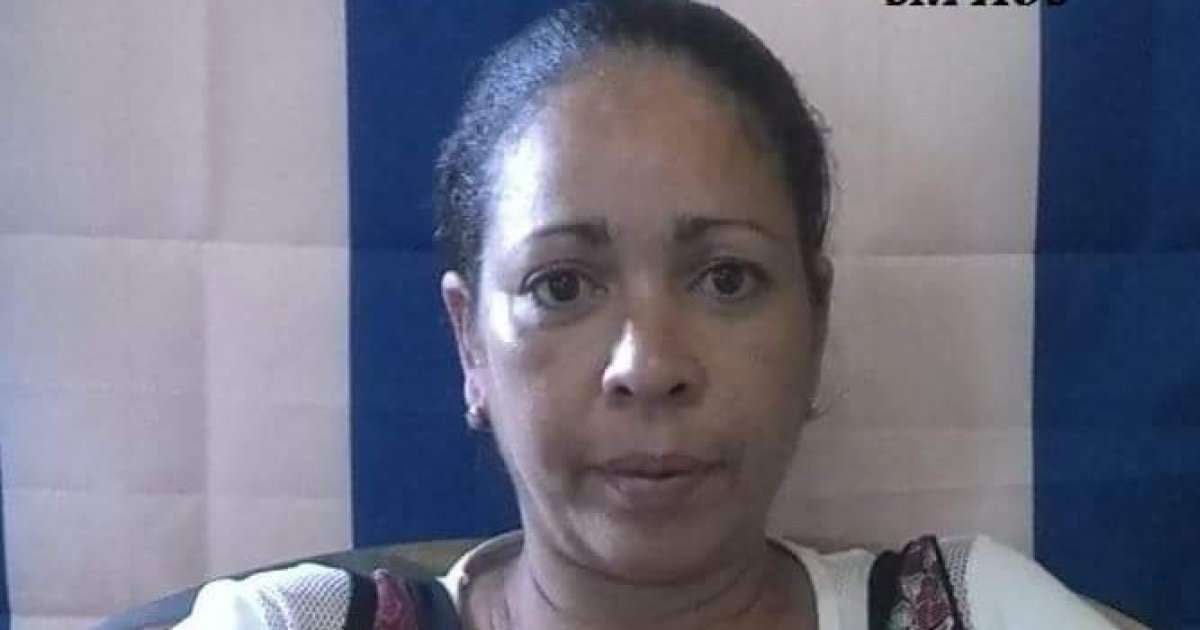
The Cuban political prisoner and member of the Damas de Blanco, Aymara Nieto Muñoz, was exiled to the Dominican Republic this Monday, after more than eight years in prison due to her opposition activism. The dissident arrived in Santo Domingo with her husband, former political prisoner Ismael Boris Reñí, and two of her minor daughters, while her oldest daughter was left in Cuba, as the authorities prevented them from saying goodbye.
According to 14ymedio, Nieto was transferred directly from the Bella Delicia Forced Labor Prison in Havana to the airport, in an operation that included interference with her family's communications. “This can only be named as exile,” denounced the activist María Regla Castro on social media, indicating that she has been welcomed by a supportive family in the Caribbean country.
Organizations like Prisoners Defenders had reminded days earlier that the Cuban regime had made their freedom conditional on leaving the Island permanently.
Nieto was serving her second consecutive sentence, imposed in 2022 for “disorders in a penitentiary establishment” following the riot that occurred in the women's prison of Guatao in 2020, when she was on the verge of completing a previous four-year sentence for “assault” and “damage.”
Nieto's case reflects a pattern of persecution that began in 2015 and intensified following his violent arrest in 2018. In addition to the initial sentence of four years, in 2022, he received an additional sentence of five years and four months, handed down during a trial held via videoconference, which the defense claimed was manipulated by State Security. Since then, he has accumulated nearly a decade of deprivation of liberty.
During her imprisonment, the Lady in White suffered from depression, high blood pressure issues, and dengue, in addition to being relocated more than 600 kilometers away from her family, which prevented her from seeing her two youngest daughters for years. In December 2022, her husband reported that she was not receiving medical treatment to manage her hypertension in the El Guatao prison.
Independent journalist Yoani Sánchez, director of the newspaper 14ymedio, described the case as evidence of the repressive policy of the regime against its critics, while María Regla Castro stated that the expulsion was forced.
Prisoners Defenders reiterated that this constitutes an exile, a figure prohibited by international law, and that the activist spent eight years in prison for political reasons.
A policy of exile and prohibitions
In recent years, the Cuban regime has exiled or prevented several opponents, journalists, and activists from returning to the country, forcing them to settle abroad under the threat of imprisonment if they remained on the Island. Cases such as those of Anamely Ramos, Carolina Barrero, and other members of civil society demonstrate that exile has become a systematic tool of political repression.
The forced departure of Aymara Nieto marks a new chapter in the repression against the Ladies in White and Cuban dissent, leaving her family divided and the opposition figure far from her homeland.
Frequently Asked Questions about the exile of Aymara Nieto Muñoz and repression in Cuba
Why was Aymara Nieto Muñoz exiled to the Dominican Republic?
Aymara Nieto Muñoz was exiled as part of a policy by the Cuban regime to suppress its opponents, using exile as a tool to silence critical voices. Nieto, a member of the Ladies in White, spent more than eight years imprisoned for her activist opposition. Organizations such as Prisoners Defenders have reported that her freedom was conditional on her permanent departure from the Island.
What background does Aymara Nieto Muñoz have in her fight against the Cuban regime?
Aymara Nieto Muñoz has been a prominent activist in the Cuban opposition, especially as a member of the Ladies in White. She was initially imprisoned in 2015, and her situation worsened after a violent arrest in 2018. In 2022, she received an additional sentence of five years and four months for “disorder in a penitentiary establishment.” Her case reflects the pattern of systematic repression by the regime against opponents.
How does exile affect Aymara Nieto Muñoz's family?
The exile has left Aymara Nieto's family divided, as her eldest daughter was unable to say goodbye and remains in Cuba. Nieto arrived in the Dominican Republic with her husband and two of her younger daughters, welcomed by a supportive family, but the situation has marked a new chapter of repression against her opposition group and has emotionally affected its members.
What other people have been affected by policies of exile and repression in Cuba?
The Cuban regime has used exile and systematic repression against numerous opponents, journalists, and activists. Cases such as those of Anamely Ramos, Carolina Barrero, and other members of civil society demonstrate that exile has become a systematic tool of political repression. Additionally, figures like Berta Soler and Ángel Moya have faced house arrests and constant surveillance.
Filed under: