
Related videos:
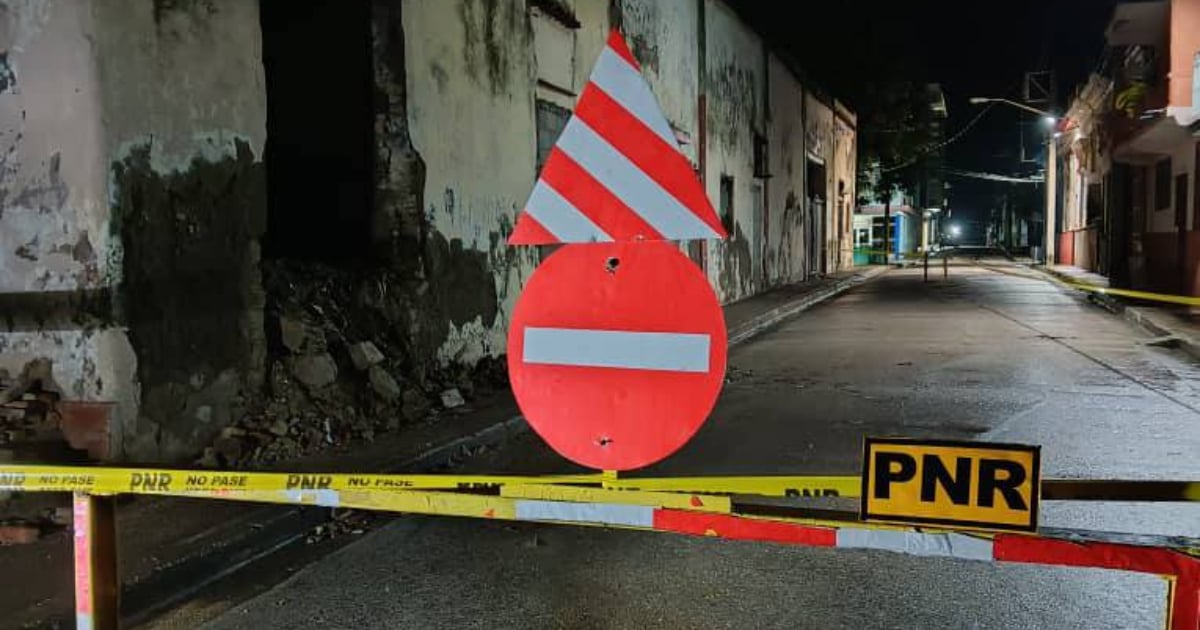
The authorities in Guantánamo have decided to close access to several streets in the municipality due to the risk of new collapses in the lateral structure of the old workshop of the Food Industry, a derelict building that has suffered damage after the heavy rains of recent days caused by Tropical Storm Imelda.
According to the state-run newspaper Venceremos in a post on Facebook, the Provincial Road Safety Commission explained that the building, located on Los Maceo Street between Carretera and Donato Mármol, poses a high risk of collapse, which presents a danger to the safety of residents and pedestrians.
Among the measures adopted is the prohibition of vehicular traffic on Donato Mármol street, from Calixto García to Los Maceo, as well as on Carretera street, from Los Maceo to Calixto García.
Access to the interior of the building and pedestrian traffic on the sidewalks near the affected structure have also been prohibited.
The Commission urged the public to respect the signs placed in the area and to follow the instructions from the relevant authorities to prevent accidents.
"We apologize for any inconvenience that these essential measures may cause," the statement noted.
The recent rains associated with Tropical Storm Imelda have affected several deteriorated structures in the province and in other areas, highlighting the vulnerability of the housing stock and the lack of maintenance in older buildings.
The situation worries the residents, who fear that the next storm could cause more landslides in other parts of the city.
The decision to close streets and restrict access to the area has provoked reactions among citizens, who criticize the authorities for their delay in taking action.
"It should have been demolished a long time ago. The situation is now worsened by the rains, but for years it has posed a danger to the people traveling through that area and to road safety," commented Risel Ruiz Cordovés.
In the same vein, Carlos Planas Betancourt criticized the institutional inaction: “That structure has been like that for years and they have never done anything.”
For her part, Rosana Ureña noted that the danger is constant: “I always cross to the other side of the street because I feel like it’s going to fall... Every time there’s a storm, another wall of that structure comes down... It’s been a long time since it became a dumping ground and a place for perverts; they should do something useful with that well-located space.”
Other internet users criticized the solution adopted by the government. “The easiest thing is to close the street instead of demolishing. I don't know where the executives of these entities in this country study or what they study,” questioned Siuky Martínez Rivera.
Meanwhile, Raudel Peña believed that the measures are just for show: “How many years has it been like this? It takes a storm for them to put measures in place. What they need to do is demolish it, and the problem is solved. They create a façade to make everyone think they care about the people, but what they truly need to do, they don’t do.”
The rains associated with tropical storm Imelda have once again highlighted the structural precariousness in several Cuban cities. In Santiago de Cuba, dozens of housing collapses were reported, many of them in vulnerable neighborhoods, leaving several families without shelter in the early hours of the morning.
Authorities acknowledged widespread damage, including total and partial collapses that even affected school buildings.
Among the most serious cases, a man lost his life after the collapse of a wall that fell onto his home while he was sleeping.
This incident sparked a strong reaction on social media, where neighbors and family members reported that they had been warning about the structural danger of the site for years, without any state entity intervening in a timely manner.
Additionally, a key bridge in the city is on the verge of collapse due to the accumulated water and sediment erosion that undermined its foundation.
Vehicle traffic was restricted due to fears of an imminent landslide, leading to chaos in mobility and concern among residents.
Frequently asked questions about the landslides in Guantánamo
Why were streets closed in Guantánamo?
The streets in Guantánamo have been closed due to the risk of collapses in the lateral structure of the old workshop of the Food Industry. Recent heavy rains have further damaged the building, increasing danger for neighbors and passersby.
What measures have the authorities taken in response to the collapses in Guantánamo?
The authorities have prohibited vehicle and pedestrian traffic on the streets near the at-risk building, as well as access to the interior of the property. The population is urged to respect the safety signs and instructions to prevent accidents.
Why is the population criticizing the government's handling of the landslides?
The population criticizes the government's inaction and delay in taking effective measures to prevent collapses. Residents believe that the building in question should have been demolished a long time ago due to its state of disrepair and the danger it represents.
What other infrastructure issues does Guantánamo face?
Guantánamo faces significant infrastructure problems due to the lack of maintenance on old buildings, which has led to frequent collapses, especially during extreme weather events. The situation is exacerbated by a shortage of resources and institutional neglect.
Filed under: