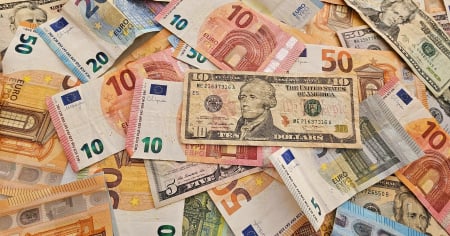
The currencies today show a trend towards stability in Cuba, following the historic Wednesday when the euro surprised everyone by soaring to 500 pesos, breaking a significant selling threshold that solidifies the decline of the national currency.
At dawn on October 2, the euro maintains the 500 pesos it reached yesterday, and the dollar continues to be priced at 440 CUP, a value it also hit the day before.
In the case of the Freely Convertible Currency (MLC), whose decline and volatility have been its predominant features in recent months, it has remained pegged at 210 CUP for several days.
Exchange rate today 02/10/2025 - 7:25 a.m. in Cuba:
Exchange rate of the dollar USD to CUP according to elTOQUE: 440 CUP.
Exchange Rate Evolution
Exchange rate of the euro EUR to CUP according to elTOQUE: 500 CUP.
Tasa de cambio from MLC to CUP according to elTOQUE: 210 CUP.
In an analysis article published by elTOQUE this Wednesday, the outlet emphasized that since they began publishing the Informal Market Representative Rate (TRMI) in January 2021, a rate as high as this for the euro had never been reached.
The value of 500 CUP per euro "lacks precedent in the recent history of the island." Not even during the so-called Special Period in the 1990s, following the collapse of the Soviet Union, were such high levels of depreciation of the Cuban peso against foreign currencies recorded
For the Observatory of Currencies and Finance of Cuba (OMFi), this record reflects "the structural imbalances of the Cuban economy": fall in GDP, energy deficit, contraction of tourism, paralysis of productive investments, dollarization of internal trade, and concentration of liquid reserves in military conglomerates.
This is compounded by the phenomenon of mass emigration, which further weakens the country's productive and fiscal framework.
Since late 2024, the Cuban government has announced its intention to introduce a floating exchange system to try to close the gap between the official and informal value of currencies. However, "more than half a year later, it has not provided details on its implementation."
Independent economists warn that any attempt to regulate the exchange system should start from a reference rate close to the TRMI.
That is to say, the Government would have to officially recognize prices four times higher than the current 120 CUP per euro maintained by state banks and official currency exchange houses (CADECA).
Equivalence of United States Dollar (USD) to Cuban Peso (CUP) according to the exchange rates of October 2nd:
1 USD = 440 CUP.
5 USD = 2,200 CUP.
10 USD = 4,400 CUP.
20 USD = 8,800 CUP.
50 USD = 22,000 CUP.
100 USD = 44,000 CUP.
Equivalence of Euro (EUR) banknotes to Cuban Peso (CUP):
1 EUR = 500 CUP.
5 EUR = 2,500 CUP.
10 EUR = 5,000 CUP.
20 EUR = 10,000 CUP.
50 EUR = 25,000 CUP.
100 EUR = 50,000 CUP.
200 EUR = 100,000 CUP.
500 EUR = 250,000 CUP.
Frequently asked questions about the exchange rate and the economy in Cuba
Why did the euro reach 500 pesos in the informal Cuban market?
The euro reached 500 pesos due to a historical record in the Cuban informal market, reflecting the rapid depreciation of the Cuban peso. Factors such as the increasing demand for foreign currency, the scarcity of euros, and the ongoing economic crisis in Cuba have contributed to this rise. The preference for the euro is also due to its stability for those with ties to Europe.
What is the current situation of the dollar in the Cuban informal market?
The dollar remains at 440 CUP in the Cuban informal market. This value reflects a sustained increase in recent weeks, although the rise has been more moderate than that of the euro. The demand for dollars continues to be high due to the dollarization of the economy and the depreciation of the Cuban peso.
What actions has the Cuban government taken in response to the currency crisis?
The Cuban government has announced its intention to introduce a floating exchange rate system to bridge the gap between the official and informal values of currencies. However, no concrete details have been provided regarding its implementation, which has led to criticism and distrust among economists and the general population.
How does the depreciation of the Cuban peso affect the population?
The depreciation of the Cuban peso severely affects the purchasing power of the population, as salaries and pensions in CUP rapidly lose value against foreign currencies. This complicates access to basic products and services, widening the social and economic gap on the island.
Filed under: