
Related videos:
Amid the economic and food crisis affecting Cuba, the authorities in Granma imposed fines of up to 72,000 pesos on citizens who sold chicken or provided services without state authorization.
The profile of Facebook Inspección Provincial de Granma reported this Tuesday that its inspectors "continue with control actions" to enforce Decree Law 91/2024, which increases sanctions against the population for alleged economic violations.
According to the report, authorities imposed fines ranging from 16,000 to 72,000 Cuban pesos on several citizens for conducting activities without a license or charging prices deemed "excessive."
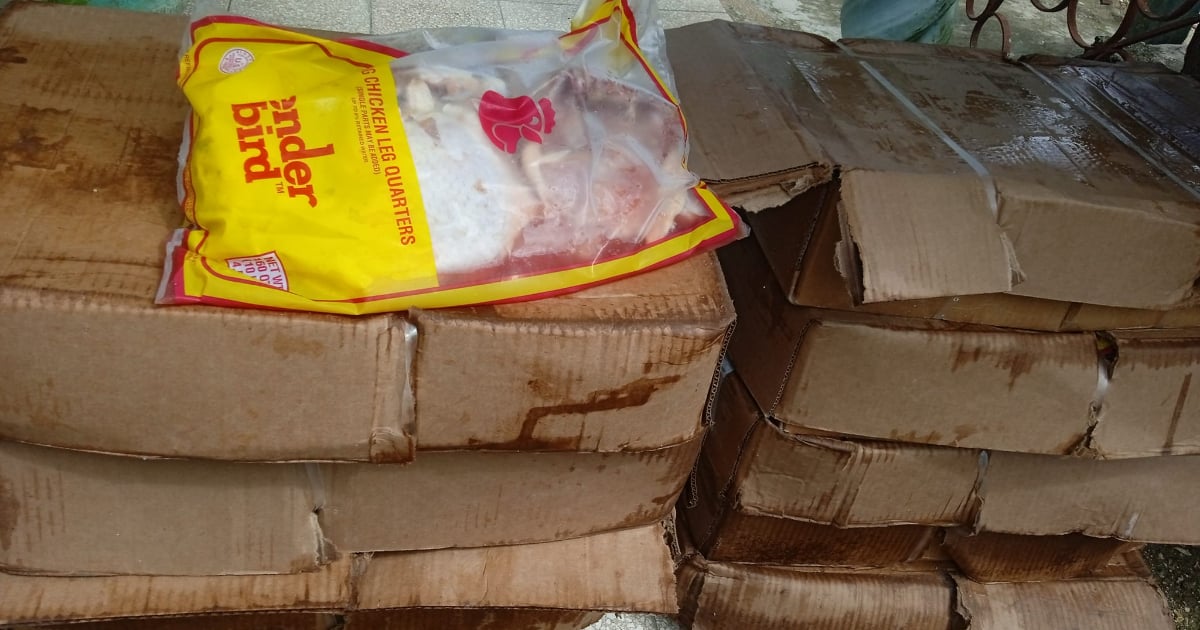
Among the most notable cases, the publication mentions a seller of chopped chicken on Figueredo Street in Bayamo, fined 72,000 pesos for selling the product at 420 pesos per pound.
Another seller of the same food, in the same area, was fined 36,000 pesos for offering it at 410 pesos per pound.
The inspectors stated that the first sanctioned individual "obstructed the inspection" and was summoned by the police through the sector chief.
The publication also highlights that "other TCP" (self-employed workers) were found selling products "without a cost sheet," and they were fined 16,000 pesos each.
The report also includes four private drivers penalized for transporting passengers without an operating license—fines ranging from 16,000 to 36,000 pesos—and a bus driver sanctioned for charging "excessive" prices on the Bayamo-Havana route.
Additionally, a self-employed worker on Jimmy Hirzel Avenue was fined 36,000 pesos for not accepting electronic payments or for charging customers a 10% surcharge who wanted to pay this way.
In front of the Tuxpan restaurant, inspectors detected the "illegal" sale of flour, beers, and other products, although they did not specify the amount of the fines imposed.
The official statement concludes by affirming that the inspectors "will continue taking actions to detect price violations and other offenses that affect our people."
However, the economic reality shows the opposite: with state salaries barely exceeding 6,000 pesos per month, fines amounting to tens of thousands of pesos have become a new form of punishment for Cubans trying to survive inflation and shortages.
These fines are part of the regime's policy to control private activity and suppress the informal market, which in many cases is the only way to access basic food items like chicken, given the state's inability to ensure the basic needs of families.
The recent sanctions imposed in Granma are part of a growing wave of economic repression that is spreading throughout the country.
In Ciego de Ávila, an rice vendor was fined 40,000 pesos for “price violations,” while another merchant was penalized for allegedly applying unjustified surcharges.
These cases reflect how the authorities enforce Decree Law 91 with total rigidity, even when those affected rely on these sales for survival.
Already in October, the regime had tightened its controls on small vendors with fines of up to 16,000 pesos for trading without a license or failing to display cost sheets, even in activities such as selling bread, vegetables, or homemade food.
The official argument has been controlling inflation, although in practice many of these measures have directly affected self-employed workers and families living off the informal market.
In September, operations in Havana against street vendors left images of massive seizures and citizens desperate for being unable to continue their daily activities.
Among those affected were elderly individuals and young people who were transporting fruits, sweets, or bread in wheelbarrows and makeshift boxes.
Filed under: