
Related videos:
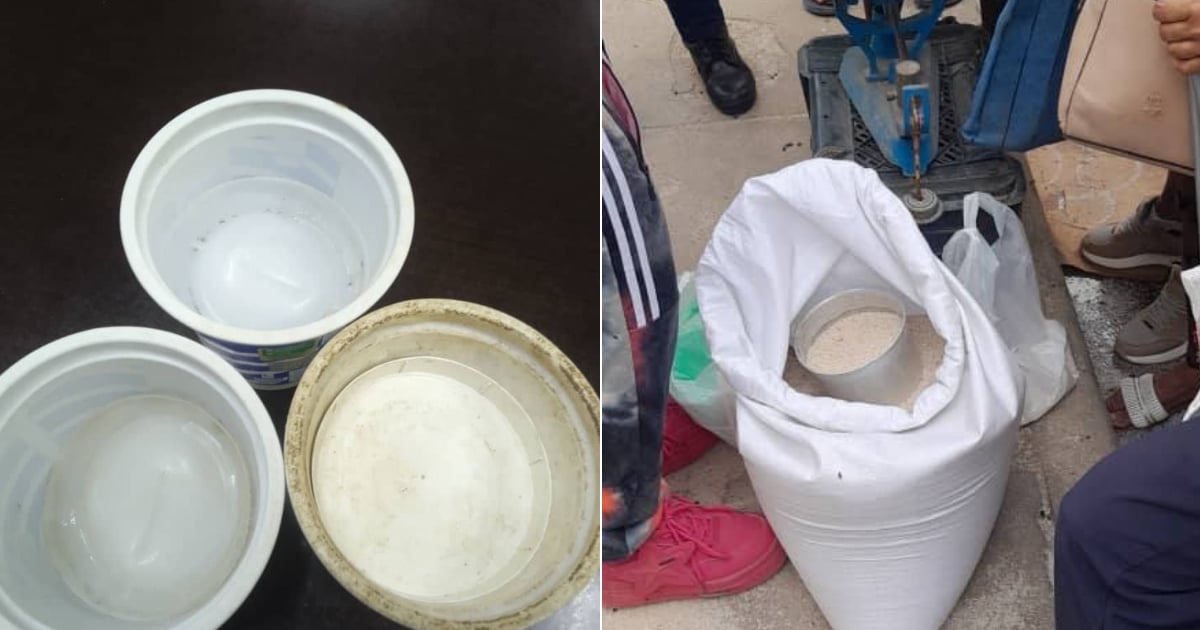
National Revolutionary Police Forces and the Provincial Inspection Group conducted an operation this Tuesday in central areas of Ciego de Ávila, where they detected the use of double-bottomed cups in the sale of rice to the public, as reported by Televisión Avileña.
The control took place on the streets of José María Agramonte and Joaquín de Agüero, where jars with double bottoms were discovered, used to steal from the people. The authorities imposed the established fines and ordered the forced sale of 400 pounds of rice to the public at the official price of 155 pesos per pound.
The released images show modified ice cream containers with a false bottom that reduces the actual volume of the packaging, a practice denounced by local residents as "a scam against the people."
The post generated hundreds of comments on social media, mostly expressing outrage and calls for more frequent controls. “This is nothing new; they’ve been doing this for months,” wrote one user. Others pointed out that the same thing happens at various locations across the province, and that after the fines, the vendors "are back to their old ways shortly after."
"Rice should be weighed on scales, not in containers," claimed another internet user, while several users reported being scammed with missing pounds in their purchases. Some called for higher fines or the revocation of licenses for offenders, and others demanded similar operations in fairs and markets in other municipalities like Morón and Ciro Redondo.
Indignation also mingled with resignation: “The people are starving, and on top of that, they're being robbed,” wrote one commentator. “We are eating each other alive,” lamented another.
The case occurs amid a wave of controls and sanctions in various regions of the country, in response to rising prices and speculation in the sale of basic goods. In Havana, authorities recently imposed fines of up to 16,000 pesos in agricultural markets for violating price caps and selling above the allowed value.
Meanwhile, the fraudulent and adulterated sale of products has become a recurring phenomenon. In the Havana market of La Cuevita, there have been reports of scams involving fake cigars filled with sawdust, as well as dental pastes and soaps sealed with nylon that do not contain the actual product.
The lack of control, the shortage of supplies, and the proliferation of informal trade continue to fuel a cycle of speculation and deception, where citizens ultimately become the primary victims.
Filed under: