
Related videos:
Representatives of the Cuban exile community, united under the nonprofit organization Cuba Study Group, today supported the statements made by Cuban-American businessman Alfonso Fanjul, who, after decades of opposing the Cuban regime, has recently expressed his support for a opening towards the island.
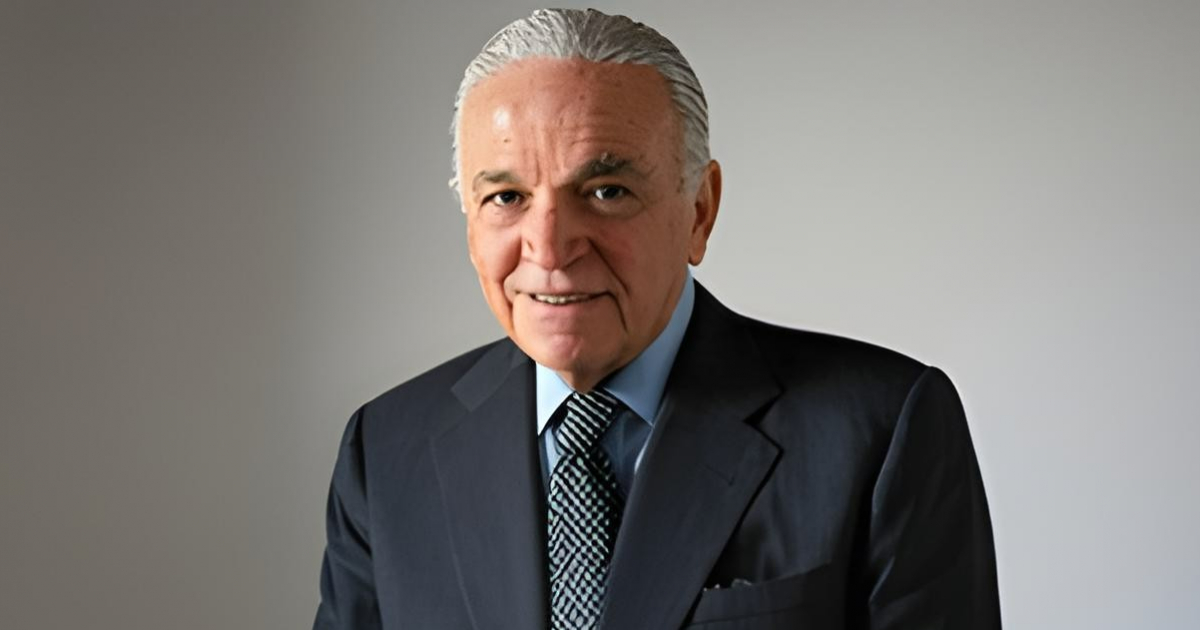
Fanjul, a historical opponent of the communist regime of the Castro brothers and a sugar magnate exiled in South Florida (USA), sparked debate, not without controversy, by stating in an interview earlier this month with The Washington Post that he would be willing to do business in Cuba under certain conditions. "If there is any way for the family flag to return to Cuba, I would be happy for that to happen," Fanjul told the Post.
The surprising turn of the businessman, whose family had to leave behind mansions and extensive farmland nationalized by Fidel Castro in Cuba, is provoking a wave of reactions in the business and political circles of the Cuban-American community. "We support the fact that Mr. Fanjul has initiated an important, timely, and critical debate within the Cuban-American community, and in terms of U.S. policy, on how to effectively respond to the significant structural changes in Cuba," stated the Cuba Study Group in a statement today.
The organization, which defines itself as "non-partisan" and "composed of Cuban business and community leaders who share a common interest and vision for a free and prosperous Cuba," also condemned "the personal attacks, insinuations, and insults" directed at Fanjul since he granted the interview. At 76 years old, the businessman stated that he was reconsidering his stance on relations with Cuba and expressed that Havana could become a business partner "under the right circumstances." "The Fanjul family was in Cuba for 150 years and, yes, in the end, I would like to see our family in Cuba, where we started. But it has to be under the right circumstances. I hope that one day the United States and Cuba can find a way for the entire Cuban community to live and work together," the businessman declared.
Fanjul's words, a prominent donor to the campaigns of former Democratic President Bill Clinton, have resonated greatly in the U.S., provoking immediate backlash from the government’s most vocal opponents, such as Republican legislators Ileana Ros-Lehtinen and Mario Díaz-Balart, as well as Senator Marco Rubio. "While democracy activists on the island face even harsher reprisals from the brutal Cuban regime, it is pathetic that a Cuban-American magnate feels inspired to step on the backs of these activists in order to give more money to the communist thugs for repression," Ros-Lehtinen stated in a press release.
In response to that and other reactions, the Cuba Study Group expressed its condemnation today regarding "the intolerance displayed by these actions and the lack of respect for the integrity of individuals who may hold alternative viewpoints." "The virulence of these statements is unjustifiable and shows a disregard for basic democratic principles," the group's statement added. Another notable politician, who was a Republican governor of Florida before becoming an independent, Charlie Crist, also supported a change in attitude towards Cuba this Monday.
The former governor, who will run for office again in November but this time as a Democrat, stated today in a statement that "the embargo has accomplished nothing in over 52 years to change the regime in Cuba." Crist specified, however, that any potential lifting of the embargo against Cuba "will take time and must be done in a way that U.S. investments help the people, not the dictatorship." On another note, businessman and former U.S. ambassador to Belgium Paul Cejas, who left Cuba shortly after the revolution, also declared that "diplomacy is a tool of politics." "It is a tool of compromise. And it is used even with our bitterest enemies," Cejas emphasized. EFE Source: Caracol.com.co
Filed under: