
Related videos:
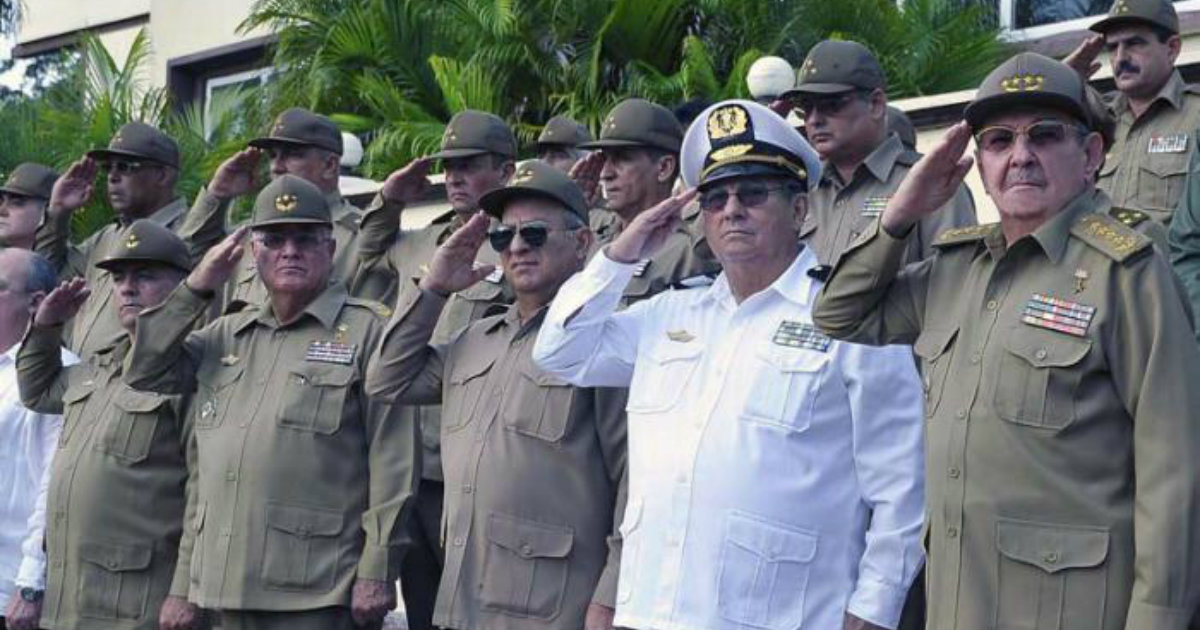
Donald Trump's measures against the Cuban military aristocracy fit perfectly with late Castroism, which still fails to produce even a glass of milk, and will harm small Cuban businesses for whom American tourism is vital to their financial health. It will also impact a future democratic transition, as the military and the clergy are the only groups with a territorial presence on the Island.
The White House didn't even take the care to wait for Trump to finish his visit to China, a multiparty democracy where the communist party is banned, before making its announcement against everyday Cubans on both sides, as the Cuban exiles who had sent part of their savings to their families to set up a small business on the Island are also left severely affected.
Rusia, the Cuban-American politicians betting on a night of San Bartolomé in Cuba, and the stale core of late Castroism must be applauding Trump's clumsiness on a minor issue like Cuba, blowing up the bridges with the Cuban military, which are crucial when it comes to the mameyes.
A glimpse at the unregulated structure of the regime reveals how Raúl Castro has placed the first secretaries of the Communist Party and provincial People's Power presidents above a general, who appears in the Cuban press as the head of a strategic region, not to mention the Council of Ministers where the stars overshadow the guayaberas.
And those generals and many other high-ranking officials are experiencing these times with a mix of curiosity and fear for the immediate future; thus, Trump's anti-Cuban measures will lead to a hardening of positions among all of them, including those who are in favor of an orderly transition and those who have been conversing monthly—since 1994—with their American counterparts at the Guantánamo Naval Base and other military structures.
Donald Trump and his advisors for the occasion are acting unjustly towards the Cuban military leadership, as it was precisely they who – after a clash of tanks against beans between Fidel and Raúl Castro – decided to develop an economic group to produce their food and light weapons, freeing the monopolistic State from the expenses associated with maintaining an oversized army.
Raúl Castro, Julio Casas Regueiro (deceased), Moisés Sio Wong (deceased), Luis Pérez Róspide, and other Cuban officials are the ones who have worked the hardest for the Cuban economy and to provide it with a strategic realism in the face of Fidel Castro's megalomaniacal delusions, obsessed with propaganda rather than with tangible results that would improve the lives of Cubans.
That group and General Ulises Rosales del Toro, a brilliant and modest strategist who has been pushed to a corner of civilian life, made possible military missions in Ethiopia and Angola, as well as the one currently deployed in Venezuela. None of them are democrats by vocation, but their economic realism, which dates back to the Second Front, makes them ideal interlocutors for an orderly and peaceful transition to democracy.
Trump has undermined an essential communication channel by attacking the Cuban military, which, along with the Catholic Church, are the only institutions present throughout the Island, and are the only ones that can assure the White House there won't be migration crises like Mariel (1980) and the Balseros (1994).
In the economic sphere, it is still early to assess the real impact of Trump's reversal on the thaw; however, it comes at a time when Cuba is devastated by Hurricane Irma, the damage caused by Fidel Castro's voluntarism, and the entrenched Cuban bureaucracy, which is entrenched in the accumulation of dollars and euros, fiercely opposes any sensible and necessary reform.
Entrepreneurs and small business owners, natural agents of the political change that Cuba needs as an emerging middle class, will be astonished by the behavior of a supposed ally, from whom they expect support, and who turns out to act just as badly or worse than late Castroism, bombarding them with controls and obstacles.
Before the Saturnine trauma of 1989, Cuba had a parallel economic structure with about 280 companies around the world, including a bank in London, all subordinate to Fidel Castro through the Ministry of the Interior. This structure, unless it has disappeared, does not appear in American records.
Trump, the hardliners in Havana and Miami, and the bureaucracy that has gotten rich at the expense of the poverty of their fellow countrymen are the main enemies of democracy in Cuba and of ordinary Cubans, tired of hardship and repression and now disheartened by the new stance of the White House, which forces them to go to Colombia to apply for a visa for a dream and restricts visits from Americans with vital dollars.
Havana has reacted with a low profile, putting the response in the hands of Josefina Vidal –who still has not assumed her role as ambassador in Canada- a light and sensible answer to the umpteenth attempt by the White House to subdue a people through hunger.
Cuban-origin politicians Ileana Ros-Lehtinen, Marco Rubio, Bob Menéndez, and Mario Díaz-Balart expressed some disappointment with the measures finally announced by the State Department, as they wished for them to be even tougher.
Paradoxically, these positions alienate them from the Cuban people whom they claim to defend against the dictatorship, and strengthen the hard core in Havana, which is resistant to any reform or opening, no matter how minimal it may be, and which continues to hold significant power. They have prevented a single opposition member from being proposed as a neighborhood councilor, detained and released on bail the artist Luis Manuel Otero Alcántara, who attempted to celebrate an independent Havana Biennial, and has been charged with "receiving stolen goods" because the police found two bags of cement in his home; they continue to harass the Damas de Blanco.
Late Castroism maintains control over society, as is typical of a totalitarian system, and although Cubans are now better informed than they were five years ago, the collective imagination still harbors the sense of the USA as both enemy and hope. Any American action holds significant weight among Cubans because the regime skillfully blamed the enemy for its disasters, and now that the pretext seemed to be exhausted, the olive-green swallows return to nest in the White House.
Filed under:
Opinion article: Las declaraciones y opiniones expresadas en este artículo son de exclusiva responsabilidad de su autor y no representan necesariamente el punto de vista de CiberCuba.