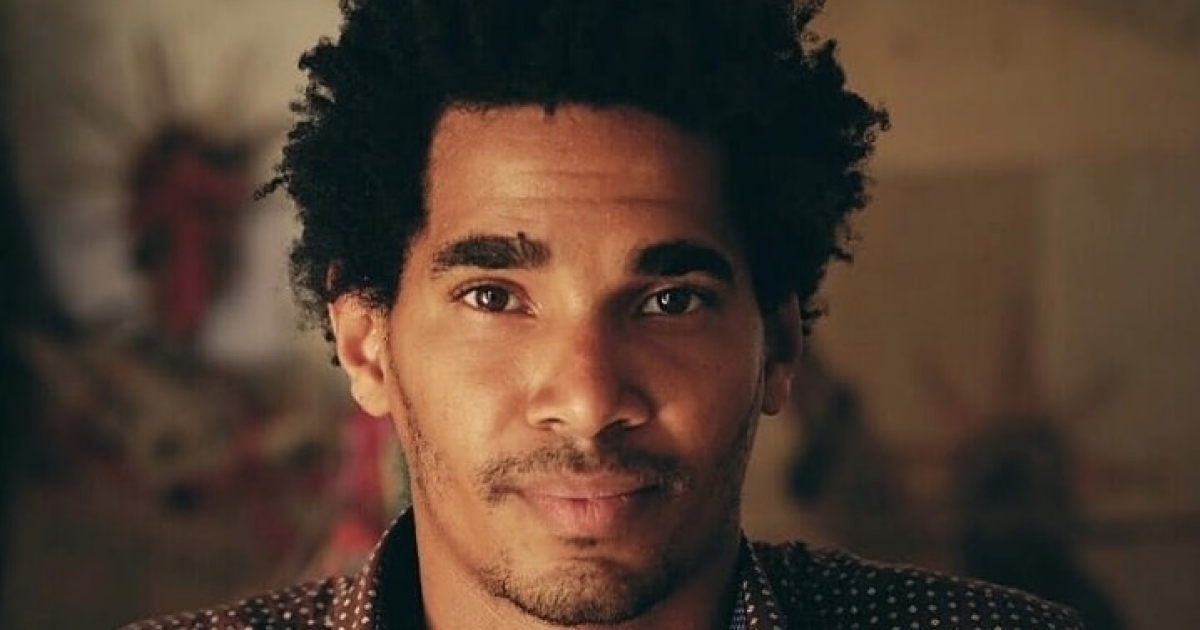
Luis Manuel Otero Alcántara is a Cuban independent activist and artist born in Cuba on December 2, 1987. Known for his performances that denounce government management and policies, he is a leader and member of the San Isidro Movement. This movement, made up of a group of artists and creators, aims to promote, protect, and defend civil and cultural rights in Cuba.
Otero has suffered, like many Cuban activists, numerous detentions by the Cuban police and State Security. He recently made headlines due to the hacking of the Facebook account of the San Isidro Movement (August 2020) and the publication of intimate photos of the artist intended to tarnish his image, which has resulted in multiple displays of support from his followers.
In February 2020, Otero traveled around the city to highlight the deteriorating construction conditions and staged a performance intended to draw attention to the collapses, as well as the tragic death of three girls following the collapse of a balcony on them in the Jesús María neighborhood of Old Havana. As a result of this action, Otero was arrested.
In March of that same year, he was arrested while heading to a "kissing" event in front of the Cuban Institute of Radio and Television due to the censorship of a gay kiss in the film Love, Simon. On this occasion, dozens of artists (Silvio Rodríguez, Pedro Luis Ferrer, Carlos Varela, Athanai, Yotuel (Orishas)), the U.S. Assistant Secretary of State for Western Hemisphere Affairs, Michael G. Kozak, and Amnesty International, among others, joined in the call for the release of the Cuban after being imprisoned for over 2 weeks and facing the threat of a sentence ranging from two to five years in prison for the alleged crime of property damage. Regarding these calls for release, Diaz Canel stated that “Cuban artists must be within the revolution."
In 2019, Otero Alcántara was summoned by State Security on the very day that the King and Queen of Spain began their official visit to the Island, and he was arrested on the charge of "public disorder."
Alcántara has been the target of attacks on many occasions from the Cuban state-run press, a group of artists who support the government, and by the president of the National Council of Plastic Arts, Norma Rodríguez Derivet.