
Related videos:
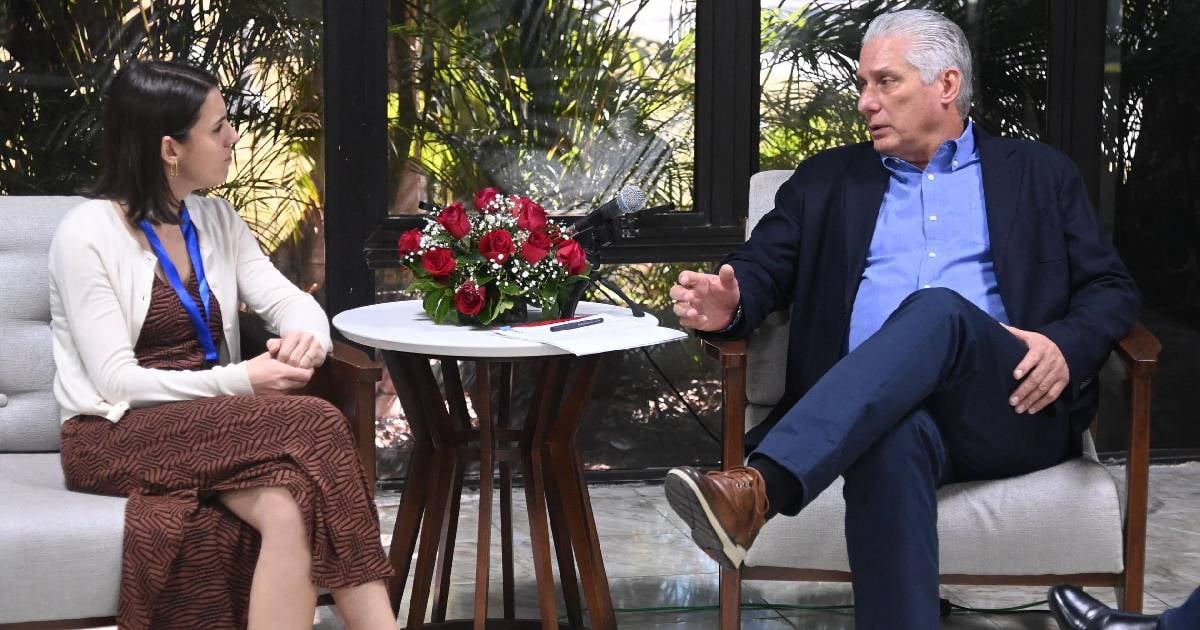
The former Minister of Equality of Spain and current MEP Irene Montero is in Cuba, where she had a meeting with the ruling Miguel Díaz-Canel.
A report from the Presidency of Cuba indicates that during the meeting, topics of bilateral cooperation, gender equality, and social policies were discussed within the framework of the Cuban government agenda.
Montero, who was part of Pedro Sánchez's coalition government and is a prominent figure in the Podemos party, reaffirmed her support for the Cuban government and emphasized the importance of strengthening ties between the two countries.
In his statements, he emphasized the need to promote feminist policies and defend social progress in the face of what he called "the rise of the far right."
Díaz-Canel thanked for the visit and praised Montero's support for the Cuban Revolution. They also discussed the international situation and the economic sanctions imposed on Cuba.
Montero's trip, in light of the VI International Conference for the Balance of the World, has sparked various reactions in the Spanish political arena, with opposition sectors criticizing his close ties to the Cuban regime, while his supporters emphasize the importance of cooperation and dialogue with Latin America.
The MEP also met with leaders of the National Assembly of People's Power.
Montero holds a degree in Psychology, and her political career began in the student movement before joining Podemos, where she played a key role as a spokesperson in the Congress of Deputies and later as a minister.
From a broader political perspective, Montero identifies with a transformative left that is critical of capitalism and supports alliances with progressive governments in Latin America.
He has repeatedly expressed his support for political processes in the region, such as those led by former President Evo Morales in Bolivia, Gustavo Petro in Colombia, and Kirchnerism in Argentina.
Podemos, the party to which Montero belongs, has maintained a stance aligned with the Cuban government, viewing it as part of a bloc of countries that resist the influence of the United States.
Montero, like other members of his political party, has avoided labeling the Cuban government as a dictatorship and has defended the sovereignty of the island against international sanctions and blockades.
Frequently Asked Questions about Irene Montero's Trip to Cuba and Her Meeting with Díaz-Canel
What was the purpose of Irene Montero's trip to Cuba?
Irene Montero's trip to Cuba aimed to participate in the VI International Conference "For the Balance of the World", as well as to meet with the Cuban leader Miguel Díaz-Canel to discuss issues of bilateral cooperation, gender equality, and social policies.
What topics were discussed during the meeting between Irene Montero and Díaz-Canel?
During the meeting, Irene Montero and Díaz-Canel discussed bilateral cooperation, gender equality, and social policies. They also addressed the international situation and the economic sanctions imposed on Cuba.
How has the Spanish political sphere reacted to Montero's trip to Cuba?
Montero's trip to Cuba has sparked various reactions in the Spanish political arena. Some opposition sectors have criticized his closeness to the Cuban regime, while his supporters argue for the importance of cooperation and dialogue with Latin America.
What is the position of Irene Montero and her party, Podemos, regarding the Cuban government?
Irene Montero and her party, Podemos, maintain a sympathetic stance towards the Cuban government, viewing it as part of a bloc of countries that resist American imperialism. Montero has expressed her support on several occasions for political processes in the region led by progressive governments.
Filed under: