The government of Panama has decided not to renew its participation in the Belt and Road Initiative, a project signed with China in 2017, after receiving diplomatic pressures from the United States.
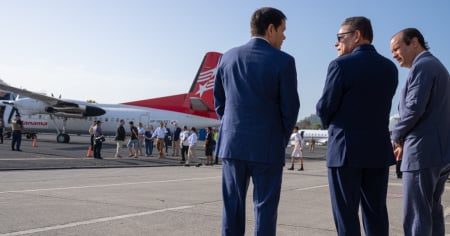
This decision was announced after a meeting on Sunday between the Panamanian president, José Raúl Mulino, and the U.S. Secretary of State, Marco Rubio.
Rubio conveyed President Donald Trump's concern regarding the increasing Chinese influence around the Panama Canal, viewing it as a potential violation of the neutrality treaty of the interoceanic route.
"The announcement yesterday by President José Raúl Mulino that Panama will allow its participation in the Belt and Road Initiative of the Chinese Communist Party to lapse is a significant step forward for U.S.-Panama relations and for a free Panama Canal," stated the U.S. official on social media.
According to Rubio, it is also "another example of the leadership" of the American president, Donald Trump, in "protecting" the national security of the United States.
The original agreement with China aimed to strengthen economic cooperation and attract investments in strategic sectors.
However, in light of the warnings from Washington about the risks of economic dependence and the potential political influence of China in the region, Panama has chosen not to renew this agreement.
In addition, President Mulino expressed his willingness to review the concessions granted to Chinese companies at the ports adjacent to the canal, stating that audits are currently being conducted in this regard.
This measure could open the door to new bids involving Western companies, in the event that irregularities are detected.
What is the Silk Road and which Latin American countries participate?
The Belt and Road Initiative (BRI), also known as the New Silk Road, is a global mega project for infrastructure and trade driven by China since 2013.
Its goal is to improve global connectivity through the construction of roads, ports, railways, and other strategic infrastructure, thereby facilitating Chinese trade and investments in various regions around the world.
The project is inspired by the ancient Silk Road, the network of trade routes that connected Asia, Europe, and Africa over 2,000 years ago.
However, the modern version of the initiative aims to expand China's economic influence in various parts of the world, including Latin America and the Caribbean.
Since China launched the BRI, several countries in Latin America have signed cooperation agreements to participate in the initiative, attracting investments in infrastructure and energy. Among the countries that have formally joined the Silk Road are:
Panama (2017) - The first Latin American country to join the project, followed by Venezuela, Chile, Peru, Ecuador, Argentina, Bolivia, Uruguay, Costa Rica, El Salvador, Cuba.
These countries have received Chinese investments in strategic sectors such as transportation, telecommunications, energy, and mining. However, some governments have started to reassess their involvement, particularly due to concerns about economic dependence on China and geopolitical pressures from the United States.
Marco Rubio's visit to Panama
The United States Secretary of State, Marco Rubio, made an official visit to Panama as part of his first international tour since taking office on January 21, 2025.
During his stay in Panama City, Rubio met with the president of the country, José Raúl Mulino, to discuss issues of bilateral and regional interest.
One of the central points of the meeting was China's growing influence around the Panama Canal.
Rubio expressed the concern of the U.S. administration regarding the involvement of Chinese companies in projects related to the canal, suggesting that this situation could breach the neutrality treaty governing the operation of this important maritime route.
Additionally, both leaders discussed cooperation on migration issues, particularly concerning the flow of migrants traversing the region on their way to the United States.
Rubio thanked Panama for its efforts in this area and emphasized the importance of continuing to work together to address shared challenges.
Frequently Asked Questions about Panama's Withdrawal from the Silk Road and Tensions with the United States
Why did Panama decide not to renew its participation in the Silk Road?
Panama decided not to renew its participation in the Silk Road due to diplomatic pressures from the United States. The Trump administration expressed its concern about the growing Chinese influence surrounding the Panama Canal, viewing it as a potential violation of the canal's neutrality treaty.
What is the Silk Road and which countries in Latin America are involved?
The Silk Road is a global megaproject for infrastructure and trade promoted by China since 2013, aimed at enhancing global connectivity through the construction of strategic infrastructures. In Latin America, countries such as Panama, Venezuela, Chile, Peru, Ecuador, Argentina, Bolivia, Uruguay, Costa Rica, El Salvador, and Cuba have signed cooperation agreements to participate in this initiative.
What has been the reaction of the United States to Chinese influence in the Panama Canal?
The United States, through its Secretary of State Marco Rubio, has expressed that it will not allow the expansion of Chinese control over the Panama Canal area. The U.S. administration believes that the involvement of Chinese companies in projects related to the canal could violate the neutrality treaty that governs the operation of this important waterway.
What measures has Panama taken regarding the concessions granted to Chinese companies?
The Panamanian president, José Raúl Mulino, has expressed his willingness to review the concessions granted to Chinese companies in the ports adjacent to the canal. Audits are currently being conducted in this regard, which could pave the way for new bidding opportunities for Western companies if irregularities are found.
Filed under: