
Related videos:
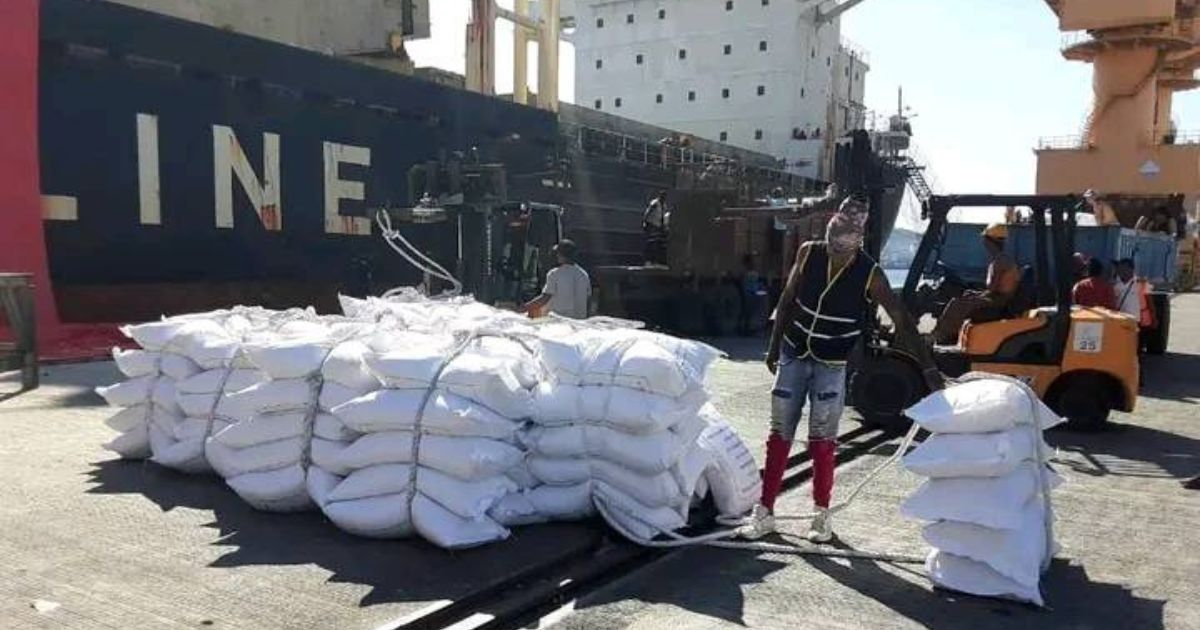
The Cuban government announced a plan to enhance maritime and port activities in Santiago de Cuba, Granma, and Guantánamo, aiming to improve the distribution of the basic goods basket amid the economic crisis and growing criticism over delays in food delivery.
Eduardo Rodríguez Dávila, Minister of Transportation, referenced on his Facebook profile the statements made by the sector's deputy minister, Roberto Ricardo Marrero, currently the director of the Maritime Port Group (GEMAR), who indicated that the plan includes the recovery of port infrastructure, the optimization of coastal navigation, and the incorporation of new technologies to enhance operational efficiency.
Among the proposed measures is the increase of cabotage in the ports of Baracoa, Boquerón, and Niquero, through which the regime assured could guarantee that at least 70% of the basic basket reaches these territories by sea.
It was also announced that a barge and a tugboat dedicated exclusively to this traffic have been recovered.
In the port of Santiago de Cuba, Marrero assured that efforts will be made to optimize container ship operations, with the aim of streamlining the transportation of imports in the eastern region.
Additionally, he reported on the construction of a new warehouse at the port of Baracoa, which was devastated by Hurricane Sandy more than a decade ago.
Despite these announcements, the Cuban port reality continues to face serious challenges, such as the lack of infrastructure maintenance, technological obsolescence, and shortage of resources to carry out the necessary investments.
In recent months, the delays in food delivery to families through the ration book have been ongoing, highlighting issues in the logistics and distribution of basic products.
The regime also assured that it would improve the conditions of port workers, shipyard workers, and sailors, promising better communication with their leaders, salary increases, and improvements in food.
Similarly, he promised a greater "confrontation against indiscipline, illegalities, and criminal acts," acknowledging that there is a lack of control in these types of entities.
While the Cuban government promises these improvements, the crisis in transportation and the distribution of goods continues to affect the population, which is facing shortages of food, fuel, and other essential items.
In December, the Ministry of Interior Trade (MINCIN) reported on the delays in the distribution of basic products through the supply booklet, amid a crisis that affects thousands of Cuban families.
According to a statement released on social media, the guarantee of the regulated family basket remains a priority for the Government, which faces serious logistical and transportation challenges to supply the more than 12,000 stores across the country.
At the end of 2024, MINCIN announced through its official profiles that the distribution of the supply booklet for 2025 was guaranteed for all family units in the country.
However, although the regime assures the continuity of the system, the quantity of guaranteed food is progressively decreasing, reflecting the growing economic and organizational difficulties.
Nonetheless, this announcement was made just a few days after the regime approved the implementation of the removal of subsidies for the basic food basket distributed through the supply booklet.
Frequently Asked Questions about the Port and Economic Situation in Cuba
What measures has the Cuban government announced to improve port operations in the eastern part of Cuba?
The Cuban government has announced a plan to strengthen maritime and port activities in Santiago de Cuba, Granma, and Guantánamo. The measures include the recovery of port infrastructure, the optimization of cabotage, and the incorporation of new technologies to improve efficiency in operations. The regime seeks to ensure that at least 70% of the basic goods reach these territories via maritime routes.
How is the Cuban economic crisis affecting food distribution?
The economic crisis in Cuba has caused constant delays in the delivery of basic food items through the ration book, affecting thousands of Cuban families. The shortage of resources, the poor condition of the infrastructure, and the lack of maintenance are some of the issues that exacerbate the situation.
What challenges does the Cuban government face in the logistics and distribution of the basic basket?
The Cuban government faces serious logistical and transportation challenges to supply the more than 12,000 bodegas in the country. The lack of resources, technological obsolescence, and port infrastructure issues are significant challenges that hinder the proper distribution of basic goods to the population.
What impact do announcements of port improvements have on food distribution in Cuba?
Port improvement announcements aim to accelerate the distribution of the basic basket in the eastern part of the country. However, the port reality continues to face serious challenges, such as a lack of maintenance and resource shortages, which raises doubts about the effectiveness of the measures to address distribution issues.
Filed under: