
Related videos:
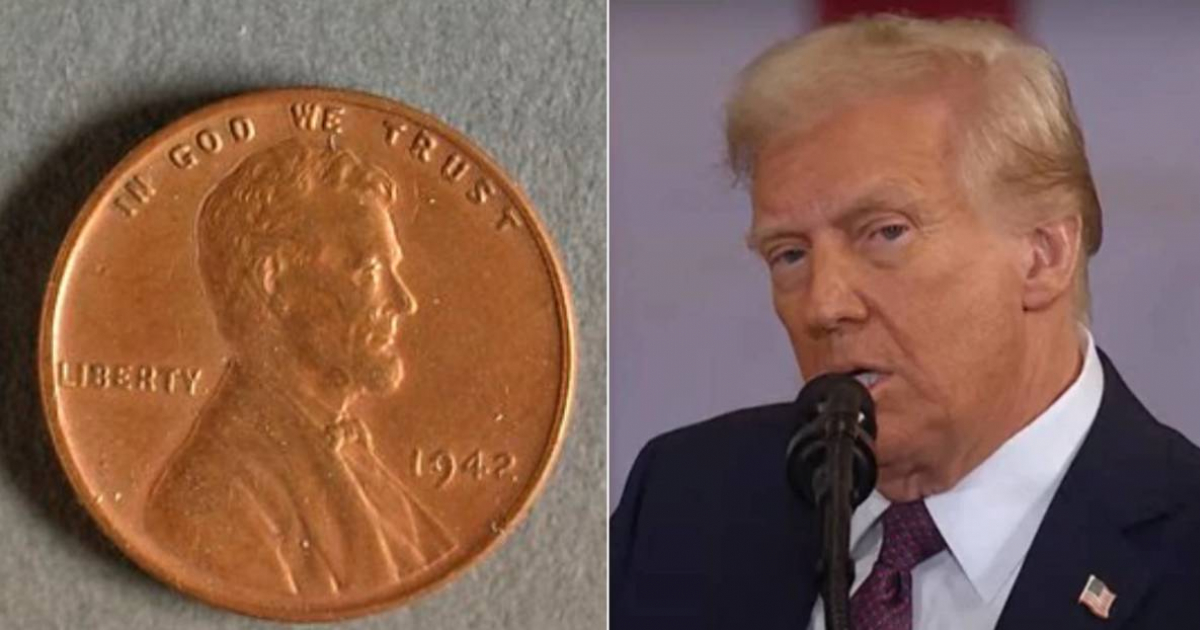
The President of the United States, Donald Trump, announced this Sunday an unprecedented measure in the financial history of the country, ordering the cancellation of the production of new one-cent coins.
"For too long, the United States has minted one-cent coins that literally cost us more than two cents. This is wasteful! I have instructed my Secretary of the Treasury (Scott Bessent) to stop producing new one-cent coins. Let’s eliminate the waste from the budget of our great nation, even a penny at a time," Trump wrote on Truth Social.
Official data indicate that each cent costs more than two cents to manufacture, due to material and production costs, representing a significant annual expenditure for the U.S. Mint.
The decision has sparked extensive debate, as although Trump may influence the operations of the Department of the Treasury, the authority to mint coins lies with the United States Congress, according to the regulations set forth by the Mint since its establishment in 1792.
In 2024, the production of cents resulted in losses exceeding 85 million dollars, with nearly 3.2 billion of these coins manufactured. The cost of each "penny," or "kilo" as it is referred to in Cuba, amounted to 0.037 dollars, surpassing its nominal value.
Additionally, the five-cent coin of the USD is also deficit-making, with a production cost of $0.14 per unit.
Economists agree that the elimination of the cent will have a minimal impact on the economy because cash transactions will be rounded to the nearest five, without greatly affecting consumers.
This measure is not unprecedented globally. Countries like Canada and several European nations have already eliminated their lower denomination coins without significant adverse effects. In Canada, the suspension of the minting of the penny in 2012 resulted in considerable savings and simplified transactions.
While some citizens mourn the end of an iconic coin featuring the image of Abraham Lincoln since 1909, others see the opportunity for circulating pennies to increase their numismatic value.
The debate continues, but the era of the "penny" in the United States is coming to an end, marking another chapter in the controversial Republican administration.
The decision made by Trump makes it clear that “the kilo has no change.” This phrase, which in Cuban colloquialism reflects a point of no return—where there are no more turns to take on the matter—fits perfectly in this context. There is no room for losses in this administration.
Frequently asked questions about the elimination of the penny in the U.S.
Why did Donald Trump decide to eliminate the production of penny coins in the U.S.?
Donald Trump decided to eliminate the production of one-cent coins because it costs more than two cents to make them, which represents a significant financial waste for the country. This measure aims to reduce unnecessary spending in the national budget.
What impact will the elimination of one-cent coins have on the U.S. economy?
The economic impact will be minimal, as cash transactions will be rounded to the nearest five. This will not significantly affect consumers and will allow for savings in the production costs of coins.
Is the elimination of lower denomination coins a common practice in other countries?
Yes, several countries, such as Canada, have already eliminated their lower denomination coins without experiencing significant adverse effects on their economies. These actions have proven to be beneficial in terms of savings and simplification of transactions.
How will the process of phasing out the penny in the U.S. be carried out?
Although Trump has ordered to halt production, the authorization to mint or eliminate coins belongs to Congress, which means the process involves a legislative debate to formalize the measure.
Filed under: