
Related videos:
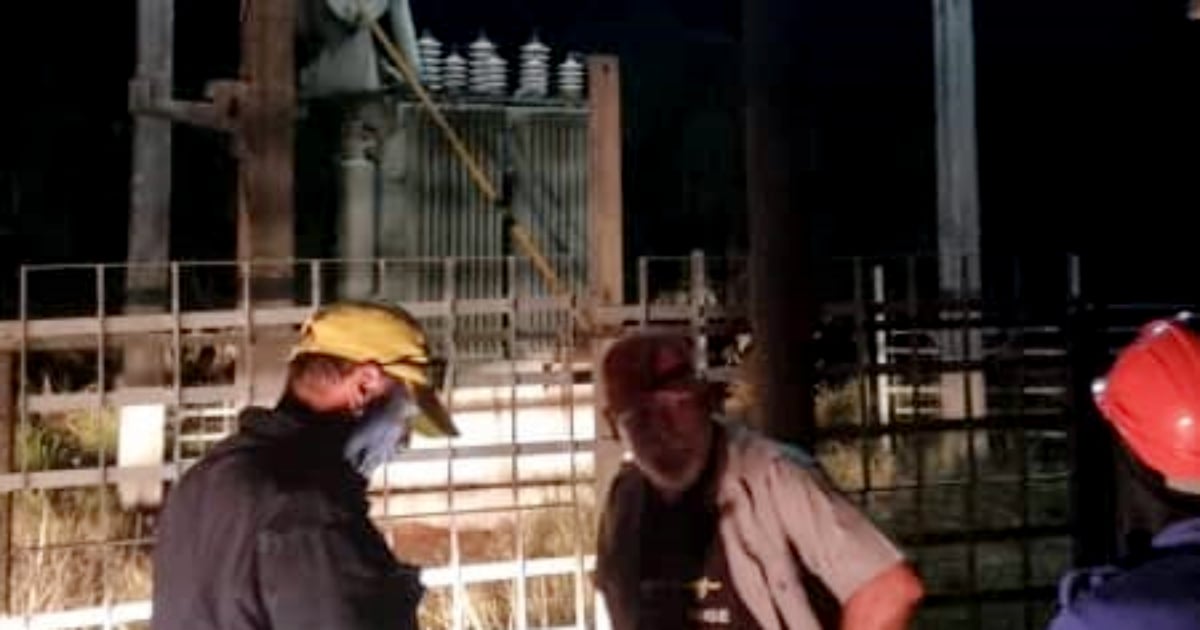
In an unusual display of cynicism, the Electric Union of Cuba (UNE) recently reported the theft of 2,000 liters of dielectric oil from a transformer in Ciego de Ávila with a message that has sparked outrage among Cubans: "Do not profit from the well-being of your people!".
According to UNE, this criminal act, which occurred on January 23 at the 33 kV transformer of the La Piña circuit, left 594 customers without electrical service for more than 21 hours and required the mobilization of material and human resources. On its social media, the state-owned company described the theft as "sabotage" of the electrical system and celebrated the capture of those responsible.
However, the outrage does not stem from the crime itself, but from the shamelessness with which the UNE positions itself as a defender of the "well-being of the people," when in reality it is the main culprit of their distress.
The irony is evident: the very institution that imposes endless blackouts on millions of Cubans, that cannot ensure a basic quality service and is part of an inefficient state monopoly, dares to speak of "well-being."
Cuba has been enduring an energy crisis for years, turning blackouts into a daily torment.
The UNE, instead of taking responsibility, justifies its shortcomings with recycled excuses: "technical failures", "scheduled maintenance", "lack of fuel" and, now, "oil thefts". However, the real issue lies in the ineffectiveness of a state structure unable to modernize the outdated electrical system of the country.
The message from the UNE is also a reflection of the double standards in the official discourse. While the theft of electrical components is indeed a crime, it is also true that many of these criminal acts are a direct consequence of the misery in which the regime has plunged the population.
Without access to a decent salary, without guarantees of functional public services, and without prospects for improvement, desperation drives many Cubans to seek alternatives outside the law.
Then, what "well-being" is the UNE talking about? In a country where food is scarce, hospitals lack medicines, and salaries barely suffice to survive, does the state enterprise intend to make people believe that its monopoly is a service that guarantees "well-being" for the people?
While Cubans suffer from a lack of electricity, the regime's bureaucrats enjoy comforts and privileges unimaginable for the average citizen.
Labeling the dielectric oil thieves as the "enemies of the people" is merely a strategy to divert attention from the real issue: an inefficient government that has made poverty and scarcity the natural state of the nation.
The real question is not who profits from the well-being of the people, but rather: what well-being?
Additional context on the theft of dielectric oil
The theft of dielectric oil has become one of the recurring narratives of the regime to justify the failures of the electrical system. In recent months, several reports have documented the rise of these incidents:
- In September 2024, the government pointed to the "transformer oil thieves" as the new excuse to justify prolonged blackouts in various provinces.
- At the end of that same month, the
- In November 2024, the regime promised to "punish severely" those caught committing such crimes, reinforcing the narrative of sabotage.
- A month later, there was a report about the arrest of an alleged seller of dielectric oil in Santiago de Cuba.
- It all started in June when the UNE included the theft of dielectric oil as one of the "main" reasons for power failures.
These events reinforce the idea that the regime uses such incidents as a distraction, without addressing the true root of the problem: the structural inefficiency and lack of investment in the country's electrical system.
Filed under: