
Related videos:
The inflation in Cuba began in 2025 with a strong monthly increase of 2.06%, which translates to an annualized rate of 27.7%, as warned by the Cuban economist Pedro Monreal on his social media.
This level, considered very high, highlights the government's inability to ensure the necessary macroeconomic balance in the country and could significantly increase poverty levels on the island.
Five months of inflationary acceleration
Monreal emphasized that inflation has been rising for five consecutive months, indicating that it is out of control. He also stressed that many economists believe the official Cuban measurement underestimates the real level of inflation, which exacerbates distrust in government figures.
Their criteria is based on the official report of the Consumer Price Index (CPI) from the National Office of Statistics and Information (ONEI), released last week.
The year-on-year measurement was slightly moderated —24.23% in January 2025 compared to 31.69% in January 2024— but Monreal warns that since November 2023, inflation has remained between 20% and 32%, a high range that contradicts the official narrative of progress in price control.
The agricultural crisis and food prices
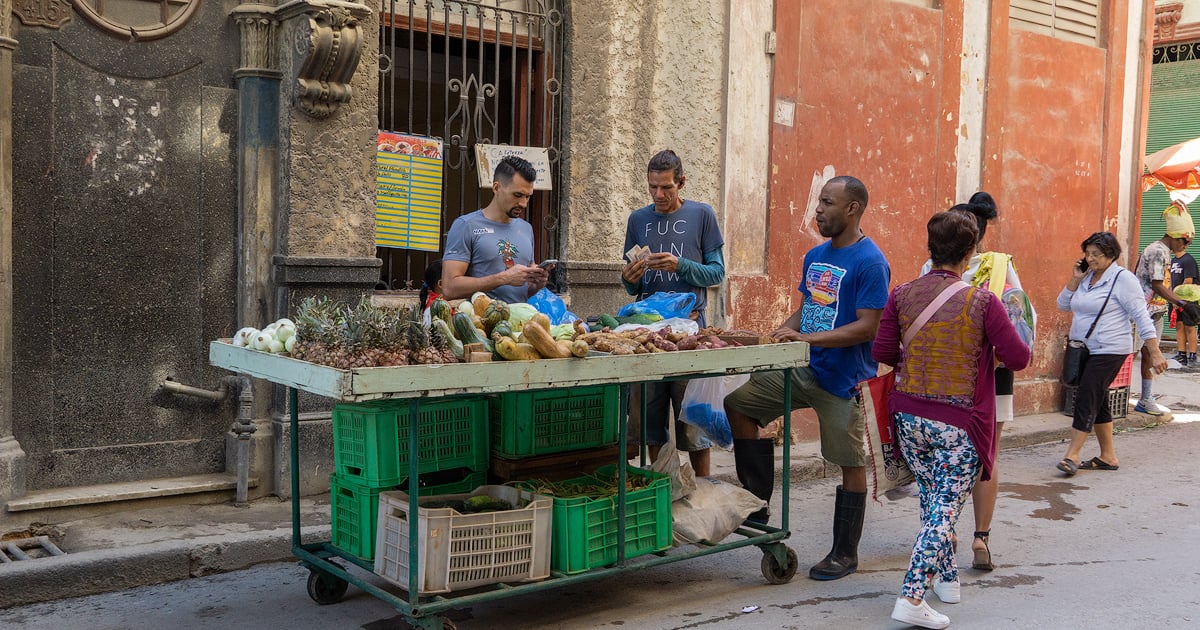
One of the main drivers of inflation in Cuba continues to be the rise in food prices, reflecting the deep agricultural crisis affecting the country.
Monreal believes that the impact of the category "food and non-alcoholic beverages" on total inflation was over 50% during most of 2023 and 2024, highlighting the vulnerability of the Cuban market to shortages and rising prices of basic goods.
The unexpected increase in tobacco and alcoholic beverages
Another relevant piece of information from the analysis is the unusual increase of 22.72% in the prices of alcoholic beverages and tobacco during January, which had a significant impact on monthly inflation.
The economist clarifies that, although these products are not considered essential, their consumption is relatively widespread and, on this occasion, the greatest inflationary effect came from tobacco products.
Poverty as an inflationary brake
Monreal concluded his analysis by warning about the real factor that is preventing an even greater increase in inflation: The "normalization" of massive poverty, resulting from the drastic decline in the weight of labor remuneration as a percentage of Gross Domestic Product (GDP).
According to the economist, beyond the official rhetoric regarding "price caps" and "contracts," the economic reality of the island continues to be characterized by precariousness and a loss of purchasing power among the population.
Frequently Asked Questions about Inflation in Cuba in 2025
What is the projected annual inflation rate for Cuba in 2025?
The projected annual inflation rate for Cuba in 2025 is 27.7%. This increase reflects an upward trend that has been present over the last five months, highlighting the government's inability to manage the country’s macroeconomic balance.
What sectors are driving the increase in inflation in Cuba?
The rise in inflation in Cuba is being primarily driven by the prices of food and non-alcoholic beverages. This sector has had a significant impact on the overall inflation due to the agricultural crisis the country is facing. Additionally, prices for tobacco and alcoholic beverages have also seen notable increases.
How does inflation affect poverty in Cuba?
Inflation in Cuba is contributing to the increase in poverty by eroding the purchasing power of the population. The "normalization" of poverty has become an inflationary brake, as many families can no longer afford to buy certain basic products. The decrease in labor remuneration as a percentage of GDP is also a critical factor exacerbating this situation.
What measures is the Cuban government taking to address inflation?
The Cuban government has attempted to set price limits on certain products, but these measures are not always enforced. Furthermore, the government claims that inflation has slightly decreased, but experts challenge this assertion and highlight that the actual inflation rate may be higher due to the black market and the lack of effective control over shortages.
Filed under: