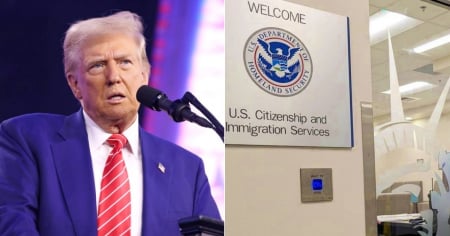
A group of attorneys has announced the preparation of a lawsuit aimed at resolving the immigration status of approximately 500,000 Cubans who are in the United States with an I-220A.
Meanwhile, the Cuban-American congresswoman María Elvira Salazar is working on a bill that could benefit these migrants.
The immigration limbo of Cubans with I-220A
Currently, more than half a million Cubans who received the I-220A form live with the uncertainty of potential deportation and are seeking legal alternatives to remain in the country.
In light of this situation, a group of lawyers is advocating for legal actions to try to provide a solution.
“The argument is that the wrong documents were given at the border when they were released,” explained immigration attorney Anthony Domínguez in statements to Univision journalist Javier Díaz.
The lawyers from the Prada Domínguez firm had already achieved a legal victory in December 2024, when they won a lawsuit that benefited over thirty Cubans with I-220A.
According to Domínguez, the law firm continues its fight and is currently working on a new lawsuit that could be resolved by the 11th Circuit Court within a timeframe of one to one and a half years.
“We can file claims or a claim on behalf of multiple individuals who were processed for expedited deportation but were released before scheduling or having the credible fear interview with USCIS,” added the lawyer.
Domínguez also stated that his goal is to reach an agreement with the government so that those affected can obtain the parole document and eliminate the I-220A.
"We hope the same, that we will reach an agreement with the government to produce the parole document and remove the I-220A," he stated.
Concern over this issue has intensified recently following the detention of a 38-year-old Cuban with I-220A when he appeared for an appointment with ICE. Despite having no criminal record, the migrant was held for deportation purposes.
Bill in Congress
Meanwhile, Republican Congresswoman María Elvira Salazar has pointed out that the I-220A issue originated during the Democratic administration and has criticized the lack of solutions from the Joe Biden administration.
“The Democrats and the Biden administration could have perfectly resolved this issue, because they were the ones who started giving Cubans what is called the I-220A, which I don't quite understand why it happened”, declared Salazar.
The congresswoman claims that she made multiple efforts with the Biden administration in an attempt to resolve the situation of Cubans with I-220A.
However, after not receiving a response from the Democrats, he announced that he is working on a bill that would benefit those affected.
"News will be coming soon," he/she hinted.
Currently, the Republicans not only control the White House but also hold a majority in the House of Representatives and the Senate, which could facilitate the approval of new immigration measures.
Recently, the Florida attorney Willy Allen stated in an interview with CiberCuba that he is not worried about the Cubans who entered the United States with an I-220A (Order of Release on Parole), which is granted to individuals who have been detained and released by Immigration officials on the condition of attending Immigration hearings in court.
Allen sent an optimistic message to the I-220A: "We are going to win in a Federal Court. Present a strong asylum case. We may have to fight," he said.
"You cannot now revoke the residency of 100,000 Cubans who entered with I-220A," he stated firmly.
Frequently asked questions about the immigration limbo of Cubans with I-220A in the U.S.
What is the I-220A form and why does it affect Cubans in the U.S.?
The I-220A form is a parole document granted to migrants, allowing them to stay in the U.S. while their immigration status is determined. Many Cubans find themselves in legal limbo with this document, as it does not provide clear immigration benefits or protection against deportation.
What legal actions are being taken to assist Cubans with I-220A?
A group of lawyers is preparing a lawsuit to remove from immigration limbo approximately 500,000 Cubans with I-220A. The goal is for these migrants to obtain the parole document and eventually take advantage of the Cuban Adjustment Act to regularize their immigration status in the U.S.
How is Congresswoman María Elvira Salazar helping Cubans with I-220A?
Congresswoman María Elvira Salazar is working on a bill that would allow Cubans with I-220A to obtain permanent legal status in the U.S. She has also been gathering information from those affected to push for solutions and promote the Cuban Adjustment Act as a way to regularize their situation.
What challenges do Cubans with I-220A currently face in the U.S.?
Cubans with I-220A face legal uncertainty, lack of access to permanent residency and fear of deportation. Moreover, they must adapt to the cultural and economic differences of the U.S., which is a complicated process without a clear immigration status.
What impact could the upcoming political decisions have on the situation of Cubans with I-220A?
Future political decisions could significantly influence the status of Cubans with I-220A. Changes in administration or immigration policies could provide new opportunities to regularize their situation or, on the contrary, increase restrictions and the risk of deportation.
Filed under: