
Related videos:
The United States government has announced the creation of a mandatory register for all individuals who are in the country illegally.
According to a statement released by the Department of Homeland Security (DHS), those who do not comply with this requirement may face fines, imprisonment, or both penalties.
This measure, based on the Immigration and Nationality Act, aims to monitor and regulate the presence of foreigners in the country.
Registration requirements
According to the DHS, all individuals present in the United States without legal immigration status must register by providing their fingerprints and a residential address. This requirement will apply to anyone aged 14 and older.
The agency has cited legal provisions that support this process, which will become a formal obligation in the coming months.
The U.S. Citizenship and Immigration Services (USCIS) has announced that a specific form and procedure will be made available for immigrants to fulfill their registration.
Starting on February 25, those who register must create an account on the USCIS website as the initial step of the process.
Most foreigners in the United States have already registered, as required by law.
However, a significant number of foreigners present in the United States did not have a direct way to register and meet their obligations under Section 262 of the INA.
In order for unregistered foreign nationals to fulfill their obligation under section 262 of the INA, USCIS has established a new form and a process through which they can register.
Registration is not an immigration status, and the registration documentation does not establish work authorization or any other rights or benefits under the INA or any other U.S. law.
Who has registered?
Every person to whom one of the documents designated as proof of registration under 8 CFR 264.1(b) has been issued is registered.
USCIS clarifies that "any person who has submitted one of the designated forms in 8 CFR 264.1(a) and has provided their fingerprints (unless exempted) and has not been issued one of the designated pieces of evidence in CFR 264.1(b) has met the registration requirement of section 262 of the INA."
The foreigners who have already registered include:
- Legal permanent residents;
Foreigners who received temporary stay permission in the United States under section 212(d)(5) of the INA, even if the permission period has expired;
- Foreigners admitted to the United States as non-immigrants who were issued a Form I-94 or I-94W (printed or electronic), even if the admission period has expired;
All foreigners present in the United States who were issued immigrant or non-immigrant visas before their arrival;
- Foreigners whom DHS placed in removal proceedings;
- Foreigners to whom an employment authorization document was issued;
- Foreigners who applied for legal permanent residency using Forms I-485, I-687, I-691, I-698, and I-700, even if their applications were denied; and
-Foreigners to whom a Border Crossing Card was issued.
Who should apply to register now?
All foreigners aged 14 or older who were not fingerprinted and were not registered when they applied for a visa to enter the United States and who remain in the United States for 30 days or more.
-They must submit the application before those 30 days expire.
-Parents and legal guardians of foreign minors under 14 years old who have not been registered and are residing in the United States for 30 days or more, before those 30 days expire.
Any foreigner, whether previously registered or not, who turns 14 years old in the United States, must do so within 30 days following their 14th birthday.
Who hasn't registered?
Any person who has not been issued one of the documents designated as evidence of registration under 8 CFR 264.1(b) and who has not submitted one of the designated forms in 8 CFR 264.1(a) and provided their fingerprints (unless exempted) is not registered.
The unregistered foreigners include:
- Foreigners present in the United States without inspection and admission or inspection and temporary stay permission;
-Canadian visitors who entered the United States at a land port of entry and for whom no evidence of registration was issued; and -Foreign nationals who submitted one or more benefit applications to USCIS not included in 8 CFR 264.1(a), including applications for Deferred Action for Childhood Arrivals or Temporary Protected Status, for whom no evidence of registration was issued.
Consequences of non-compliance with the measure
The DHS statement emphasizes that failure to comply with this registration will be considered a violation, with potential severe legal consequences.
"The fact that a foreigner does not register is a crime that could result in a fine, imprisonment, or both. For decades, this law has been ignored; no more," the official document states.
Furthermore, those immigrants who do not report changes of address or who do not leave the country when instructed will also face penalties.
The U.S. government has indicated that the initial goal of this measure is to identify and prioritize the deportation of individuals with criminal records.
However, immigrant advocacy groups have expressed concern that this registry could be used to expand deportations beyond criminal cases.
Context and background of the measure
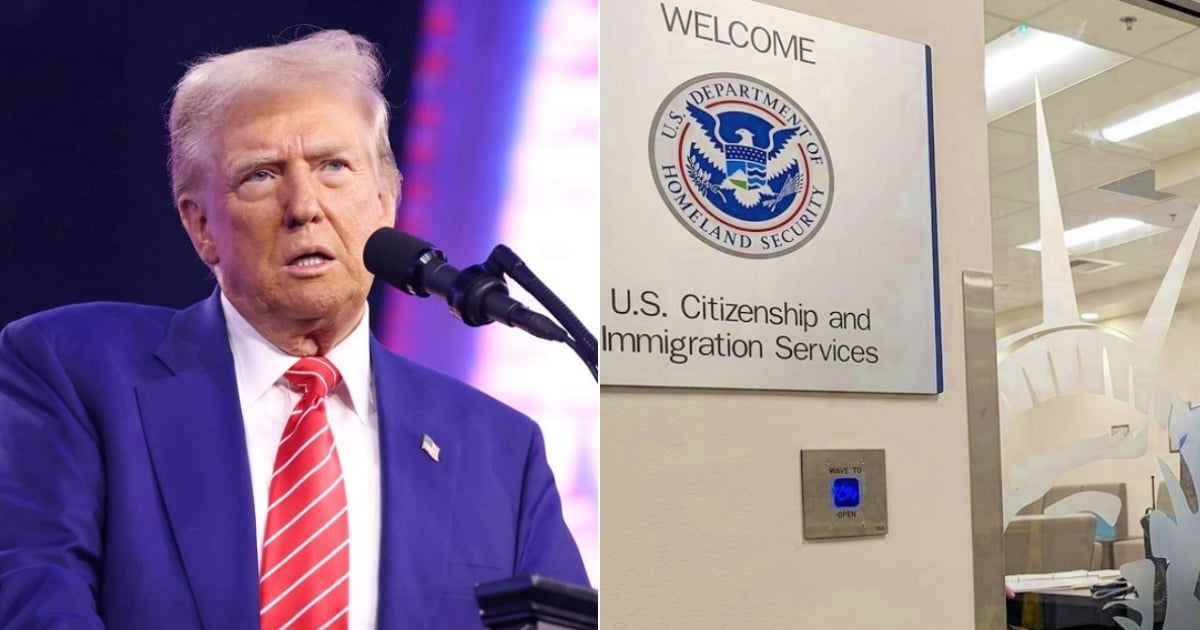
This initiative is in line with President Donald Trump's campaign promises to implement large-scale deportations and strengthen border control.
On his first day in office, Trump signed a series of executive orders on immigration, which included the creation of this registry.
In them, he ordered the DHS "to immediately announce and publish information regarding the legal obligation for all undocumented foreigners in the United States to comply with it."
The National Immigration Law Center reminded that the last time the U.S. government implemented a widespread registry of foreigners was with the Alien Registration Act of 1940, according to U.S. media reports.
At that time, immigrants had to go to local post offices to register.
This procedure was used to identify "potential threats to national security", categorized as communist or subversive.
According to this organization, the registry proposed by Trump follows a similar pattern and could facilitate the identification of immigrants for deportation.
"Any attempt by the Trump administration to create a registration process for non-citizens who were previously unable to register would be used to identify and target individuals for detention and deportation," the group warned.
The announcement has generated various reactions both inside and outside the United States.
While government officials have defended the measure as a key tool to reinforce security and immigration control, activists and human rights groups have expressed their fear that this database could facilitate mass deportations.
In recent days, the DHS launched a national and international advertising campaign urging undocumented immigrants to "self-deport."
Frequently Asked Questions about the Mandatory Registration for Illegal Immigrants in the U.S.
What is the new mandatory registration for undocumented immigrants in the U.S.?
The United States government has implemented a mandatory registration for all immigrants who are in the country without legal status. This registration requires individuals to provide their fingerprints and a residence address. The measure aims to regulate and track the presence of foreigners in the country, and those who do not register will face fines and possible imprisonment.
What are the consequences of failing to comply with the immigration registration?
The failure to comply with this measure will be considered a crime, with potentially severe legal consequences, including fines and imprisonment. In addition, immigrants who do not report changes of address or fail to leave the country when instructed will also face penalties. The goal is to identify and prioritize the deportation of individuals with criminal records.
Who must register according to the new DHS measure?
All foreigners aged 14 or older who have not registered previously must do so if they stay in the United States for 30 days or longer. This includes the parents or legal guardians of unregistered minors under the age of 14. Furthermore, any foreigner who turns 14 in the United States must register within 30 days following their birthday.
How can illegal immigrants register in the U.S.?
Registration is done by creating an account on the website of the U.S. Citizenship and Immigration Services (USCIS). Immigrants must complete a form and follow the established procedure, providing their fingerprints and a residential address to meet this legal requirement.
Filed under: