
Related videos:
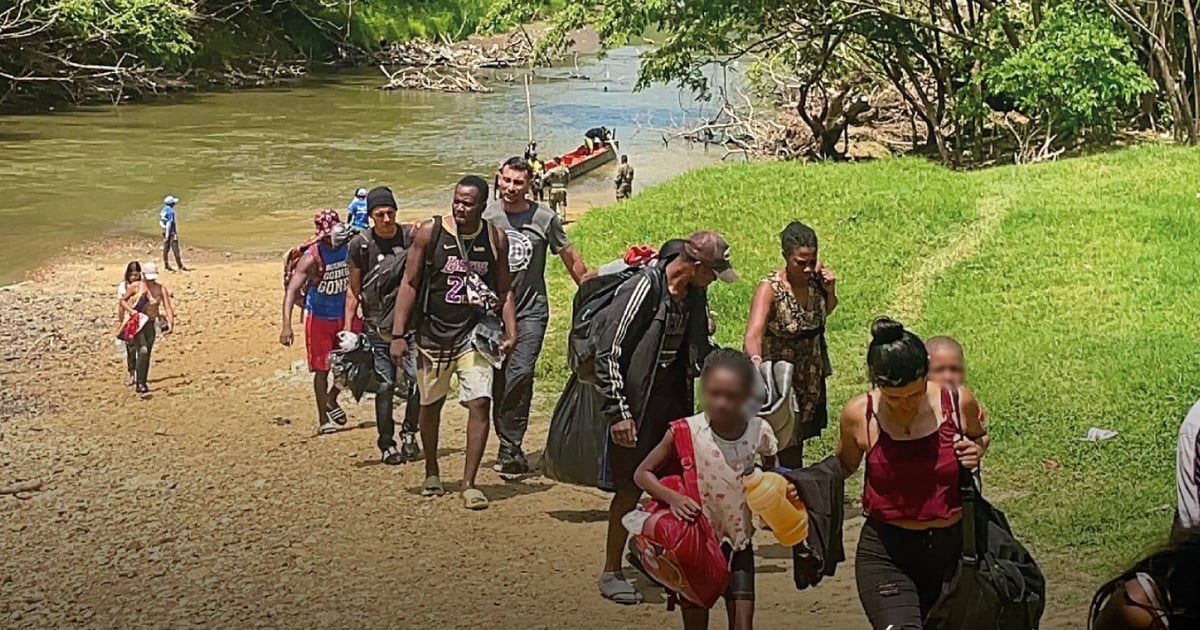
Migration through the Darién Gap, the dangerous jungle border between Colombia and Panama, has experienced a dramatic decrease of 96% compared to the previous month, in the context of the new immigration policies implemented by the administration of President Donald Trump.
According to the Panamanian President José Raúl Mulino, in February 2025, only 400 migrants, mostly from Venezuela, Colombia, Ecuador, Nepal, and Iran, crossed the Darién in hopes of reaching the United States, as reported by La Voz de América.
In contrast, in January, the number had been 2,229 migrants, which highlights the significant drop in migration flows to the north.
The decline in migration through the Darién coincides with the intensification of restrictive measures implemented by the Trump administration at the southern border of the U.S.
These policies have included the deployment of the Mexican National Guard and a series of stricter restrictions in the asylum process, which has forced many migrants to reconsider their routes and destinations.
In Panama, authorities have also observed an increase in migrants arriving from the north, particularly from Nicaragua, Costa Rica, and other Central American countries, representing a phenomenon opposite to that of migrants coming from the south.
At the international level, authorities in Panama have reported a favorable decrease in immigrants deported from the U.S., following the recent mass deportations of migrants during the Trump Administration.
Of the repatriated migrants, many prefer to return to their countries of origin or stay in the region, as the closing of the U.S. border has limited their options.
Meanwhile, in Mexico, the shelters that were set up to accommodate deported migrants remain empty.
The deportations of undocumented migrants have decreased significantly since Trump reassumed the presidency last January, and Mexicans in particular are choosing to return on their own or remain close to the border, hoping for the chance to attempt to enter the U.S.
At the southern border, Mexican authorities confirm that the presence of migrants in the area has decreased.
According to José Antonio Chol Ruiz, an advocate for migrants, the decrease in the number of people is due to the temporary closure of access to asylum in the U.S. and the insecurity they now face when trying to cross the border.
"The situation has changed radically. Migrants are now seeking other options or even beginning to return to their countries," noted Chol Ruiz.
Frequently Asked Questions About Migration through the Darién and the Southern Border of the U.S.
Why has migration through the Darién drastically decreased?
Migration through the Darién has decreased by 96% due to the new immigration policies implemented by the Administration of Donald Trump. These policies include the deployment of the Mexican National Guard and stricter asylum process restrictions at the U.S. southern border, prompting migrants to reconsider their routes and destinations.
What impact do Trump's immigration policies have on the southern border of the U.S.?
Trump's immigration policies have led to a decrease in the presence of migrants at the southern border of the U.S. These measures include the elimination of the CBP One program, an increase in deportations, and the deployment of Mexican armed forces at the border, which has discouraged many migrants from attempting to cross.
What measures are being taken in Panama to manage migration through the Darién?
Panama has seen an increase in migrants arriving from the north, primarily from Nicaragua and Costa Rica. Additionally, the country is working with the United States to curb illegal migration through Darién, facilitating the repatriation of migrants to their home countries from the Metetí airport in Darién.
What are the alternatives for Cuban migrants given the restrictions at the U.S. border?
Cubans are choosing less risky routes, such as the Nicaraguan route, to reach the United States. Additionally, they can regularize their status under the Cuban Adjustment Act, which allows them to apply for permanent residency after one year of entering the country with parole.
Filed under: