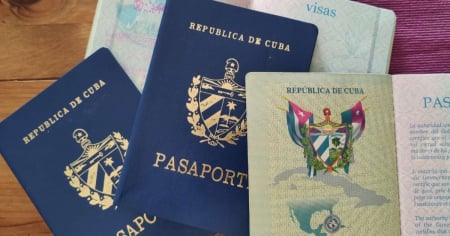
A Cuban resident in Louisville, Kentucky, identified on TikTok as Devis (@blued_diamond), responded to the criticism he has received for sharing his experience visiting Cuba. In a recently published video, the influencer defended his decision to travel to the island, arguing that, regardless of any political situation, family will always be the most important thing.
The video emerged as a response to a comment asking him not to promote travel to Cuba. In his message, Devis questioned the reason behind this criticism and expressed that many people must leave Cuba in search of a better future, but that does not mean they should forget their loved ones who remain on the island.
"Why not? If our family is really over there. The family that gives you a kiss, a hug, that asks how you are, that goes with you to the hospital, that offers you a coffee, cold, stiff, freshly made, that cry with you, that wipes your tears, that gives you support, that offers you what they don't have," he stated in the video, which has generated a large amount of interaction on social media.
The young man also compared the reality of some migrants in the United States, highlighting that sometimes family ties are not the same outside of Cuba. "Who do you have here? That family that when you’ve been here for a month, they start to get annoyed and either kick you out or find you a rental that you know you can't afford?" he asked during his speech.
The video has received an avalanche of comments, both supportive and critical. Most users backed his stance, sharing their own experiences and reaffirming the importance of family. Some internet users expressed that as long as their children, wives, or mothers remain in Cuba, they will continue to travel to the island. Others emphasized that family is the most important thing and that familial bonds cannot be broken despite the distance. There were also those who stated that traveling to Cuba is a personal decision, and that everyone must act according to their own reality.
However, not everyone agreed. Some pointed out that while family is important, traveling to Cuba also means contributing money to the Cuban regime. Among the criticisms, it was expressed that traveling to the island is equivalent to indirectly promoting the dictatorship. Others noted that while it is understandable to visit loved ones, the political and economic implications of these trips should be taken into account.
This video comes shortly after Devis himself shared his experience returning to the United States after a visit to Cuba. On that occasion, he explained that he did not face rigorous questioning at the airport and that the process of entering the country was straightforward. His testimony sparked a debate about the immigration controls for Cubans traveling to the island and returning to the U.S.
The debate about travel to Cuba continues to divide opinions among Cubans in exile, especially in a context where many believe that any spending on the island indirectly benefits the government. However, for Devis and those who support his stance, the family connection is unbreakable and justifies any trip back.
Frequently asked questions about Cuban travelers to the island and sending aid to family members
Why do some Cubans abroad decide to travel to Cuba?
Many Cubans abroad travel to Cuba primarily to visit their family, placing emotional ties above any political implications. Despite the criticisms, they believe that staying in touch with their loved ones is essential, especially when they are facing difficult situations on the island.
What criticism do Cubans who visit the island receive?
The main criticisms focus on the idea that visiting the island could indirectly support the Cuban regime by generating income that benefits the government. However, many argue that their intention is solely to visit family and has no political motives.
Does sending aid to family members in Cuba contribute to the Cuban regime?
This topic generates divided opinions. Some believe that remittances and aid shipments indirectly support the regime, while others argue that their goal is to improve the quality of life for their relatives, regardless of the political impact.
What challenges do Cubans face when sending aid to their families on the island?
Sending aid to Cuba involves logistical challenges, such as weight and cost restrictions, as well as constant emotional pressure to send more than what is possible. Additionally, they face criticism from those who believe that these shipments may support the Cuban regime.
Filed under: