
Related videos:
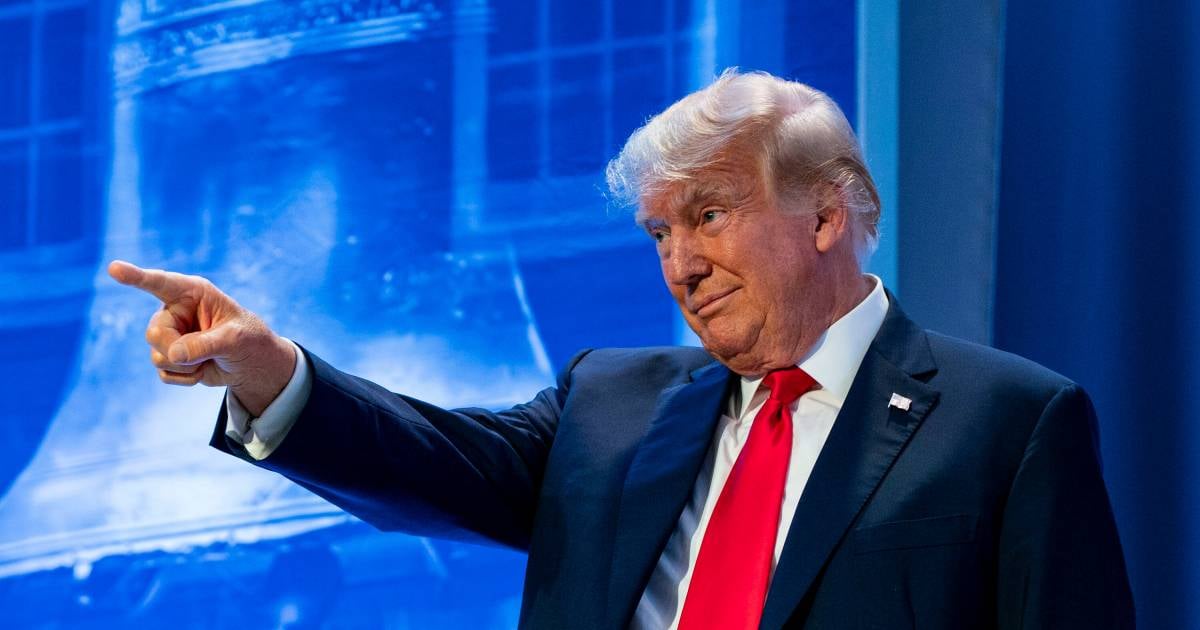
The President of the United States, Donald Trump, announced that his speech before Congress will be direct and to the point. "Tomorrow night will be great! I'm going to tell it like it is," he wrote this Monday on social media.
The post has generated great anticipation regarding his intervention on Tuesday before a joint session of Congress, as there are several topics on the agenda, including the war in Ukraine and the entire debate that has arisen.
However, it is expected that in his speech, Trump will highlight his initiative to restructure the government through the Department of Government Efficiency, led by the magnate Elon Musk. This measure has resulted in the layoff of tens of thousands of federal employees and the closure of several agencies, triggering multiple legal battles.
Another key point will be tariffs, while the immigration issue is also likely to take up significant space. Since returning to power, he has suspended the asylum process at the southern border and has attempted to eliminate automatic citizenship for children of undocumented immigrants, although this last measure has been blocked by two federal judges.
What is clear is that Trump's speech, his first major appearance in prime time since he resumed office, will be closely watched by both his allies and opponents, amid a backdrop of political and economic tension in the United States.
This is how Trump has shaken the United States and the world
In his first 30 days back in the White House, Donald Trump unleashed a wave of actions that have shaken the political, economic, and social landscape of the United States and the world.
Mass deportations, aggressive trade tariffs, a disruptive foreign policy, and controversial alliances are just some of the most contentious moves by the New York mogul at the start of his term.
A first month marked by controversy
"The golden era of the United States begins now," proclaimed Trump on January 20, during his inauguration.
His return to power has been anything but discreet: he has signed 73 executive orders.
Executive orders that include measures as varied as pardons for participants in the Capitol riot, the renaming of the Gulf of Mexico, the dismissal of Biden-era prosecutors, and restrictions on the participation of transgender individuals in women's sports.
Mass deportations and a new war against immigration
One of Trump's first actions was to declare a national emergency at the border with Mexico.
He ordered the deployment of 15,000 military personnel to "secure" the southern border and initiated mass arrests of undocumented immigrants. More than 1,000 individuals have been deported in just one month.
In an even more controversial turn, the Guantanamo naval base in Cuba has been reactivated to house undocumented immigrants, with a capacity for 30,000 detainees.
The first deportees have already been transferred to countries such as Guatemala and Colombia, following diplomatic pressure exerted through threats to impose trade tariffs.
Aggressive tariffs and a global trade war
Trump's economic policy has been dominated by the imposition of tariffs.
On February 1, he announced a 25% tax on imports from Mexico and Canada, contingent on concessions regarding border control and the fight against drug trafficking.
China, one of its main targets, received tariffs of 10% that could escalate to 60%.
In response, the Asian giant imposed tariffs of 10 to 15% on American products.
The European Union has not escaped either: Trump has imposed reciprocal tariffs to match the taxes that European countries apply to products from the United States.
Disruptive Foreign Policy: Ukraine and Gaza
In his promise to end the war in Ukraine, Trump has taken controversial steps.
He proposed to continue military support to Kiev in exchange for access to strategic minerals.
Additionally, their engagements with Russia have excluded the European Union from the negotiation process, leaving Ukraine in a vulnerable position.
Tension has reached a new level with incendiary statements against Volodymyr Zelenski, whom he referred to as a "dictator."
In Gaza, Trump has proposed transforming the Strip into a "Middle Eastern Riviera," forcibly displacing the Palestinian population.
This plan, supported by Israeli Prime Minister Benjamin Netanyahu, has been heavily criticized by the international community.
Reactivation of some sanctions against Cuba and suspension of key migration programs
After his return to the presidency, Donald Trump implemented a series of measures that have impacted the relations between the United States and Cuba, as well as the immigration situation of Cubans.
On January 20, 2025, on his first day in office, Trump reversed his predecessor Joe Biden's decision to remove Cuba from the list of state sponsors of terrorism.
In addition to the reinstatement of Cuba on the list of state sponsors of terrorism, the Trump administration has intensified economic sanctions against the island.
These measures include additional restrictions on trade and finance, aimed at pressuring the Cuban government. As a result, companies like Western Union have suspended their operations in Cuba, affecting the sending of remittances.
Trump signed executive orders that eliminate the humanitarian parole program, which allowed the legal entry and temporary stay of migrants from countries such as Cuba, Haiti, Nicaragua, and Venezuela.
Additionally, the CBP One application was deactivated, a tool used to manage asylum requests and other immigration procedures. These actions have left thousands of migrants in legal limbo, creating uncertainty about their status in the United States.
The most recent blow to Cuban immigrants has been the "administrative pause" in the immigration processes of hundreds of thousands of beneficiaries of programs such as humanitarian parole and family reunification.
This suspension, justified by concerns about fraud and security, affects those who were hoping to regularize their immigration status, leaving them in a state of uncertainty regarding their future in the United States.
More controversial measures
Environmental policies have also undergone a radical shift, with the elimination of regulations that hindered oil and gas extraction. Under the slogan "Drill, drill, drill!", Trump has promoted an energy agenda that disregards warnings about climate change.
He signed an executive order that grants the White House unprecedented control over the independent regulatory agencies established by Congress.
Additionally, he put an end to federal aid for undocumented immigrants and attempted to eliminate birthright citizenship.
In the workplace, he ordered mass layoffs at the Federal Aviation Administration (FAA) amid growing concerns about the rise in aircraft accidents.
He also proposed the immediate closure of the Department of Education and dismantled energy efficiency regulations previously imposed by the Joe Biden administration.
Elon Musk, the new strongman in the White House
Elon Musk has emerged as a key figure in the new government.
In charge of the Government Efficiency Department (DOGE), it has driven the closure of federal agencies and a massive reduction in personnel, with 75,000 officials already out of the system.
The elimination of the United States Agency for International Development (USAID) marks the end of traditional U.S. international cooperation.
Musk has also implemented a system to audit public spending, with the aim of reducing the fiscal deficit of 2 trillion dollars.
Withdrawal from international agreements and global tensions
In an isolationist move, Trump withdrew the United States from the Paris Climate Agreement, the World Health Organization (WHO), and the UN Human Rights Council.
It has also suspended the participation of the U.S. in the Organization for Economic Cooperation and Development (OECD).
Additionally, it has declassified files related to the assassinations of John F. Kennedy, Robert F. Kennedy, and Martin Luther King Jr., a move that could reveal secrets hidden for decades.
A first month that has changed the global landscape
The first month of Trump has redefined global geopolitical alliances, strained trade relations with traditional partners, and increased the risk of international conflicts.
His "America First" policy has resulted in a unilateral approach that has jeopardized the multilateral relationships that have historically defined Washington's global standing.
With 47 months ahead, the world watches with uncertainty how far Trump will go in his attempt to transform not only the United States but also the global order.
Frequently Asked Questions about Trump's Speech in Congress and His Policies
What is expected from Donald Trump's speech in Congress?
It is expected that Trump's speech before Congress will be forceful and straightforward, addressing topics such as the war in Ukraine, the government restructuring led by Elon Musk, and immigration and economic issues like tariffs. Expectations are high due to his promise to "speak the truth."
What actions has Trump taken regarding immigration and how have they affected Cuban immigrants?
Trump has implemented mass deportations and reactivated the Guantanamo Naval Base for undocumented immigrants. He has eliminated the humanitarian parole program, affecting immigrants from Cuba, Haiti, Nicaragua, and Venezuela, leaving them in a legal limbo. These measures have generated uncertainty and concern among Cuban migrants.
How has Elon Musk been involved in the Trump administration?
Elon Musk has been appointed to lead the Department of Government Efficiency, responsible for closing federal agencies and reducing staff. He has laid off 75,000 employees and is looking to audit public spending to reduce the budget deficit. His influence in the government has been a source of controversy due to his role as a private businessman.
What economic measures has Trump implemented upon his return to power?
Trump has imposed aggressive tariffs on imports from Mexico, Canada, China, and the European Union, aiming to balance international trade. He has also announced a 25% tariff on imported cars, which has created trade tensions and affected relations with other countries.
What has been Trump's stance on the war in Ukraine?
Trump has proposed to continue military support for Ukraine in exchange for access to strategic minerals, and has excluded the European Union from the negotiation process. He has maintained a critical stance towards Volodymyr Zelensky, which has generated tensions in the international context.
Filed under: