
Related videos:
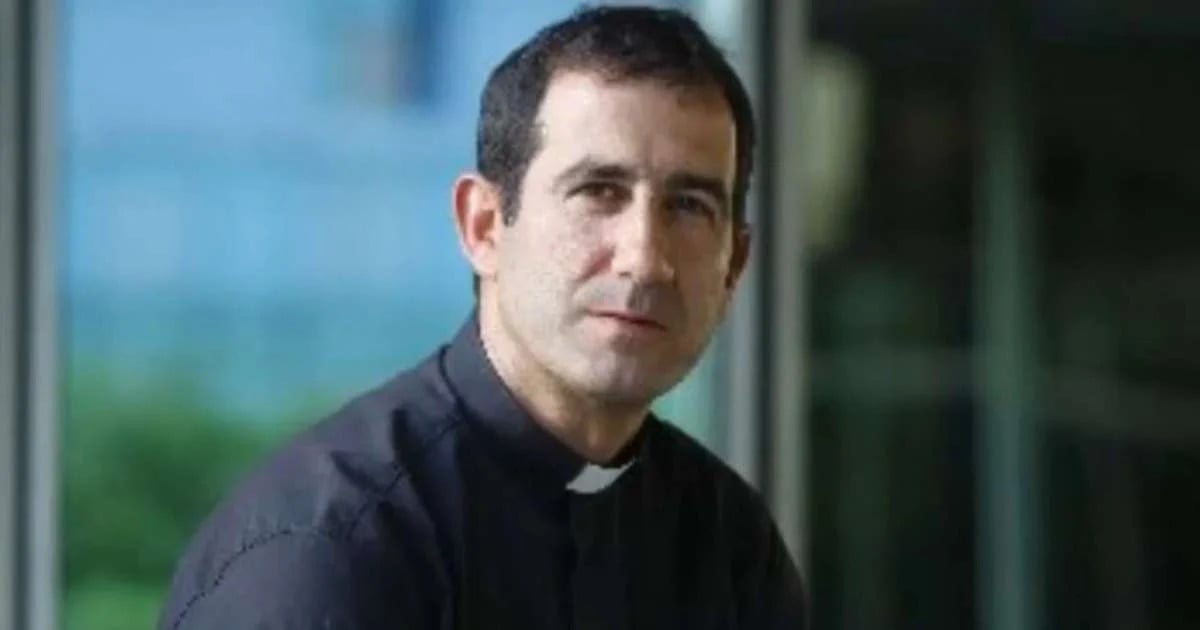
The priest Alberto Reyes Pías from the parish of Esmeralda, Camagüey, has once again questioned the reality faced by the Cuban people under the Castro regime. Known for his direct critiques of the dictatorship, he has frequently used his profile on Facebook to denounce violations of fundamental rights on the Island.
In his latest reflection, Reyes compared the current situation in Cuba to a concentration camp, arguing that the country shares many of its characteristics: confinement, lack of freedoms, political repression, and the precarious conditions in which citizens live. In his view, the most terrible aspect is not only the scarcity of food or the lack of decent conditions, but the absence of hope and the feeling that the system is unmovable.
The priest called on Cubans to resist and preserve humanity in the face of adversity, just as prisoners did in Nazi concentration camps. "Our first trench of resistance in this concentration camp is to maintain the goodness of our hearts, solidarity, and joy despite everything," he expressed in his message.
He also urged to maintain faith and trust that evil cannot prevail over good.
Below, CiberCuba shares the full text of the publication by Alberto Reyes Pías:
I have been thinking… (104) by Alberto Reyes Pías
I have been thinking about the need for hope
Today's Cuba is very similar to a concentration camp.
If we look up the characteristics of a concentration camp in an encyclopedia, we find that they are generic confinement sites where people are deprived of their liberty and where there are no judicial guarantees. The administration is based on political repression, and in addition to the official authorities of the camp, there is a control system carried out by the inmates themselves who are given certain power and whose role is to watch over and inform on the other prisoners.
Members of a concentration camp are deprived of humane conditions: the food is insufficient, there is no hygiene, the work is done under deplorable conditions, and, in general, people live in precariousness, that is, under conditions considered below the threshold deemed as normal.
However, the most terrible aspect of a concentration camp is the lack of hope, the unbearable feeling that the diabolical system controlling and oppressing the defenseless population is unmovable, the absence of light at the end of the tunnel. Because even though we know that every concentration camp has an end and that freedom may take time but will always arrive, that does not diminish the 'feeling' of imprisonment, of unyielding slavery, and above all, of helplessness.
That is why we either sink into depression and boredom, or we continue to stumble through the night, without any support other than a hope we have chosen not to abandon.
Walking in the night means, first and foremost, working on our own lives and the lives of those who depend on us, so that the night that surrounds us doesn’t seep into our souls. Despite the control, the lack of options, the scarcity, and even the evil we may encounter, we seek to bring out the best in ourselves, that 'image and likeness of God' which will be the greatest secret to the reconstruction of this island.
Psalm 27 says: 'I hear within me the voice of the Lord saying: seek my face. Your face, Lord, I will seek; do not hide your face from me.'
Our first trench of resistance in this concentration camp is to preserve the goodness of our hearts, solidarity, and joy despite everything. Our first trench is to do the same as the prisoners did in Nazi Germany: sharing, helping each other, and creating alternative realities that keep our spirits alive.
And to trust that evil is not stronger than good, that darkness is not stronger than light, until the day when our land ceases to be a battlefield, until the day when spring bursts forth with all its strength and covers with flowers what today seems like dead hopes.
Frequently Asked Questions about Priest Alberto Reyes' Critiques of the Cuban Regime
Why does Father Alberto Reyes compare Cuba to a concentration camp?
Alberto Reyes compares Cuba to a concentration camp due to political repression, the lack of freedoms, and the precarious living conditions that, according to him, are characteristics shared with these places. He also highlights the absence of hope and the feeling of an unchangeable system as aggravating factors in the situation on the island.
What message is Alberto Reyes trying to convey to Cubans?
The priest Alberto Reyes calls on Cubans to maintain hope and humanity in the face of adversity. He urges them to preserve kindness, solidarity, and joy as forms of resistance against repression and the challenging conditions in Cuba, likening them to the resistance displayed by prisoners in Nazi concentration camps.
What is the current situation in Cuba according to Alberto Reyes?
Alberto Reyes describes the current situation in Cuba as a terminal crisis, characterized by shortages of food and medicine, and deep despair among the population. He points out that the regime has lost the support of the people, who live under a dictatorship that responds with repression to any attempt at change.
What role does religion play in Alberto Reyes' critiques?
Religion is a fundamental pillar for Alberto Reyes in his critique of the Cuban regime. He uses his faith to inspire hope and resistance among Cubans, suggesting that spirituality and morality are essential to confront adversities and seek positive change in Cuban society.
Filed under: