
Related videos:
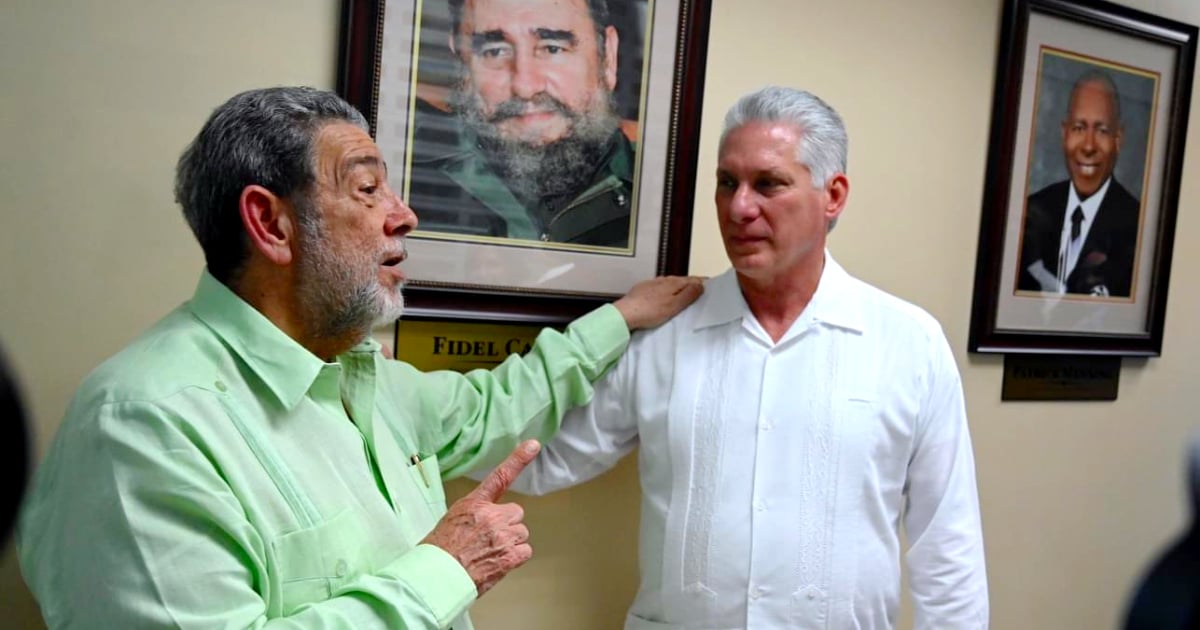
The Prime Minister of Saint Vincent and the Grenadines, Ralph Gonsalves, cynically defended the Cuban medical mission system, justifying that the health professionals from the island must give part of their salaries to the regime because they received "free education."
This statement, made in response to the United States' decision to impose sanctions on officials of third countries that hire Cuban doctors under exploitative conditions, has sparked a strong debate regarding the labor rights of these professionals.
"It is said that the Cuban professionals here under the agreement with the Cuban government had to pay, I don’t know if it’s 10 percent or 15 percent, whatever it is, of their salary to the Cuban government. But that doesn’t mean they are being exploited. They receive a free education. And if they go abroad, earning money from that education, it’s not unreasonable for them to contribute something back so that more people can receive an education" noted Gonsalves, according to Cubainformación.
Cuba's medical brigades have been characterized by human rights organizations as a system of labor exploitation. Gonsalves's statement overlooks the repeated reports from international organizations regarding the conditions of semi-slavery that Cuban doctors face abroad.
Doctors are sent to work in foreign countries without full labor guarantees, under strict surveillance of the Cuban regime and with the obligation to hand over up to 85% of their salaries to the State. Additionally, their passports are withheld, and they face severe reprisals if they decide to abandon the mission.
The United States government, through the Secretary of State, Marco Rubio, has tightened sanctions against this practice, expanding the visa restriction policy to officials of countries that hire Cuban medical personnel under abusive conditions.
The decision aims to put an end to the "export of Cuban labor," which has become one of the main sources of income for the regime in Havana.
Cuban medical missions: modern slavery and human trafficking
Various reports from organizations such as Human Rights Watch and the United Nations Special Rapporteur have denounced the conditions under which Cuban doctors work abroad, describing them as forms of "modern slavery" and "human trafficking."
In these documents, it is evident how the Cuban regime imposes restrictions on professionals, which include the prohibition of traveling with their families, the retention of personal documents, and surveillance of their movements by security agents.
Additionally, doctors who attempt to defect are considered "traitors" and face penalties ranging from an eight-year ban on returning to Cuba to the persecution of their family members on the island.
On previous occasions, these allegations have led countries like Brazil and Bolivia to reconsider their agreements with the Cuban regime and, in some cases, to cancel medical cooperation programs.
U.S. sanctions and Gonsalves' response
The U.S. Department of State has sanctioned several Cuban and foreign officials involved in the hiring of Cuban doctors under this exploitation system.
The recent expansion of this policy also targets the immediate relatives of those involved in these practices. According to the U.S. government, these measures aim to "counteract forced labor practices worldwide."
Despite these sanctions, Gonsalves defended the program, asserting that Cuban doctors are essential to his country's healthcare system and downplaying complaints about labor exploitation.
"If the Cubans are not here, we may not be able to manage the service," he argued, referring to the presence of medical personnel in the Hemodialysis Unit in Saint Vincent and the Grenadines. He also suggested that criticisms of the Cuban system are the result of a "misunderstanding" by some sectors in the U.S.
However, Gonsalves' statements have been viewed by experts as an attempt to justify a system that deprives Cuban doctors of their fundamental rights.
"It's not about cooperation, but about exploitation," activists pointed out, reminding that the income generated by medical missions represents one of the main sources of funding for the Cuban regime, at the expense of the dignity of its health professionals.
The controversy surrounding Cuban medical missions continues to escalate, with increasing denunciations and international actions aimed at curbing this lucrative form of human trafficking, disguised under the rhetoric of solidarity.
Critiques of the Cuban presence in Saint Vincent and the Grenadines
The presence of Cuban doctors in Saint Vincent and the Grenadines has been controversial, but the closeness of the "continuity" leader, Miguel Díaz-Canel, with the prime minister of that country has prevailed in the relationship between both governments.
In September 2024, citizens of that country criticized the quality of the service provided by Cuban doctors, reporting deficiencies in care and communication problems due to language barriers. The lack of integration of Cuban doctors into the local healthcare system and complaints about their professional competencies have been a topic of public debate.
However, in December 2022, the visit of the Cuban leader to Saint Vincent and the Grenadines left an unforgettable scene that sparked ridicule on social media due to his clumsiness in expressing himself in English, and for his participation in a relaxed karaoke, where he sang "Guantanamera" along with his Minister of Foreign Trade, Rodrigo Malmierca.
Filed under: