
Related videos:
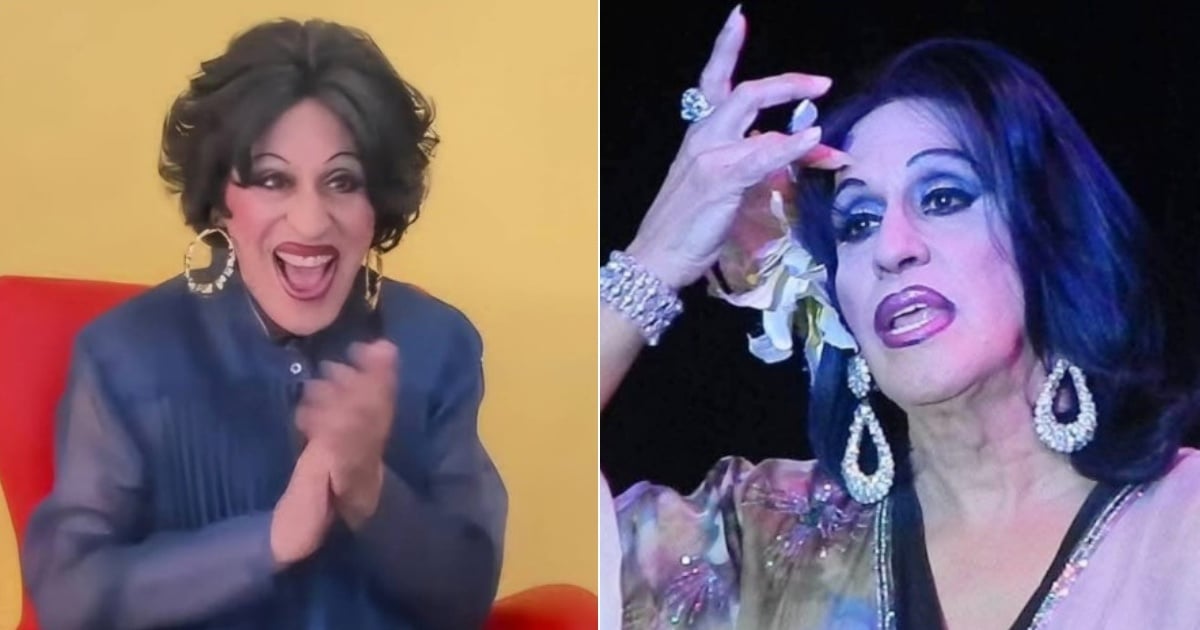
The Cuban artistic community in Miami is in mourning following the death of "Mariloly" (born as Danilo Domínguez), one of the most emblematic figures of drag in exile.
Her passing occurred this Sunday at a rehabilitation center in South Florida, as confirmed by news outlets citing sources close to the comedian and performer.
Domínguez had been hospitalized after suffering a fall, and in the past few weeks, her health deteriorated rapidly. People who visited her in her last days recounted that she barely recognized those who were with her.
“I always wanted to be an artist, and Miami gave me the opportunity to be on stage”, Mariloly declared in an interview with journalist Daysi Ballmajó.
In that same interview, he revealed that his father was imprisoned in 1962 as a political prisoner, which left him, his mother, and his brother in a precarious situation.
In Cuba, he also suffered many years of persecution for his sexual orientation.
According to his account, the police held him at a station for three or four hours and told him: “You have to walk properly, you can't walk the way you do because that’s not how a man walks.”
"They wanted me to go out with a mustache and a cigar, but that was not going to happen," said Mariloly.
Finally, in 1980 - amidst the migration wave of El Mariel - Danilo arrived at a police station dressed as a woman and said that he wanted to leave.
According to what she said, when asked her name, she replied: "Helen of Troy." And thus she arrived in Miami, where she became "Mariloly."
From Repression to Stardom in Miami
Once in Miami, Mariloly established her presence in the city's major theaters and nightclubs, earning the admiration of the exiled Cuban community and the LGBTQ+ scene.
In addition to shining in the cabaret, her talent allowed her to participate in theater productions, local television, and even in lyrical groups, showcasing her versatility.
“In Cuba, he left a trail of humiliation and discrimination instilled by Fidel Castro's Communism, where, in his homophobic speeches, he was heard saying, 'In Cuba, those Degeneracies do not change,' placing emphasis on the Gay Community of the Caribbean island,” recalled journalist Yosmany Mayeta while commenting on the news of his passing.
Mariloly's legacy in the world of drag and comedy in Miami is profound. She became a mentor and role model for new generations of trans and drag artists, who recognize her as a pioneer of Cuban drag in exile.
The homage of Alexis Valdés
The Cuban comedian and actor Alexis Valdés has been one of the artists who publicly mourned the loss of Mariloly, highlighting her brilliance and the significance of her work.
“I'm being told that Mariloly has passed away. What a great sorrow and what a significant loss for comedy in the city of Miami. A person endowed with tremendous grace and energy. A unique ability to improvise and a courage to engage with the audience.” Valdés wrote on his social media.
The comedian fondly recalled the first time he saw Mariloly on stage.
“For the first time, I saw her in the Ashé. And I was impressed. I hadn’t seen anyone do something like that since the days of Juana Bacallao. The stage presence was incredible and the laughter she provoked was unforgettable,” he wrote in his heartfelt reminiscence.
Valdés also emphasized the artist's strength and skill, forged "through many nights of theater and cabaret," in a time without social media, where talent had to assert itself directly before the audience.
“She was a master at that. On several occasions, I invited her to work on the sketches for my show, and we would laugh ourselves silly,” added the comedian, who concluded his tribute with words filled with affection and recognition.
"Thank you for the laughter and charm, Mariloly. The world will be less fun without you," he/she concluded.
Filed under: