
Related videos:
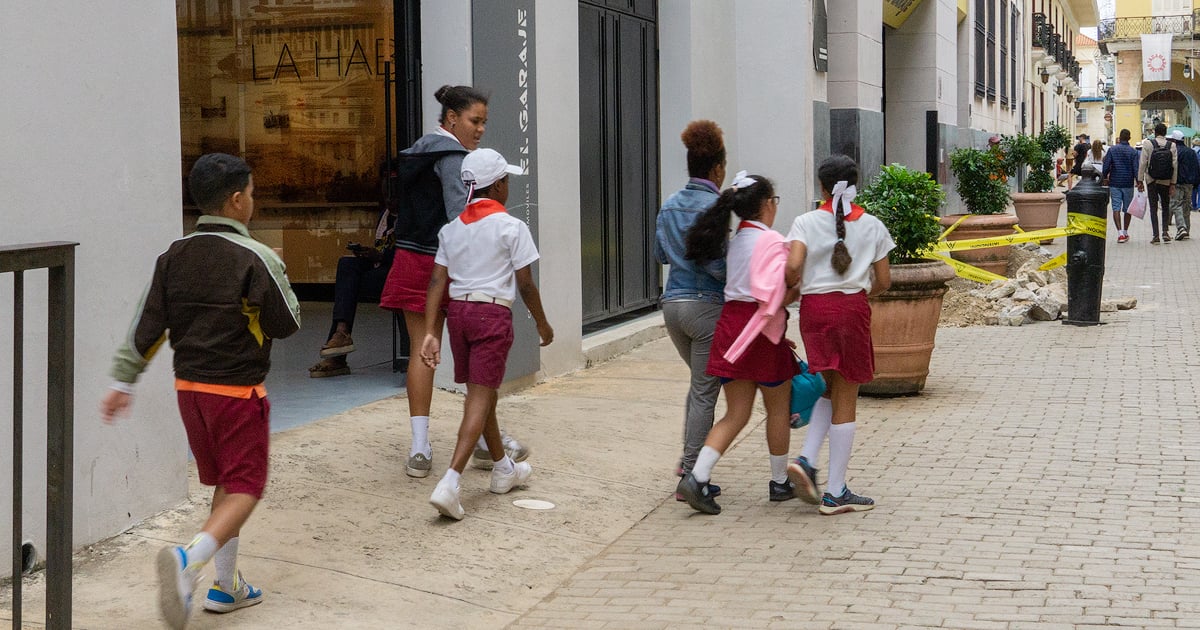
This Monday, thousands of Cuban children resumed their classes amid a bleak landscape following a weekend marked by prolonged blackouts and a lack of drinking water in several provinces of the country.
The situation has generated a wave of indignation among parents, who question the government's demand for them to send their children to school without minimum conditions for their well-being. In many places, there isn't even bread for snacks, due to the shortage of flour, lack of water, and power outages.
Social media has been flooded with comments from citizens denouncing the precarious conditions in which children will have to attend classes, without proper hygiene, without food, and in many areas, without electricity.
"It's disrespectful. In Matanzas, we have been without electricity or water for over 50 hours, and they expect children to attend school. It's impossible," said a netizen.
Similar situations are reported in Santiago de Cuba, where "there has been no electricity since 5 in the morning, children have no bread for breakfast, and there is no water."
Another affected mother stated that her daughters will not attend school "after three days without proper sleep." "We have no electricity and the uniforms haven't been washed. They won't be able to attend like this," she expressed.
In Villa Clara, a person criticized the authorities' lack of sensitivity: "The electricity is still absent in Caibarién. How can they expect children to attend school when they are still crying from the heat and the mosquitoes at this hour?"
In Havana, a user explained that many areas continue to lack electricity and water, which prevents both children and teachers from resting.
The Ministry of Education of Cuba announced on Sunday adjustments to the school schedule due to the disconnection of the National Electric System (SEN), which required adaptations to activities according to the conditions of each territory.
Most institutions will resume their classes on Monday, March 17, but in Pinar del Río, Artemisa, and Mayabeque, they have been postponed until Tuesday, March 18.
The authorities have relaxed the rules regarding school uniforms and allowed students to attend without them. However, this measure has not been enough to soothe the frustration of parents, who are demanding decent conditions for the education of Cuban children.
Frequently Asked Questions About the Energy Crisis and the Return to School in Cuba
Why did classes resume in Cuba despite the energy crisis?
The Ministry of Education of Cuba has decided to resume classes in several provinces despite the energy crisis because they adjusted the school schedule to adapt to the conditions of each territory. However, in Pinar del Río, Artemisa, and Mayabeque, the return to classes has been postponed until Tuesday, March 18, due to a lack of basic services such as electricity and water.
How does the energy crisis affect the well-being of Cuban students?
The energy crisis in Cuba has severely impacted the well-being of students. Many children have had to attend school without having rested properly due to blackouts and the lack of water, which has sparked outrage among parents. Furthermore, the lack of electricity has hindered food preparation and the supply of drinking water, affecting the health and academic performance of students.
What measures has the Cuban government taken to mitigate the energy crisis?
The Cuban government has implemented measures such as the synchronization of the Antonio Guiteras Thermoelectric Power Plant with the National Electric System in an effort to recover the energy supply. Microsystems have been created, and they have opted for the use of diesel engines and floating power plants, but these solutions have proven insufficient to resolve the energy crisis in the short term.
What has been the response of Cuban citizens to the energy crisis and the return to school?
The response from Cuban citizens has been one of indignation and frustration. Many parents and citizens have voiced their discontent on social media due to the inadequate conditions for children's return to schools. They have also criticized the lack of effective solutions from the government to address the energy crisis and the perception of inequality in the distribution of resources.
Filed under: